




Four killed in latest Eastern Pacific strike under ‘Operation Southern Spear’
- In Reports
- 04:49 PM, Dec 18, 2025
- Myind Staff
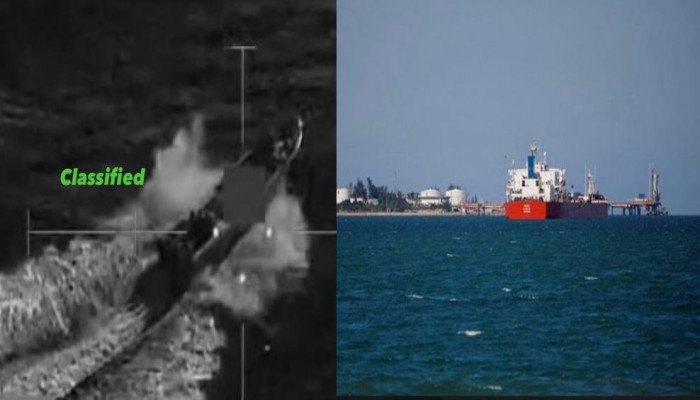
The United States military has confirmed that four people were killed in its latest attack on a vessel in the eastern Pacific Ocean, as political and military tensions between Washington and Venezuela continue to escalate. The strike adds to a growing death toll from US operations in the region and comes amid congressional debate, international concern, and strong reactions from Latin American leaders.
According to the US Southern Command (SOUTHCOM), the strike took place on Wednesday in international waters. In a statement posted on social media, SOUTHCOM said the attack was ordered by US Defence Secretary Pete Hegseth and carried out under the ongoing “Southern Spear” military operation in Latin America. SOUTHCOM claimed the targeted vessel was operated by what it described as a “Designated Terrorist Organisation” and said the four people killed were “male narco-terrorists.” However, the US military did not provide any public evidence to support the allegation that the vessel or those on board were involved in drug trafficking.
“The vessel was transiting along a known narco-trafficking route in the Eastern Pacific and was engaged in narco-trafficking operations,” SOUTHCOM said in its post, which was accompanied by a video showing a speedboat being destroyed in an explosion. The command also stated that no US military personnel were injured during the operation.
This latest strike brings the total number of people killed in US attacks on vessels in the eastern Pacific Ocean and the Caribbean to nearly 100 since September. Washington has acknowledged carrying out strikes on at least 26 vessels during this period. The attacks drew sharp criticism from legal experts and human rights advocates, who argued that the United States is conducting extrajudicial killings in international waters. Despite these accusations, President Donald Trump has repeatedly defended the military actions, saying they are necessary to stop the flow of illegal drugs into the United States.
Trump has specifically pointed to drug cartels that the US claims are linked to Venezuela. The White House argues that strong military action is required to disrupt trafficking routes and weaken criminal networks operating in the region. The latest strike was announced shortly after US lawmakers voted down resolutions that aimed to limit the president’s authority to use military force against Venezuela and other groups in the Western Hemisphere.
On Wednesday, the Republican-majority House of Representatives voted 213 to 211 against a resolution that would have required President Trump to remove US forces from hostilities with or against Venezuela unless Congress had formally authorised such action. In a separate vote, the House rejected another resolution by a margin of 216 to 210. That measure sought to bar US forces from engaging in hostilities with any “presidentially designated terrorist organisation in the Western Hemisphere” without congressional approval.
The defeat of these resolutions allows the Trump administration to continue its military operations without additional oversight from Congress. This comes at a time when the United States is carrying out one of its largest military deployments in Latin America in recent years.
The deployment includes thousands of US troops, Washington’s largest aircraft carrier, and a nuclear-powered submarine. US officials say the build-up is part of efforts to counter drug trafficking and regional threats. However, critics see it as preparation for possible direct military action against Venezuela.
President Trump has openly threatened to remove Venezuelan President Nicolas Maduro from power. On Tuesday, he ordered a naval blockade of Venezuelan ports, targeting oil tankers that are already under US sanctions. Venezuela’s government strongly condemned the move. Maduro’s administration described the blockade as a “grotesque threat” and accused the United States of trying to seize the country’s natural wealth. Officials said the action was aimed at “stealing the riches that belong to our homeland.” The situation intensified further last week when US soldiers boarded and seized the oil tanker Skipper off the coast of Venezuela. According to reports, the vessel was taken to the US state of Texas, where its oil cargo was unloaded.
In response to the blockade, Venezuela has reportedly taken steps to protect its oil shipments. The New York Times reported that Venezuela’s navy has begun escorting ships carrying petroleum products as they leave the country’s ports. Several ships departed from Venezuela’s eastern coast under naval escort on Tuesday evening and Wednesday morning, the report said, citing three people familiar with the matter. As tensions rise, concern is growing across Latin America and within the United Nations. UN Secretary-General Antonio Guterres has expressed alarm over the increasing risk of conflict between Washington and Caracas.
Mexican President Claudia Sheinbaum urged the United Nations to take action to prevent violence. Speaking on Wednesday, she criticised the lack of international response and said, “It has not been present. It must assume its role to prevent any bloodshed.” She also reiterated Mexico’s long-standing position against foreign intervention in Venezuela. Brazilian President Luiz Inacio Lula da Silva also voiced concern over the Trump administration’s approach to the region. He said he was “concerned about President Trump’s attitudes towards Latin America, about the threats.”
Lula revealed that he had discussed the issue directly with Trump during a phone call earlier this month. Emphasising diplomacy over force, Lula said, “The power of the word can outweigh the power of the gun … I said to Trump: ‘If you are interested in talking to Venezuela properly, we can contribute. Now, you have to be willing to talk, you have to be patient.’”
In Caracas, President Maduro has sought support from the United Nations. According to reports, he held a phone call with UN Secretary-General Guterres, during which he strongly criticised the US naval blockade. Maduro “denounced … the recent escalation of colonial threats against Venezuela,” the state-run Agencia Venezuela news site reported. He also condemned what he called “barbaric diplomacy,” referring to comments by US officials suggesting that Venezuela’s natural resources should belong to the United States.
As military operations continue and political efforts to limit them fail in Washington, fears of a wider conflict are growing. With naval blockades, deadly strikes, and large-scale troop deployments now underway, many regional leaders warn that the situation could spiral further unless dialogue replaces confrontation.



 Loading...please wait
Comments