



Fostering a Time-Tested Strategic Partnership: Redefining a Multi-Polar World
- In Foreign Policy
- 11:19 AM, Feb 12, 2026
- Shubhi Malhotra & Dr Adityanjee
Introduction
The changing landscape of global politics brought the idea of multipolarity back into the international spotlight at the beginning of 2026. The world order is not based on one power or bloc being in charge, but on many centres of influence working together. Last year, the US openly endorsed the idea of a G-2 condominium with China, redefining the global geopolitical order. Resistance to the idea of a G-2 condominium forced US President Trump to enunciate the C-5, rather than the G-7, as the core group of countries for maintaining a stable international order. This grudging acceptance by President Trump has renewed the debate on the inevitability of a multipolar world, while acknowledging geopolitical rivalries and institutional asymmetries.
India’s signing of multiple free trade agreements with the UK, the EU, New Zealand, Oman, the UAE, etc., has forced the US to come to the table and walk back the punitive 25% tariffs on Indian exports to the US for purchasing discounted Russian oil. Furthermore, refunding the already collected tariffs to India suggests that the US is now forced to accept the reality of the India-Russia bilateral relationship, which cannot be jettisoned on flimsy issues. Despite numerous proclamations from Washington DC, India has not given an iron-clad commitment to stop buying crude oil from Russia and has only alluded to market conditions deciding India’s energy import preferences.
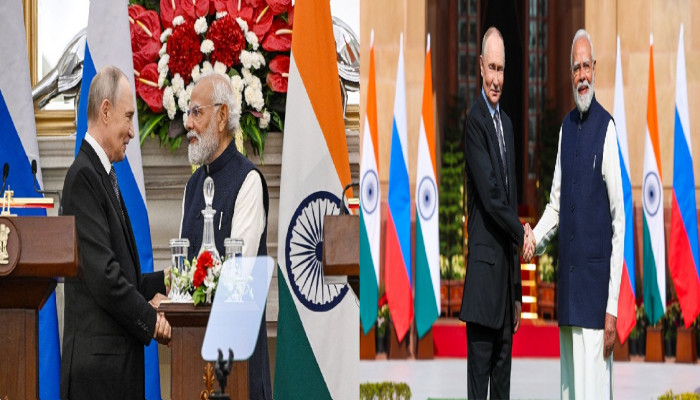
In this context, the annual India- Russia bilateral summits stand out as an important diplomatic platform that shows how both countries want to work together to make the world a more balanced place. Both countries have increasingly advocated for strategic independence, decisional autonomy, diversified partnerships, and sovereignty and equality for all, as the foundation for global stability. The annual summit serves as a crucial platform that reinforces long-standing bilateral strategic ties, underscoring the commitment of both countries to a balanced world order and inclusive global governance. In other words, it is an institutional framework that serves as an anchor for stability in bilateral relations despite headwinds from other powers.
Historical Aspect of the Bilateral Partnership
Dating back to the Cold War, the relationship between India and the former USSR (now Russia) has a long history of trust and friendship. The foundation for the partnership was laid down by the Treaty of Peace, Friendship, and Cooperation in 1971, which lasted through generations of changes in ideology. Post 1991, when the Soviet Union fell apart, India and the Russian Federation worked to strengthen their ties. In 2000, they signed the Declaration on Strategic Partnership, and in 2010, they upgraded it to a "Special and Privileged Strategic Partnership”.
The two countries held annual summits to make high-level political dialogue a regular part of their relationship. This allowed for ongoing cooperation in areas like defence, energy, science, technology, and diplomacy. This long-lasting partnership is the foundation on which modern summit meetings try to build a world order that is more balanced.
The India-Russia Summit as a Strategic Base
The last India-Russia Summit was more than just a meeting between two countries; it was also a way for the two countries to work together on regional and global issues. The summit allowed both countries to reaffirm their strategic independence and policy independence in a time when alliances are changing, the world is becoming more fragmented, and countries are competing for power.
This annual forum brings together India's goal of "multi-alignment" and Russia's focus on "strategic sovereignty." Both countries support a variety of partnerships instead of just aligning with one bloc or the other. This naturally supports multipolarity. The annual summit has now become a place for more discussions about changes to global governance, regional stability, development of global south, mutual prosperity, free and fair trade, and economic resilience.
- Cooperation in Defence and Balance of Power: Defence cooperation still forms a major stakeholder in the corporation between India and Russia, which is also a big part in keeping the world stable. For decades now, Russia has been one of the most dependable defence partners of India, giving advanced platforms like the S-400 Air Defence System, nuclear-powered submarines, and BrahMos missiles.
This partnership eventually strengthens India's ability to counter threats. Indirectly, Russia also helps to keep a multipolar world order by allowing India to maintain its strategic independence, making sure that no one power bloc controls all of India's defence partnerships. This ensures a more even distribution of military power in the Indo - Pacific and Eurasian regions.
- The Economic and Energy Aspects of Multipolarity: The summit also shows how increasing economic and energy cooperation can be used to get involved in a multipolar world. India needs Russia as an energy partner, especially in the oil, gas, and nuclear energy sectors. Long-term energy deals help India make its supply chains more diverse and less likely to be affected by geopolitical problems.
Both countries also support alternatives to the supremacy of the dollar in trade through national currency settlements and other financial tools. These kinds of projects challenge the dominance of Western-centred financial systems and encourage a more diverse global economic structure, which is an important part of a multipolar world.
- Global Governance and Multilateralism: India and Russia both want to change the way global governance works so that it better reflects the world as it is today. Both countries want the United Nations Security Council to be more representative, and Russia has always supported India's claim to permanent membership.
Through groups like G20, BRICS, MTCR, Australia Group, Wassenaar Arrangement, and SCO, both India and Russia work together to enhance the voices of strategic stability and the global South and highlight it at a global level. In this regard, the India-Russia summit strengthened this initiative further by highlighting the principles, such as respect and sovereignty for all and inclusive development.
- Tackling Global Polarisation: As the world is becoming increasingly divided due to geopolitical rivalries, especially between the developed Western countries and the developing and emerging countries, such as that of Asia, the relationship between Russia and India is becoming increasingly complicated. It is very evident that in today's scenario, India shares strong ties with countries such as the USA and Europe, while Russia is becoming closer to countries like China and non-Western partners. The US under President Trump understands the importance of Russia as a serious global partner instead of letting it become a junior partner of China. India, despite having border problems and recent clashes with China, is managing bilateral relations with China in a prudent manner. This makes the strategic task of maintaining the bilateral partnership more of a diplomatic balancing act.
Although there are different political views, the India-Russia summit is a sign that even after so many complications, the ties are still strong owing to common vested interests and deep-rooted cooperation. This collaboration underscores that multipolarity signifies coexistence and cooperation, rather than confrontation, despite differing ideologies.
Problems and Limitations
Although the annual bilateral summit shows the strong partnership between two countries, eventually strengthening the desire for a multipolar world, but it is not without problems. As India is increasingly diversifying its defence and energy sectors, it has started interacting with other countries apart from Russia.
Additionally, the Western sanctions on Russia due to the Ukraine/EU/NATO War have brought to the fore the changing regional dynamics. This resulted in the levy of secondary and tertiary sanctions on India and some Indian companies that have nothing to do with this tribal European war of strategic domination. All this makes it hard for deep involvement between the two. The problems in negotiating a bilateral free trade agreement with the US have become hostage to the US demands that mandate India to curtail the purchase of energy and armament from Russia. In this context, Russia has already expressed its concern at the US trying to interfere in the bilateral relationship by persuading India to commit to stopping future purchases of Russian crude oil.
As Russia works on its own pathways and changes in this tense geopolitical environment, India needs to ensure that it does not become too dependent on other countries, including the US, weakening its historical ties with Russia. But as we highlight these problems, we also understand the importance these dialogue platforms hold, like the summit that was held between two countries, since it allows both countries to directly interact and work on their dynamics to continue their strong partnership in this changing world.
Conclusions
The US and China need to remember that international relations are not a zero-sum game. India’s relationship with the Russian Federation is not at the expense of India’s bilateral relationship with either the US or China. India has never subscribed to the mentality of military alliances and power blocs. Hence, the India-Russia annual summit is a sign of shared commitment, strategic trust, and diplomatic stability in a newly emerging world order with many poles. By encouraging cooperation in various sectors such as defence, diplomacy, energy, and global governance, this summit helps make the world a more balanced one. Despite India’s interim framework for a bilateral free trade agreement with the US being signed, India will not yield its policy options and bilateral relations with the Russian Federation at the altar of an unpredictable, unreliable and often tumultuous US-India bilateral relationship.
In a nutshell, in these uncertain times of change, the India-Russia partnership shows that multipolarity is not just a theory, but a stark reality that cannot be wished away by one hyperpower. A world where power is spread out, voices are heard, and sovereignty is protected through interaction and mutual respect - this is the aim of the India-Russia relationship and the annual summit. This continued bilateral engagement is still shaping and holds a promise for not just peace and cooperation between India and Russia, but for the entire world.
References
- Joint Statement following the 23rd Russia-India Annual Summit, December 05, 2025 “Russia-India: A Time-Tested Progressive Partnership, Anchored in Trust & Mutual Respect“. (n.d.). President of Russia. https://en.kremlin.ru/supplement/6426
- MEA. (n.d.). State visit of the president of the Russian Federation H.E. Mr. Vladimir Putin, to India (December 04 - 05, 2025). Ministry of External Affairs, Government of India. https://www.mea.gov.in/press-releases.htm?dtl/40346/State_Visit_of_the_President_of_the_Russian_Federation_HE_Mr_Vladimir_Putin_to_India_December_04__05_2025
- Narayanan, M. K. (2025, December 23). Putin’s visit to India and the aftermath. The Hindu. https://www.thehindu.com/opinion/lead/putins-visit-to-india-and-the-aftermath/article70425676.ece
- PIB. (n.d.). From strategic partnership to special and privileged bond: India-Russia relations at a glance. https://www.pib.gov.in/PressReleasePage.aspx?PRID=2198621®=3&lang=2
- Programme of the Russia-India conference 2025. (n.d.). Valdai Club. https://valdaiclub.com/events/posts/articles/programme-of-the-russia-india-conference-2025/
Disclaimer: The opinions expressed within this article are the personal opinions of the author. MyIndMakers is not responsible for the accuracy, completeness, suitability, or validity of any information on this article. All information is provided on an as-is basis. The information, facts or opinions appearing in the article do not reflect the views of MyindMakers and it does not assume any responsibility or liability for the same.



 Loading...please wait
Comments