




Former South Korean president gets 30 year jail term over drone infiltration issue
- In Reports
- 07:59 PM, Jun 12, 2026
- Myind Staff
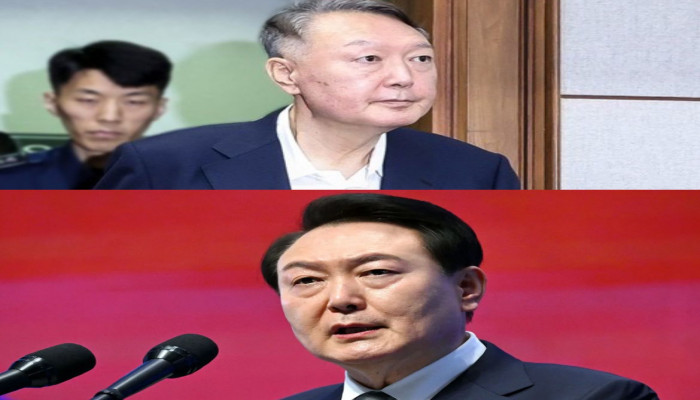
Former South Korean President Yoon Suk Yeol was sentenced to 30 years in prison by a Seoul court on Friday after being found guilty of ordering drone infiltrations into North Korea. The court ruled that the operation was carried out to increase tensions between the two Koreas and create a situation that could be used to justify the declaration of martial law in December 2024.
According to Yonhap News Agency, the verdict was delivered by the Seoul Central District Court. Yoon was convicted on charges of benefiting the enemy and abuse of power. The court handed down the same sentence that had been requested by special counsel Cho Eun-suk during the trial.
The court found that Yoon had ordered the drone operation in October 2024. Judges concluded that the mission was designed to provoke North Korea and create a security crisis. The prosecution argued that the heightened tensions were used as grounds for declaring martial law, which was eventually announced on December 3, 2024.
Soon after the ruling was delivered, Yoon’s legal team filed an appeal challenging the court’s decision. The former president remains in custody and continues to face several legal proceedings related to the failed martial law declaration.
The case also led to the conviction of several former military officials. Former South Korean Defence Minister Kim Yong-hyun received a 30-year prison sentence for his role in the operation. The punishment was stricter than the 25-year sentence sought by the special counsel. The court determined that Kim played a major part in planning and carrying out the controversial drone mission.
Former Defence Counterintelligence Command chief Yeo In-hyung was sentenced to 15 years in prison. Meanwhile, Kim Yong-dae, the former head of the Drone Operations Command, was given a three-year prison sentence that was suspended for five years.
While explaining the judgment, the court detailed how the operation was allegedly intended to create conditions that would allow the government to impose martial law. The court stated, “In order to create conditions for martial law, the defendants decided to use the military tactic of psychological warfare to incite North Korea and induce a provocation and use that to prompt an armed provocation, such as a local conflict, or create a national security crisis situation resulting from heightened military tension.”
The court further criticised the actions of the former president and senior defence officials. It observed that the operation violated the trust placed in them by the public. According to the ruling, their conduct amounted to “betraying” the public’s trust that the president and defence minister would employ military force only for lawful purposes. The court also noted that the operation appeared to have been motivated by personal interests rather than national security concerns.
During the trial, Yoon’s defence team argued that the drone deployment was a legitimate response to actions taken by North Korea. In 2024, North Korea launched balloons carrying trash into South Korea, creating tensions between the two countries. The defence claimed that the drone mission was part of a lawful military response to those incidents.
However, the court rejected that argument. Judges ruled that the operation had harmed South Korea’s national security interests. The court said the drone incursions exposed sensitive military capabilities to North Korea. It also concluded that the operation may have unintentionally helped Pyongyang strengthen its military preparedness by providing valuable information about South Korean tactics and capabilities.
The controversy surrounding the drone operation first gained attention in October 2024 when North Korea accused South Korea of sending drones into its territory and dropping propaganda leaflets over Pyongyang. At the time, then-Defence Minister Kim denied the allegations. Later, South Korea’s Defence Ministry stated that it could neither confirm nor deny North Korea’s claims.
Friday’s ruling is the latest major legal setback for Yoon. It adds to a series of convictions linked to his controversial declaration of martial law. Earlier this year, in February, he was sentenced to life imprisonment after being found guilty of leading an insurrection through the imposition of martial law. Yoon has also appealed that conviction.
The latest judgment further deepens the legal troubles facing the former president and several senior officials from his administration. With appeals already filed, the case is expected to continue through higher courts. The verdict marks one of the most significant political and legal developments in South Korea in recent years, as authorities continue to investigate and prosecute those involved in the events surrounding the failed martial law attempt.



 Loading...please wait
Comments