




Five Iranian advisers among 20 dead in US-Saudi airstrikes on Iraq
- In Reports
- 06:48 PM, Jul 30, 2026
- Myind Staff
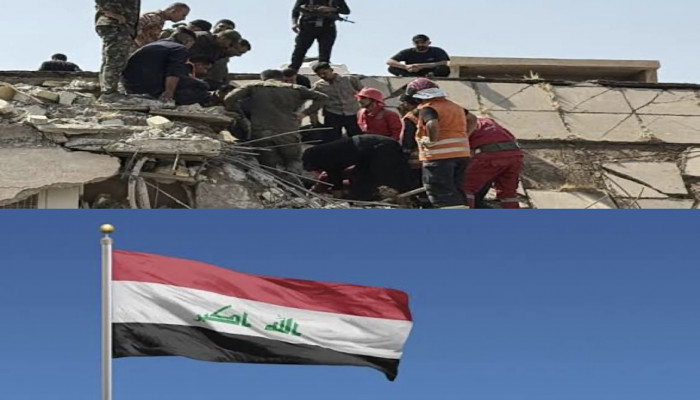
At least 20 militants were killed and 32 others suffered injuries in US-Saudi airstrikes carried out in Iraq on Wednesday, according to the Hashed al-Shaabi, an armed Iraqi alliance that includes several pro-Iran groups. The strikes marked another sharp escalation in regional tensions and added to the growing conflict involving the United States, Saudi Arabia and Iran-backed armed groups operating in Iraq.
The United States and Saudi Arabia said they launched the strikes against Iran-backed militants in Iraq. They said the operation came in response to attacks targeting US military personnel and Saudi oil facilities. The latest action reflects the continuing security challenges in the region, where armed groups and foreign powers remain deeply involved.
Iraq continues to face pressure from both Washington and Tehran. The two countries remain Iraq's most influential allies, yet their long-standing rivalry has repeatedly turned Iraqi territory into a proxy battleground. This situation has placed successive Iraqi governments in a difficult position as they attempt to maintain relations with both sides while protecting national stability.
The Hashed al-Shaabi, also known as the Popular Mobilisation Forces (PMF), announced that the strikes caused significant casualties. The alliance said at least 20 fighters lost their lives, while another 32 sustained injuries. In its official statement, the group said that at least 20 fighters "were martyred and another 32 wounded according to a preliminary toll".
Two senior Hashed officials also confirmed that five Iranian advisers were among those killed. They told AFP that the advisers died in one of the strikes carried out in Iraq's central Diyala province. The reported deaths of Iranian nationals are likely to increase tensions between Tehran and Washington.
AFP journalists present in Baghdad witnessed funeral ceremonies organised by the Hashed al-Shaabi. Coffins carrying some of those killed were wrapped in Iranian flags, highlighting the close ties between sections of the alliance and Iran. The funeral reflected the political and military relationship that has existed between Tehran and several factions within the PMF for years.
The Hashed al-Shaabi was established in 2014 during Iraq's campaign against jihadist groups. The alliance played a major role in military operations at that time. It later became an official part of the Iraqi armed forces. Despite its formal integration, several brigades within the alliance maintain close links with Iran-backed organisations and have often operated independently of the Iraqi government's direct control.
US President Donald Trump said the strikes were coordinated with the Iraqi government, according to Fox News. The operation followed increasing pressure from Washington on Baghdad to disarm pro-Iran armed groups. The United States has repeatedly accused these groups of targeting American military facilities in Iraq. Many of these organisations have also demanded the complete withdrawal of US troops from Iraqi territory.
Prime Minister Ali al-Zaidi, who assumed office earlier this year with Washington's support, has pledged to bring armed groups under state control. He promised to ensure these organisations surrender their weapons. However, his government has faced resistance from several powerful factions that oppose disarmament.
Earlier this month, Prime Minister Zaidi visited both the United States and Iran as part of efforts to strengthen diplomatic engagement with both countries. His visits reflected Iraq's continued attempt to balance relations with two rival powers while preventing further instability inside the country.
The latest strikes came shortly after Saudi Arabia announced that its forces had intercepted drones targeting oil facilities. Riyadh blamed Iran-backed armed groups based in Iraq for the attempted attacks. The accusation further increased tensions across the region and contributed to the decision to launch military action.
Several of the most active pro-Iran armed organisations operate under an alliance known as the Islamic Resistance in Iraq. The alliance has supported Tehran during the wider conflict in the Middle East. It has claimed responsibility for hundreds of attacks on US military bases in Iraq and other parts of the region.
Following the strikes, the Islamic Resistance in Iraq issued a strong warning. The group said, "our response to the American enemy is inevitable, and may target its tools in Saudi Arabia". At the same time, it stated that any retaliation would take place only after the Arbaeen pilgrimage, which falls on Tuesday.
Arbaeen is one of the most important religious events in the Shia Muslim calendar. Every year, millions of pilgrims travel to Iraq to visit holy shrines, including large numbers of visitors from Iran. The pilgrimage remains one of the largest annual religious gatherings in the world.
The pro-Iran armed groups denied carrying out drone attacks against Saudi Arabia. They also said they had not claimed responsibility for any attacks since the US-Iran conflict resumed earlier this month.
The Iraqi government strongly criticised the US-Saudi airstrikes. Officials rejected the military action and expressed concern over violations of Iraqi territory. In an official statement, Iraq said it rejects "all acts of aggression, regardless of the party responsible or the justifications presented."
The Ministerial Council for National Security also responded to the strikes. It said Iraq would "confront any violation of Iraq's sovereignty, and prevent any source from using Iraqi territory to threaten neighbouring states". The council also reaffirmed its commitment to ensure that the Iraqi state remains the only authority permitted to possess weapons.
Prime Minister Zaidi's administration has already set a deadline for armed groups that the United States classifies as terrorist organisations. The government has instructed those organisations to disarm by September 30. Baghdad views the move as an important step toward strengthening state authority and reducing the influence of independent armed factions.
Iraq has worked to recover from decades of conflict, instability and political unrest. The country has made progress in rebuilding institutions and improving security. However, regional rivalries and internal armed groups continue to create serious challenges. The latest airstrikes have once again highlighted Iraq's fragile security environment and the risks posed by the wider conflict involving the United States, Saudi Arabia and Iran-backed groups.



 Loading...please wait
Comments