



Fazlur Rehman questions Pakistan’s Afghan Policy, says “Not even a pomegranate can enter, but terrorists can”
- In Reports
- 04:53 PM, Feb 10, 2026
- Myind Staff
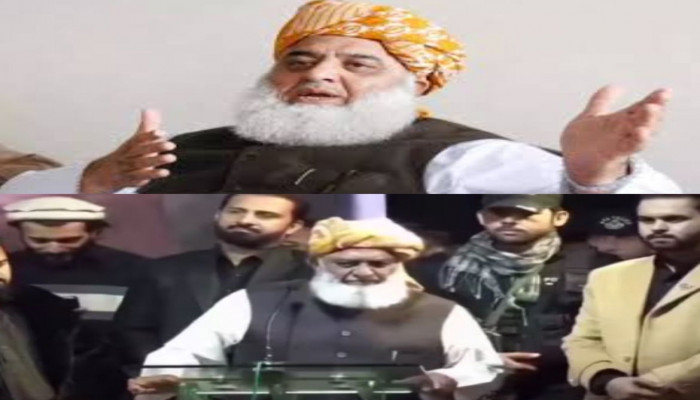
Pakistan's Jamiat Ulema-e-Islam (JUI-F) chief, Maulana Fazlur Rehman, has strongly criticised Pakistan’s security and foreign policy approach, especially regarding Afghanistan, saying the country’s strategies have failed for decades and have only worsened the situation.
Speaking on Sunday, Rehman took a swipe at Pakistan’s military and its handling of rising militancy. He questioned how terrorists are repeatedly entering Pakistan even though border movement is tightly controlled. Highlighting the contradiction, he said that “not even a single pomegranate from Afghanistan can enter Islamabad, and yet somehow, terrorists are entering the country.”
Rehman raised concerns about Pakistan’s long-standing Afghan policy and asked why Pakistan has never been able to build stable relations with Afghanistan despite multiple governments changing over the years. He said Pakistani citizens want to ask policymakers why nobody has been able to successfully work with Afghanistan, “from Zahir Shah to today’s Amarat-e-Islamiyah.”
He pointed out that Afghanistan has seen many different political systems and leaders over the decades, yet Pakistan’s relationship with the country has remained troubled. “Different people came, a communist government came, a jihadist-led ruling came, the Taliban's regime came, and so did the pro-Pakistanis. Yet, before criticising, have you ever thought why my Afghan policy has been failing for the last 78 years?” Rehman asked.
Referring to the government’s claims that terrorists enter Pakistan from Afghanistan, he questioned why authorities have not been able to stop them if such movement is happening. He said officials often blame Afghanistan for terrorism but fail to take responsibility for internal weaknesses.
“If they are coming, then stop them, eliminate them. The Afghan government has never objected to your moves,” Rehman said, directly challenging the country’s leadership and security forces.
He further emphasised what he called the strange and confusing reality at the border. According to him, even basic trade items are blocked, yet militants manage to cross. Rehman said the unusual part is that “not even a single pomegranate or a melon from Afghanistan can enter Pakistan, and yet somehow, terrorists come into the country.”
Along with border security, Rehman also criticised Pakistan’s overall diplomacy and foreign relations. He described the country’s broader foreign policy as a complete “failure” and said it has damaged Pakistan rather than helping it.
“We are fighting with India, we have tensions with Afghanistan, China is upset, and so is Iran. And in this atmosphere, they think they are fighting Pakistan's war,” Rehman said. He further claimed that the policies being followed have only to “destroy” the country.
His remarks came at a time of growing tension following a deadly suicide bombing at a Shi'ite Muslim mosque in Islamabad. The attack killed at least 31 people, while more than 170 others were injured.
According to a Reuters report, the attacker first opened fire at the mosque gates and then detonated a suicide bomb after guards challenged him while he was trying to enter the Khadija Tul Kubra Imambargah compound.
Pakistan’s defence minister Khwaja Asif shared details about the incident in a post on X. He said the attacker blew “himself up in the last row of worshippers.” Asif also claimed that the bomber travelled to and from Afghanistan.
Pakistan’s minister of state for interior, Talal Chaudhry, also reportedly said that the bomber was a Pakistani citizen who had made several trips to Afghanistan.
However, the Taliban government rejected Pakistan’s claims. The spokesperson of the Taliban ministry of defence, Inayat Khwarazmi, dismissed the allegations, calling them “illogical” and “baseless.”
Afghanistan urged Pakistan to focus on its own security failures instead of blaming neighbouring countries. KabulNow reported that Afghanistan advised Pakistani authorities to address internal security lapses rather than pointing fingers at others.
Rehman’s strong comments and the ongoing dispute between Pakistan and Afghanistan reflect rising concerns over terrorism, border management, and the country’s foreign policy direction. His statements also underline public frustration over repeated militant attacks and the inability of authorities to prevent such incidents despite heavy security measures.



 Loading...please wait
Comments