




Far-right Republican, José Antonio Kast wins Chilean presidency
- In Reports
- 01:36 PM, Dec 15, 2025
- Myind Staff
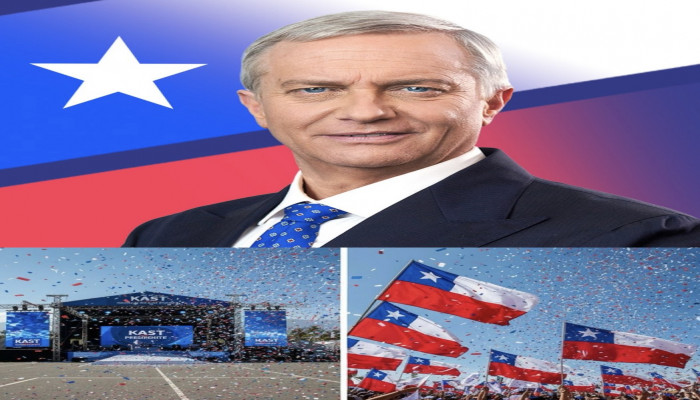
Chile has elected Jose Antonio Kast as its new president, marking the country’s sharpest political shift to the right since the end of the military dictatorship in 1990. Kast won the presidential runoff election on Sunday, driven largely by public concerns over rising crime, migration, and insecurity. Kast, the candidate of the far-right Republican Party, secured about 58% of the vote, defeating the government-backed leftist candidate Jeannette Jara, who received 42%. Jara conceded defeat shortly after the results were announced.
The election outcome signals a significant change in public mood in Chile, where voters appear increasingly frustrated with crime and safety issues, despite the country still being considered one of the safer nations in Latin America. Throughout the campaign, crime and immigration dominated the political debate. Kast repeatedly warned that Chile was losing control over public safety and promised tougher measures to restore order.
Over his decades-long political career, Kast has been known as a hardline right-wing figure. His proposals include building border walls, deploying the military to high-crime areas, and deporting migrants who are in the country illegally.
Speaking to supporters on Sunday night at his party’s headquarters in the upscale Las Condes neighbourhood of Santiago, Kast promised sweeping changes. “Without security, there is no peace. Without peace, there is no democracy, and without democracy, there is no freedom, and Chile will return to be free of crime, anxiety and fear,” he said.
At the same time, Kast acknowledged the challenges ahead, warning that improvements would not happen overnight. He said there were “no magical solutions” and added that change would require time and perseverance. Supporters at the event waved Chilean flags and celebrated what they described as a turning point for the country. This was Kast’s third presidential bid and his second runoff election. In 2021, he lost the presidency to leftist President Gabriel Boric. At that time, many voters viewed Kast as too extreme.
However, analysts say the rise in violent crime and migration has changed voter priorities, making Kast’s tough stance more appealing to a wider section of the population. His victory even extended into regions that traditionally support left-wing candidates.
Political scientist Claudia Heiss from the University of Chile said Kast’s win was also influenced by voter rejection of Jara. She said Jara, a member of the Communist Party, was viewed by many voters as “too extreme.” Among the supporters was Ignacio Segovia, a 23-year-old engineering student, who attended the victory celebration wearing a red cap reading “Make Chile Great Again.” “I grew up in a peaceful Chile where you could go out in the street, you had no worry, you went out and you never had problems or fear,” Segovia said. “Now you can’t go out peacefully.” Such sentiments reflect growing public concern as violent crime has risen in recent years.
While Chile remains safer than many of its neighbours, violent crime has increased as organised criminal groups have expanded their presence. These groups have taken advantage of Chile’s porous northern desert borders, which it shares with Peru and Bolivia, both major coca-producing countries.
Authorities have also pointed to major international ports and a surge of migrants, particularly from Venezuela, as factors contributing to crime. Many migrants are vulnerable to human trafficking and sex trafficking, worsening the security situation.
Kast has proposed the creation of a new police force inspired by the U.S. Immigration and Customs Enforcement (ICE) agency to rapidly detain and deport undocumented migrants. He has also promised deep cuts in public spending, positioning himself as a leader focused on law, order, and fiscal discipline.
Chile is the world’s largest producer of copper and a major supplier of lithium, a key mineral for electric vehicle batteries. Following Kast’s election victory, expectations of reduced regulation and market-friendly policies have boosted confidence among investors.
The local stock market, peso currency, and equity benchmark all reacted positively, reflecting optimism over a possible shift toward pro-business policies. Despite his decisive win, Kast is expected to face strong political resistance. Chile’s Congress is deeply divided. The Senate is evenly split between left-wing and right-wing parties, while the balance of power in the lower house rests with the populist People’s Party. Political analyst Guillermo Holzmann, a professor at the University of Valparaiso, said Kast will need to govern carefully. “It is clear that not everyone who voted for Kast is from his party. That is, much of his vote is borrowed,” Holzmann said. This could limit Kast’s ability to push through more controversial proposals.
One area where Kast may face difficulty is social policy, particularly abortion laws. A devout Catholic and father of nine children, Kast has previously spoken strongly against abortion and the morning-after pill. However, he largely avoided the topic during the recent campaign. Any changes to abortion laws would require support from more than half of Congress, and opinion polls suggest that most Chileans support existing abortion rights.
Kast’s victory adds to a broader right-wing resurgence in Latin America. Recent leaders elected in the region include Daniel Noboa in Ecuador, Nayib Bukele in El Salvador, and Javier Milei in Argentina. In Bolivia, the election of centrist Rodrigo Paz in October ended nearly two decades of socialist rule.
As Kast prepares to take office, Chile enters a new political phase, shaped by voter demands for security, stability, and economic confidence but also constrained by a divided legislature and a diverse electorate.



 Loading...please wait
Comments