



Ex-PM to Prison: Najib Razak convicted in the trial over 1 MDB scandal
- In Reports
- 06:30 PM, Dec 26, 2025
- Myind Staff
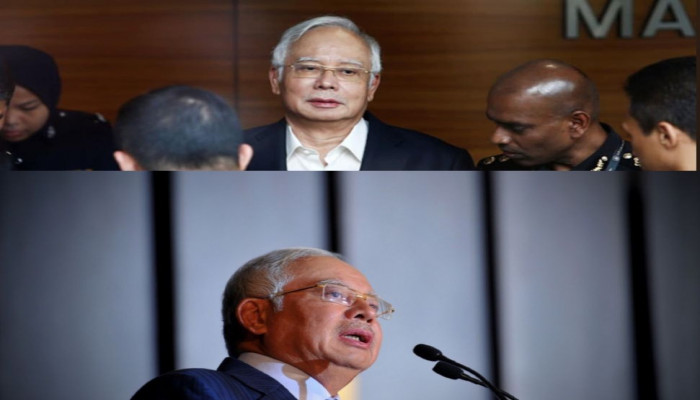
The former Malaysian Prime Minister, Najib Razak, was pronounced guilty of abusing power in the biggest trial in the multi-billion-dollar 1MDB scandal. The verdict will have a significant political impact and further weaken his eroding influence within the United Malays National Organisation (UMNO), Malaysia’s oldest political party. UMNO lost power in the landmark 2018 election, ending decades of rule.
US and Malaysian investigators found that $4.5 billion was siphoned off from the 1 Malaysia Development Berhad, a state fund, co-funded by Najib during his tenure in 2009. Over $1 billion is allegedly traced to Najib’s bank accounts despite his consistent denials of any wrongdoing.
Najib is now charged with four accounts of corruption and 21counts of money laundering for receiving more than 2.3 billion ringgit ($569.45 million) from 1MDB through illegal transfers.
In his verdict, Judge Collin Lawrence Sequerah said, "The contention by the accused that the charges against him were a witch hunt and politically motivated were debunked by the cold, hard and incontrovertible evidence against him that pointed towards the accused having abused his own powerful position in 1MDB, coupled with the extensive powers conferred upon him”.
As per reports, Najib could face a jail sentence of 15-20 years on each charge, including a fine of up to five times the value of the pilfered amount. He has been in jail since August 2022 after the top Malaysian court upheld a verdict convicting him of corruption for receiving kickbacks from 1 MDB fund.
Najib, now 72, is currently serving a six-year prison sentence for graft connected to the misuse of funds from 1MDB. His political and personal downfall began after Malaysia’s historic 2018 general election, when his long-ruling coalition lost power. Since then, investigations carried out under successive governments have drawn Najib and his wife, Rosmah Mansor, deeper into corruption allegations.
Najib Razak, once one of Malaysia’s most powerful leaders, has seen a dramatic fall from grace. Groomed from a young age for national leadership, the son of one of Malaysia’s founding fathers rose to become prime minister in 2009. However, after serving for nine years, Najib is now behind bars, convicted in one of the country’s biggest corruption scandals linked to the 1Malaysia Development Berhad (1MDB) sovereign wealth fund.
Najib’s fall is seen as a stunning reversal for a man who once promised reform and change. When he took office in 2009, he presented himself as a liberal-minded leader and repealed several widely criticised security laws. Educated in Britain, Najib aimed to modernise Malaysia and soften the image of the long-dominant ruling coalition.
However, over time, many Malaysians came to view him as an aloof elitist, disconnected from the daily struggles of ordinary citizens. This perception was worsened by public missteps and unpopular policies, including the introduction of the goods and services tax (GST) in 2015. The tax was deeply unpopular and was later scrapped.
Najib’s wife, Rosmah Mansor, also became a frequent target of public criticism. Known for her commanding public presence and distinctive hairstyle, Rosmah once complained that her hair cost her 1,200 ringgit ($300) to style. At the time, Malaysia’s minimum monthly wage stood at 900 ringgit, a comparison that angered many citizens and highlighted perceptions of excess among the political elite.
One phrase came to symbolise the growing anger toward Najib’s leadership. Former prime minister Mahathir Mohamad revealed that Najib had told him in 2015 that “cash is king” when it comes to maintaining political support in Malaysia. Political opponents later turned this phrase against Najib, using it as a sign of arrogance and alleged corruption.
Even before the 1MDB scandal fully surfaced, Najib had been surrounded by controversy. During his tenure as defence minister, Malaysia purchased French submarines in a deal brokered by a close associate. The deal was later followed by claims of kickbacks. The scandal deepened after the murder of Mongolian negotiator Altantuya Shaariibuu, who was shot and then blown up using military explosives near Kuala Lumpur. Two police officers, who were former bodyguards to Najib, were later convicted in the case. Najib denied rumours that he had an affair with the 28-year-old Altantuya.
The final blow to Najib’s leadership came with the exposure of the 1MDB scandal. Launched by Najib in 2009 as a development fund, 1MDB accumulated massive debt after his re-election in 2013. Around 2015, investigations revealed that large sums of money were missing from the fund.
Public anger over the scandal played a key role in Mahathir Mohamad’s return to power in the 2018 election. That victory opened the door for wide-ranging investigations into Najib’s role in the misuse of state funds.
Investigations in the United States later revealed that hundreds of millions of dollars linked to 1MDB were diverted into luxury properties in cities such as Los Angeles, New York, and London. Additional funds were reportedly spent on artworks by Claude Monet and Vincent van Gogh, a private jet, and the production of the Hollywood film “The Wolf of Wall Street”, which was produced by Najib’s stepson. A New York Times report also alleged that some of the money was used to buy jewellery for Rosmah Mansor.
Najib has consistently denied any wrongdoing. Despite this, in 2020, he was sentenced to 12 years in prison in his first trial. The case involved 42 million ringgit that had been siphoned from SRC International, a former 1MDB subsidiary, into his personal bank accounts. Najib began serving the sentence two years later, after exhausting all appeals. His jail term was later reduced by half following a decision by a pardons board.
Najib’s journey from prime minister to prisoner remains one of the most dramatic political downfalls in Malaysia’s history, symbolising the far-reaching impact of the 1MDB scandal on the nation’s politics and public trust.



 Loading...please wait
Comments