



Ex-Pak envoy warns of nuclear strikes on India in a hypothetical US conflict scenario
- In Reports
- 01:05 PM, Mar 23, 2026
- Myind Staff
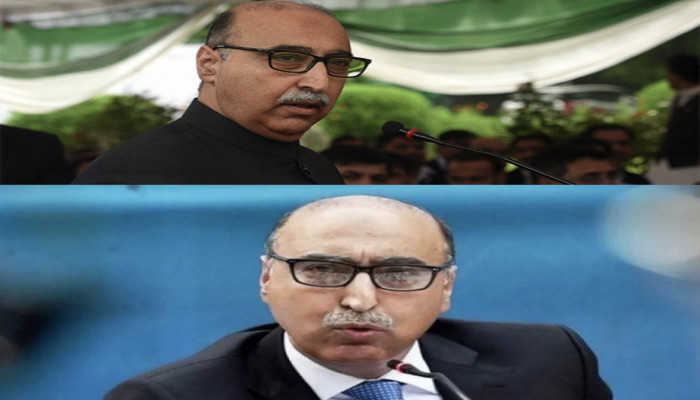
Remarks made by former Pakistani diplomat Abdul Basit have triggered serious concerns after he spoke about a possible nuclear retaliation scenario involving India. Basit, who served as Pakistan’s High Commissioner in New Delhi between 2014 and 2017, commented on what might happen if the United States were to launch an attack on Pakistan. Speaking on 21 March 2026, he suggested that Pakistan would respond by targeting major Indian cities like Delhi and Mumbai if such a situation were to arise.
Basit described this as a “worst-case scenario,” explaining that it would only occur if the US attempted to dismantle Pakistan’s nuclear weapons programme. According to him, Pakistan would be left with no choice but to retaliate strongly to defend itself. At the same time, he made it clear that such a situation remains unlikely, calling it “among the impossibilities.” Despite this, his remarks have drawn widespread attention because of the serious implications of such a statement.
To explain his argument, Basit compared this hypothetical response to the strategy adopted by Iran in its ongoing conflict. Iran, he noted, has targeted Gulf nations that host US military bases since it cannot directly strike American territory due to geographical limitations. While India does not host US bases, Basit still framed India as a potential target in the event of a larger conflict involving the US. This comparison highlights Pakistan’s approach of responding to threats by targeting countries it perceives as supporting its adversaries.
The backdrop to these comments is the ongoing conflict in the Middle East, where tensions involving Iran and Israel have been escalating. Reports suggest that Israel’s growing presence closer to Pakistan’s borders has increased security concerns in Islamabad. Basit speculated that if the US sees Pakistan’s nuclear programme as a threat, it might consider military action. However, he emphasised that Pakistan possesses strong defensive capabilities and is prepared to respond if needed.
Pakistan’s nuclear doctrine, developed in the 1990s, is based on the idea of full-spectrum deterrence. This includes the use of tactical nuclear weapons if required, especially in a conflict with India. Basit’s comments have revived memories of past tensions, particularly the 2019 Balakot crisis, when military actions between India and Pakistan brought the region close to a larger confrontation. Unlike Pakistan, India follows a no-first-use nuclear policy, which adds another layer of complexity to the situation.
Over the years, India has strengthened its defence capabilities significantly. Developments such as the Agni-V missile and advanced air defence systems like the S-400 have improved its ability to respond to threats. Cities like Delhi and Mumbai, which Basit mentioned, are not only political and economic centres but also symbolic targets. Any attack on these cities would have a massive impact on the country’s economy and public morale, making his remarks particularly sensitive.
Relations between Pakistan and the United States have also become strained in recent years, especially after the US withdrawal from Afghanistan in 2021. Pakistan has accused the US of double standards, particularly regarding its stance on the Taliban. Additionally, recent US sanctions on Pakistan’s missile programme have further increased tensions. In this context, Basit’s statement can be seen as an attempt to send a strong message against what Pakistan views as growing pressure from Washington.
At the same time, India’s relationship with the United States has grown stronger, with cooperation increasing in areas such as defence and intelligence sharing. Initiatives like the Quad and iCET have brought the two countries closer. While these partnerships are aimed at maintaining regional stability, Pakistan often sees them as efforts to contain its influence. Basit’s remarks reflect this perception, suggesting that India could act as a proxy in a larger geopolitical conflict.
Experts in India have largely dismissed Basit’s comments, pointing out that he no longer holds an official position and therefore does not represent the government’s stance. However, his words have still sparked debate about national security and the need for stronger defence systems. There have been renewed calls to enhance missile defence capabilities, including systems like Prithvi Air Defence (PAD) and Advanced Air Defence (AAD), while the government continues to invest in advanced technologies such as hypersonic weapons.
The public reaction in India has been strong, with many expressing concern and anger over the remarks. On the other hand, some sections of Pakistani media have supported Basit’s views, presenting them as a realistic assessment of potential threats. This exchange of strong statements risks increasing tensions in a region that already has a history of conflict, particularly over issues like Kashmir.
Globally, organisations like the United Nations have urged restraint and called for efforts to reduce tensions. The International Atomic Energy Agency continues to monitor nuclear programmes to ensure compliance with safety standards. US officials have also downplayed the scenario described by Basit, calling it unrealistic and reaffirming their commitment to avoiding conflict. However, studies by organisations such as the RAND Corporation have warned that even small miscalculations could lead to serious consequences.
Pakistan’s missile capabilities, including systems like the Shaheen-III, allow it to strike targets deep within India. Similarly, India’s missile systems, such as BrahMos and Nirbhay, provide strong countermeasures. The balance of power between the two countries remains delicate, and any escalation could have devastating consequences for the entire region.
As the conflict involving Iran continues, its impact is being felt far beyond the Middle East. Basit’s remarks, though hypothetical, highlight the fragile nature of peace in South Asia. They bring attention to the underlying tensions between nuclear-armed neighbours, as well as the influence of global powers in the region. In such a situation, diplomatic efforts and communication remain crucial to prevent misunderstandings from turning into real conflicts.



 Loading...please wait
Comments