



EU urges US to honour trade deal after Trump raises global tariffs
- In Reports
- 02:36 PM, Feb 23, 2026
- Myind Staff
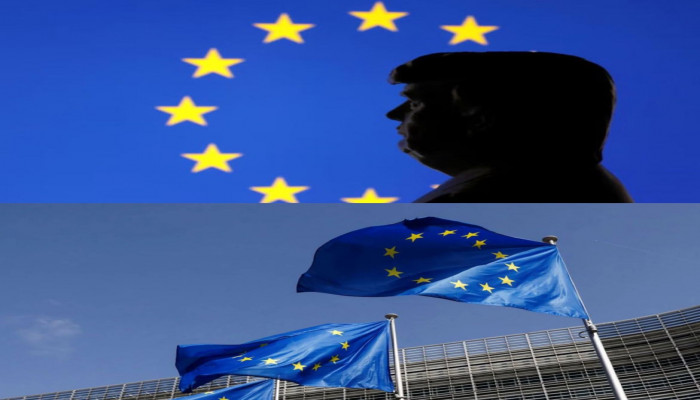
The European Union has urged the United States to stick to the trade agreement both sides signed last year, even as U.S. President Donald Trump increased tariffs on imports. This appeal came after a major decision by the U.S. Supreme Court that struck down parts of Trump’s earlier tariff programme.
On Sunday, the European Commission, the body that handles trade policy for all 27 EU countries, said Washington must continue following the trade deal’s terms. The EU emphasised that agreements between nations should be respected and that sudden tariff increases damage confidence in global trade.
The concern stems from a Supreme Court ruling that invalidated much of Trump’s international tariff strategy. The ruling found that the legal authority used for wide tariff actions was not valid. A day after this ruling, President Trump ordered new tariffs. He first set a temporary global tariff of 10% on almost all imports to the U.S., then raised it to 15%.
The EU and U.S. had previously agreed on a tariff cap of 15% on most European goods entering the U.S. This was part of a joint statement reached in 2025 to normalise trade relations and reduce uncertainties that had built up during earlier tariff disputes.
In a statement on Sunday, the European Commission said, “A deal is a deal.”
This means that once both parties agree to certain terms, those terms must be respected.
The statement added that because the EU is the United States’ biggest trading partner, it expects Washington to honour all the commitments described in their joint statement. The Commission stressed that the EU itself will also honour its commitments under the agreement.
The EU also asked the U.S. government to explain clearly what it plans to do following the Supreme Court’s decision. The legal ruling has caused confusion and Brussels wants clarification about how the U.S. will implement tariffs and other trade rules.
The EU warned that tariffs introduced without stable, predictable rules can disrupt global markets. They said such tariffs harm business confidence and make international supply chains more uncertain. EU officials pointed out that unpredictable trade barriers can affect companies and workers on both sides of the Atlantic.
The Commission noted that European products should keep receiving “the most competitive treatment” agreed in the deal, and that tariff rates should not go above the agreed ceiling.
The EU said it is in regular contact with U.S. officials to discuss the situation. On Saturday, Maros Sefcovic, the EU Trade Commissioner, spoke with Jamieson Greer, the U.S. Trade Representative, and Howard Lutnick, the U.S. Commerce Secretary.
In an interview on the U.S. TV show Face the Nation, Greer said the United States still intends to honour its trade agreements with partners, including the EU. He said, “So we’re having active conversations with them. We want them to understand that these deals are going to be good deals."
He also said, “We expect to stand by them. We expect our partners to stand by them.”
Not all European officials were confident about the future. Christine Lagarde, the President of the European Central Bank, said she was not sure what the long-term effects of the U.S. Supreme Court ruling would be. She added, “I hope it’s going to be clarified.”
The ruling has also affected the EU’s internal procedures. The European Parliament’s trade committee had been scheduled to vote on the EU-U.S. trade deal this week. However, because of legal uncertainty, that vote may now be delayed.
The head of the Parliament’s trade committee, Bernd Lange, said that because of recent tariff changes, the EU needs to pause further work until it has a clear legal picture and firm commitments from the U.S.
He wrote on social media, “Pure tariff chaos from the US administration. No one can make sense of it anymore — only open questions and growing uncertainty for the EU and other U.S. trading partners. Clarity and legal certainty are needed before any further steps are taken.”
Some financial analysts believe that even if the new tariffs could be challenged in U.S. courts, they might still be used as a short-term tactic to gain leverage in future negotiations. They noted that the uncertainty could lead to adjustments in how trade discussions move forward.



 Loading...please wait
Comments