



EU to activate ‘trade bazooka’ against Trump’s Greenland tariff threat
- In Reports
- 12:20 PM, Jan 19, 2026
- Myind Staff
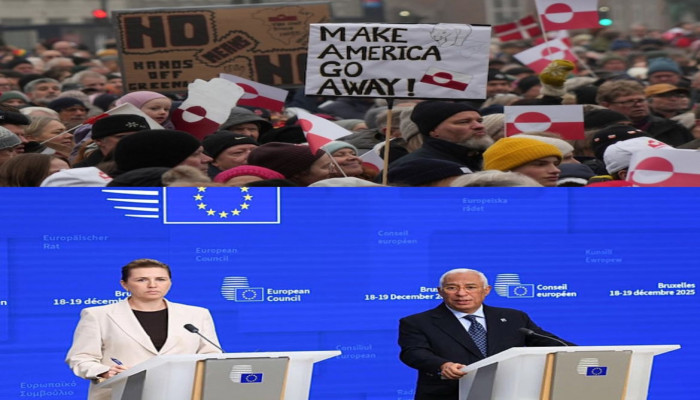
The European Union is preparing to use its strongest trade retaliation tool for the first time as a response to US President Donald Trump’s threat to impose tariffs on European countries that have expressed support for Greenland. The move highlights a sharp rise in transatlantic tensions and signals a coordinated pushback from the 27-member EU bloc against what it sees as economic pressure from Washington.
The EU is weighing the activation of its Anti-Coercion Instrument (ACI), often described by officials as the bloc’s “trade bazooka.” This mechanism is designed to protect the EU from economic coercion by non-EU countries. If used, it would mark the first-ever deployment of this powerful trade tool.
The development follows President Trump’s announcement on Saturday that the United States would impose a 10 per cent tariff starting February 1 on goods imported from Denmark, Finland, France, Germany, the Netherlands, Norway, Sweden, and the United Kingdom. Trump warned that this tariff could rise to 25 per cent from June 1 if no agreement is reached on Greenland.
The US President has repeatedly insisted that Greenland, a Danish territory, is vital to US security interests. He also declined to rule out the use of force, further escalating concerns among European leaders. These tariff threats came after several European countries publicly expressed support for Greenland, intensifying an already sensitive dispute between Washington and its European allies.
The announcement quickly strained diplomatic ties between the US and Europe. In response, representatives from European countries held an emergency meeting in Brussels on Sunday. The meeting focused on possible countermeasures and the wider consequences for future US-EU relations.
After the talks, French President Emmanuel Macron openly called for a strong response. “It’s time to use the EU’s ‘trade bazooka’ for the first time,” Macron said, underlining the seriousness with which European leaders view the situation.
The Anti-Coercion Instrument would allow the EU to take a range of retaliatory actions. These include imposing counter-tariffs on US goods, restricting American companies’ access to the EU’s Single Market, and blocking US firms from bidding for major EU public contracts. Officials said these steps would send a clear signal that the EU is ready to defend its economic and political interests.
EU officials have also explained that the measures could go beyond tariffs. The ‘trade bazooka’ may include export controls and additional restrictions targeting US interests. According to the Reuters news agency, the EU is also considering the option of imposing 93 billion euros worth of retaliatory tariffs on the United States. These tariffs were announced earlier but were delayed after the two sides reached a tentative trade truce in July 2025.
European diplomats described the current standoff as unprecedented. They noted that previous trade disputes with the US had never pushed the EU to consider using such a decisive and wide-ranging instrument.
The next steps will depend largely on negotiations between the US and the EU. However, European leaders have made it clear that they are ready to act quickly if Washington continues or escalates its tariff threats.
In a show of unity, eight European countries released a joint statement on Sunday expressing full support for Greenland. “We stand in full solidarity with the Kingdom of Denmark and the people of Greenland,” the statement said. It also stressed the shared security interests of European nations in the Arctic region.
The statement highlighted that, as NATO members, these countries remain committed to strengthening Arctic security as a common transatlantic priority. At the same time, it warned that the US tariff threats could seriously damage long-standing alliances. The countries cautioned that such actions risk triggering a “dangerous downward spiral” in transatlantic relations.
European Council President Antonio Costa also reacted strongly, saying the EU would take a firm stand. He stated that the bloc would defend international law in the face of the new tariff threats. European Commission President Ursula von der Leyen echoed these concerns, warning that tariffs would undermine EU-US relations and harm cooperation between the two sides.
The issue has also drawn criticism from the United Kingdom. UK Prime Minister Keir Starmer spoke to President Trump by phone on Sunday and criticised the use of tariffs as political leverage against NATO allies. According to a Downing Street statement, Starmer warned that using tariffs against allies over Greenland is wrong and risks destabilising transatlantic relations.
“Security in the high north is a priority for all NATO allies to protect Euro-Atlantic interests,” the Downing Street statement said. It added that imposing tariffs on allies for pursuing collective NATO security goals would be unjustified.
As tensions continue to rise, European leaders remain cautious but firm. While they have left the door open for dialogue, they have also made it clear that the EU is prepared to defend itself economically and politically if the United States proceeds with its tariff plans.



 Loading...please wait
Comments