



EU agrees to unfreeze US trade deal after Trump drops Greenland tariff threat
- In Reports
- 05:29 PM, Feb 05, 2026
- Myind Staff
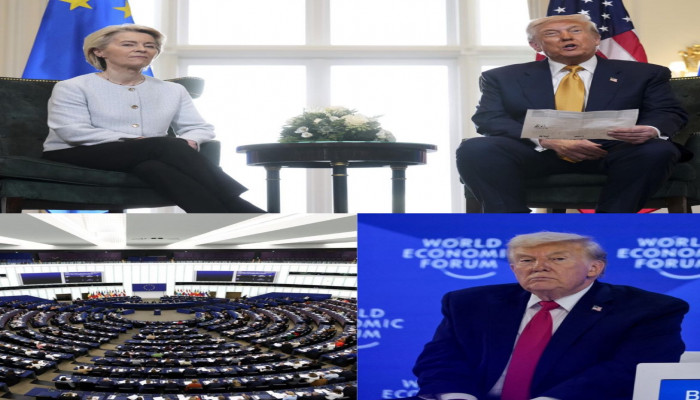
European Union lawmakers have agreed to restart work on the long-delayed trade deal with the United States after former US President Donald Trump withdrew his threat to impose new tariffs on European countries over the Greenland dispute. The European Parliament’s trade committee had earlier paused progress on enacting the deal in protest against Trump’s controversial stance on Greenland, a semi-autonomous territory of Denmark.
The agreement, originally negotiated in July 2025 by Trump and European Commission President Ursula von der Leyen, would eliminate many EU import duties on US goods and maintain zero duties on US lobsters under a deal first struck with Trump in 2020. However, lawmakers put the votes on hold when Trump threatened a wave of new tariffs against European countries that opposed his aim to acquire Greenland. After several days of uncertainty, Trump abruptly withdrew his tariff threat, allowing the EU to move forward again.
German Social Democrat lawmaker Bernd Lange, who chairs the European Parliament’s trade committee, confirmed that work on the deal would resume and said the committee could vote on the proposals on February 24. “Work will resume and the committee can vote on February 24,” Lange said in a social media post, explaining the next step in the legislative process.
Lange also told Reuters that the parliament would support an amendment to allow the EU to suspend the agreement if the United States threatened the security interests or territorial integrity of any EU member state or issued new tariff threats in the future. “The parliament would also back an amendment allowing the EU to suspend the deal if the United States threatened the security interests or territorial integrity of any EU member,” he said, adding that lawmakers had agreed to include a sunset clause in the agreement, although details of its duration remain undecided.
If the trade committee approves the deal in late February, it will still need to be approved by the full European Parliament and by member governments before final ratification. Because of these additional steps, final approval is still expected to be a month or two away.
Many lawmakers had earlier criticised the trade deal as being unbalanced, noting that the European Union would be required to cut most import duties while the United States would maintain a broad tariff rate of about 15 percent on European imports. Despite these complaints, lawmakers had indicated a willingness to accept the deal under specified conditions.
The suspension of the vote had come after Trump’s objectionable threats, which raised concerns among EU legislators about the possibility of retaliatory tariffs. A significant European move to delay the deal further could have angered Trump, who had also threatened to raise tariffs on South Korean exports over what he said was Seoul’s failure to enact its side of a trade deal agreed last year.
With the tariff threats now lifted, the EU appears ready to proceed cautiously to conclude the deal with safeguards in place. Lawmakers are working on clauses to protect against future threats and to ensure that the agreement can be paused if necessary to defend EU member states’ security and territorial integrity.
Overall, this restart marks a significant step forward for the EU-US trade relationship after weeks of uncertainty triggered by the Greenland controversy and tariff threats that had paused the deal’s progress.



 Loading...please wait
Comments