




Encrypted chats, burner phones: CJP protesters tried to outsmart Delhi Police surveillance
- In Reports
- 07:14 PM, Oct 10, 2026
- Myind Staff
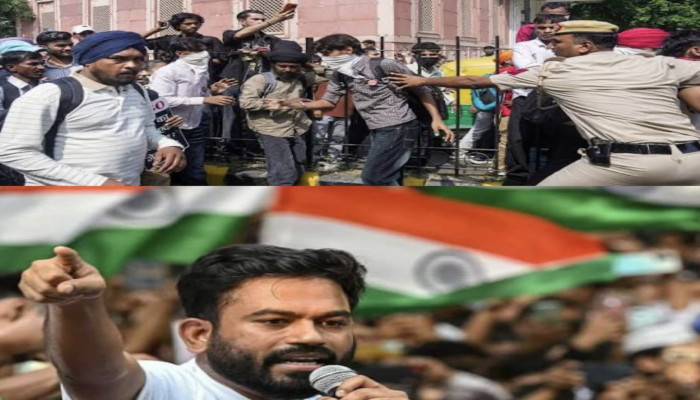
As security agencies tightened surveillance across Delhi ahead of the Cockroach Janta Party (CJP)-led protest on Saturday, youth-led activist networks reportedly used encrypted messaging apps, secondary phones and decentralised communication to evade police monitoring.
The crackdown began before dawn, with security personnel tracking digital footprints, monitoring prominent social media accounts and enforcing restrictions. Anticipating surveillance and preventive house arrests, organisers reportedly shifted from public communication channels to closed messaging groups with disappearing messages, encrypted Signal groups and temporary devices. These networks helped coordinate movements across Delhi, Noida and Gurugram.
Instead of marching in predictable groups towards protest sites such as Jantar Mantar, demonstrators reportedly adopted a decentralised approach. Organisers shared changing meeting points through encrypted channels shortly before gatherings, making it harder for police to anticipate crowd movements.
Small groups reportedly assembled near transit hubs and commercial areas, including Dilli Haat and Jor Bagh. When police closed in, organisers shared alternative meeting points through encrypted networks, allowing protesters to disperse and regroup at other locations before security personnel could respond.
Student leaders and volunteer coordinators reportedly switched to secondary, unregistered phones with temporary data plans to reduce the risk of exposing their contacts, private group histories and logistical details. These precautions aimed to protect sensitive information if police intercepted participants at checkpoints or transit stations.
Organisers also reportedly advised volunteers to follow digital security practices. These included clearing cache files, disabling biometric phone unlocking and avoiding live broadcasts until they had moved away from security cordons. Such measures could make it harder for intelligence agencies to identify organisers and map leadership networks in real time.
Authorities reportedly deployed drones and restricted mobile network access in parts of central Delhi. In response, participants turned to peer-to-peer offline messaging tools and virtual private networks (VPNs) to maintain communication during localised disruptions.
The developments highlight the growing role of digital security in protest mobilisation. While security agencies increasingly use artificial intelligence, drone surveillance and large-scale monitoring, activist networks are adopting encrypted communication and decentralised coordination to organise demonstrations under tight restrictions.



 Loading...please wait
Comments