



Education Ministry to clarify UGC anti-discrimination rules amid growing protests and online backlash
- In Reports
- 04:38 PM, Jan 27, 2026
- Myind Staff
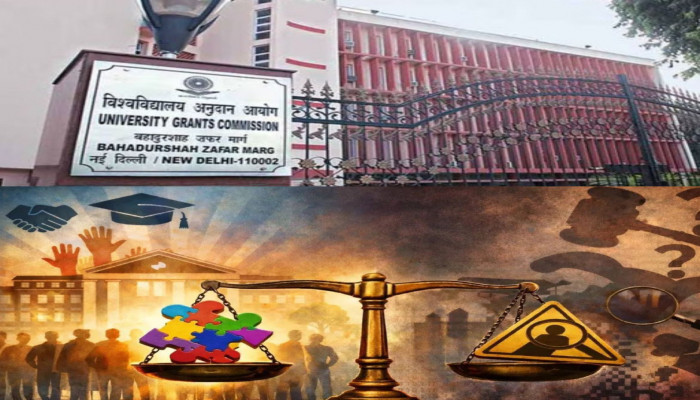
The Ministry of Education is expected to clarify concerns related to the recently introduced University Grants Commission (UGC) anti-discrimination rules, amid widespread debate and protests on social media and university campuses. According to sources, the government is preparing to address misunderstandings pertaining to the UGC Promotion of Equity in Higher Education Institutions Regulations, 2026, which were implemented on January 13, 2026.
These new regulations have been made mandatory for all colleges and universities in India. Their main objective is to prevent caste-based discrimination and other forms of bias in higher education institutions. Government sources have said that efforts are being made to ensure that accurate information about the rules reaches the public, as misinformation and misinterpretations have fuelled controversy.
The regulations introduce an expanded definition of discrimination. They cover discrimination based on caste, religion, gender, place of birth, and disability. The rules also include provisions for OBC students and ensure their representation on institutional equality committees. According to the government, these measures are aimed at promoting inclusivity and equality within academic spaces.
The guidelines also outline strict action against both direct and indirect acts of discrimination. The UGC has stated that discrimination against SC/ST and OBC students will be treated as a crime and will attract strict action. These regulations replace earlier policies introduced in 2012 and aim to create a campus environment free from bias and exclusion, ensuring equal treatment for all students regardless of their background.
However, despite the government’s assurances, opposition to the new rules has intensified on social media. The hashtag #RollbackUGC has been trending among critics who oppose the regulations. Some groups have demanded that the rules be withdrawn, expressing concerns about their impact on students from the general category.
Protesters have described the regulations as “UGC’s black law,” a phrase widely used online to express dissatisfaction and fear regarding the future of campus relationships. Some critics argue that the new rules treat students from the general category as potential criminals. They believe the regulations may lead to unfair assumptions and increase tensions among different student groups.
In response to the growing debate, the Ministry of Education is expected to issue further clarifications soon. Officials have reiterated that the purpose of the guidelines is to make educational institutions more inclusive and not to target any particular group. The government has also stated that it is working to counter misinformation spreading on digital platforms and in some media reports.
The impact of these rules on campus life and institutional practices continues to be a major topic of national discussion. What began as online criticism has now spread to universities, where student groups and some faculty members have organised demonstrations demanding clearer safeguards and wider public consultation.
Students of Lucknow University recently held a protest against the UGC’s new equity regulations, 2026. Students from upper-caste communities also staged a protest outside the UGC headquarters in Delhi on Tuesday, claiming that the new regulations could create chaos on campuses. They urged students to unite under the slogan “No to UGC discrimination” and called for large participation in protests.
Speaking to PTI, Alokit Tripathi, a PhD student at Delhi University, criticised the regulations, saying they are “draconian.” He stated that the rules shift the burden of proof onto the accused and do not provide safeguards for students who may be falsely accused. He also said that equity squads could make campuses feel like they are under constant surveillance and added that students from several Delhi colleges are expected to join the protests.
Commenting on the resignation of the Bareilly City Magistrate, Uttar Pradesh Minister Sanjay Nishad said, “This is his personal matter. I will only say that the laws passed by Parliament are in the best interest of the public. If there are any flaws after implementation, they are reviewed. It is wrong to say that there are flaws before that. This means that harm was being done.”
He further said, “There were some discriminatory practices, whatever they were, they were based on the commission’s report. A Supreme Court committee was formed. General caste people have also received 10 per cent reservation, and no one has opposed that. The laws made by the elected representatives should be followed.”
As debates continue, the government maintains that the regulations are meant to strengthen fairness and equality in higher education. Officials have emphasised that the rules will not be misused and that all concerns will be addressed through proper clarification. With protests spreading across campuses and discussions intensifying online, the future impact of the UGC’s equity regulations remains a significant issue in the country’s educational and social landscape.



 Loading...please wait
Comments