



ED raids I-PAC office, Pratik Jain’s residence; Mamata Banerjee alleges attempt to access party documents
- In Reports
- 04:59 PM, Jan 08, 2026
- Myind Staff
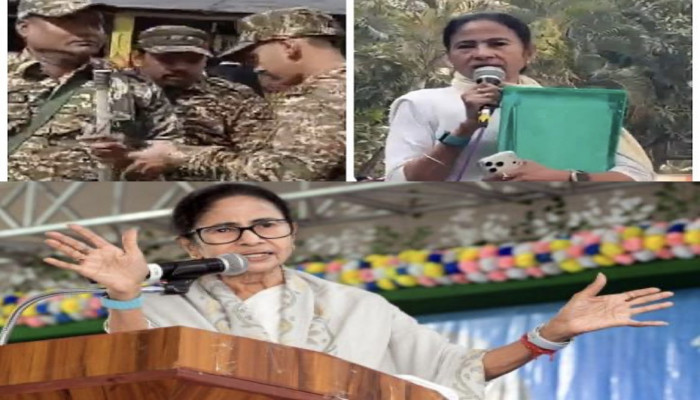
The Enforcement Directorate (ED) on Thursday carried out raids at several locations in Kolkata and Bidhannagar in connection with a money laundering investigation. Among the places searched were the office of political consultancy firm I-PAC, the residence of its head, Pratik Jain, and the office of a trader located in the Posta area of Burrabazar.
According to officials, the ED searches included I-PAC’s office situated on the 11th floor of a building in Salt Lake, Pratik Jain’s home on Loudon Street, and the trader’s office in central Kolkata’s Posta area. The raids were conducted as part of an ongoing probe under the Prevention of Money Laundering Act (PMLA).
West Bengal Chief Minister Mamata Banerjee arrived at the residence of Pratik Jain while the ED operation was underway. Speaking to the media after coming out of the house, Banerjee strongly criticised the central agency and alleged that it was attempting to gather sensitive information related to her party.
“This is most unfortunate that ED raided the house and office of our IT wing and its head. They are trying to collect all the information. I rang up Pratik, he is in charge of my party,” Mamata Banerjee said while holding a file in her hand.
She further claimed that the agency was trying to obtain internal party details and planning documents. “I have collected the party file. ED is trying to get details of all our party activities and plans. They are trying to get the candidate list and our internal information. Is it the duty of ED and Amit Shah? See, I got this, the file and hard drive,” she said, showing a green folder to reporters.
The Chief Minister also questioned the role of central agencies and compared the situation to a hypothetical action against the BJP. “‘What if I raid the BJP party office’: Mamata fumes. ‘What if I raid the BJP party office? What will be the fallout?’” she asked.
Before Mamata Banerjee reached Pratik Jain’s residence, Kolkata Police Commissioner Manoj Verma had already visited the location. After that, the Chief Minister proceeded to the I-PAC office in Salt Lake, where a large number of Trinamool Congress workers had gathered outside the building.
During Mamata Banerjee’s visit to the I-PAC office, additional central forces were deployed in the area. At the same time, personnel from the Bidhannagar Police Commissionerate were also posted at the spot to maintain law and order.
Meanwhile, Kolkata police officials were seen loading files into Mamata Banerjee’s car, which was parked in the basement of the building. West Bengal Director General of Police Rajeev Kumar also arrived at the I-PAC office during the developments.
Reacting to the incident, BJP MLA and Leader of Opposition in the West Bengal Assembly, Suvendu Adhikari, criticised Mamata Banerjee and accused her of interfering with the ED investigation. He demanded legal action against the Chief Minister.
“I-PAC is a corporate organisation. ED can raid its offices. What the chief minister and Kolkata police commissioner have done is unconstitutional. They tried to interfere in an investigation by a central agency. ED should take legal steps against the chief minister. I-PAC is not a party office. Why should party documents be there?” Adhikari said.
The developments also brought back memories of a similar incident from February 3, 2019. On that day, Central Bureau of Investigation (CBI) teams visited the residence of then Kolkata Police Commissioner Rajeev Kumar to question him in connection with the Saradha Ponzi scheme case. The CBI had alleged that Kumar had “destroyed evidence and connived with accused persons” during his tenure as the head of the State Task Force.
Following the 2019 CBI action, Mamata Banerjee had staged a dharna at Esplanade in Kolkata in protest against the raid on Rajeev Kumar.
The ED raids on I-PAC-linked locations and the political reactions that followed have once again highlighted tensions between the state government and central agencies.



 Loading...please wait
Comments