



ECI trains 200 judges to review 45 lakh election cases in West Bengal
- In Reports
- 06:01 PM, Feb 23, 2026
- Myind Staff
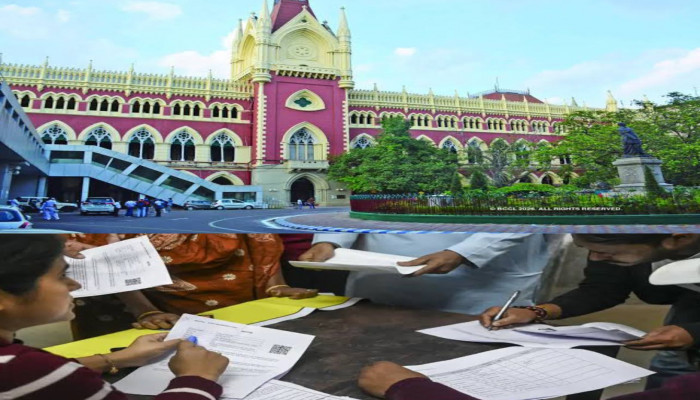
The Election Commission of India (ECI) has started virtual training for over 200 judicial officers to prepare them to review and make decisions on around 45 lakh election-related cases in West Bengal. These cases come under categories called “logical discrepancy” and “unmapped” terms used in the voter roll revision process. This important step follows a directive by the Supreme Court of India to ensure judicial oversight in handling these cases.
Most of these judges are Additional District Judges (ADJs) and District Judges (DJs), and they have been selected after the Calcutta High Court sent their names to the ECI late on Sunday night. These officers will start reviewing these cases, and their areas of responsibility (assembly constituencies) have already been assigned.
The voter roll revision work in West Bengal has identified a huge number of cases where voters’ information could not be clearly matched with the old voter list, or where details seemed inconsistent — described officially as “logical discrepancies and unmapped cases”. The total number of such cases so far stands at about 45 lakh, according to data available from the office of the West Bengal Chief Electoral Officer.
To handle this enormous task, the Supreme Court ordered the appointment of experienced judges to examine and decide on each case fairly and transparently. These judicial officers are being trained to use a special new portal created by the ECI to manage and record their decisions.
The virtual training began on a Monday afternoon, where judicial officers joined online sessions organised by the ECI. In addition to learning how to use the portal, they were briefed on the process for reviewing and disposing of cases.
A senior ECI official explained that the portal for these judges is different from the software used by micro-observers. The portal is specially designed for the judges appointed under the Supreme Court’s instruction. To help judges start work without delay, the ECI prepared login credentials and user IDs for them the night before the training session.
During training, the judges will be guided on how to access the portal, look at the information in each case, and mark their decisions. The official said details on how the portal functions and how to log in will be taught in the sessions.
Before training began, a key meeting was held virtually on Sunday. This meeting was chaired by Chief Justice Sujay Paul of the Calcutta High Court. Officials present included:
- Nandini Chakraborty, Chief Secretary
- Peeyush Pandey, Director General of Police
- Supratim Sarkar, Kolkata Police Commissioner
- Senior officials from the Election Commission
- 23 district judges
- Registrar General of the Calcutta High Court
The purpose of this meeting was to finalise arrangements and ensure the smooth implementation of the Supreme Court’s order. After the names of judicial officers were finalised, the Calcutta High Court sent the list to the ECI.
In the meeting and planning, the West Bengal Chief Electoral Officer, Manoj Kumar Agarwal, said the state has requested one Additional District Judge or District Judge for every assembly constituency in West Bengal, which has 294 constituencies in total. These judges will get help from “micro-observers” in their work. Every judge will be assisted by micro-observers, with about half coming from the ECI and half appointed by the state.
Agarwal said, “We have sought one ADJ/DJ for every constituency (294) for the fast disposal of cases.”
However, officials also noted that the final list of all logical discrepancies and unmapped cases is still being finalised and has not yet been fully completed.
Once training is complete, these judicial officers are expected to begin reviewing and ruling on cases immediately, using the ECI portal. The aim is to ensure that every voter’s case is looked at fairly and that genuine voters are not wrongly removed or affected during the voter roll revision process.
This move is also part of a larger attempt to make the Special Intensive Revision (SIR) process in West Bengal more transparent, lawful, and accurate as elections approach.



 Loading...please wait
Comments