



EC tightens grip ahead of polls with observer deployment and police reshuffle
- In Reports
- 06:05 PM, Mar 17, 2026
- Myind Staff
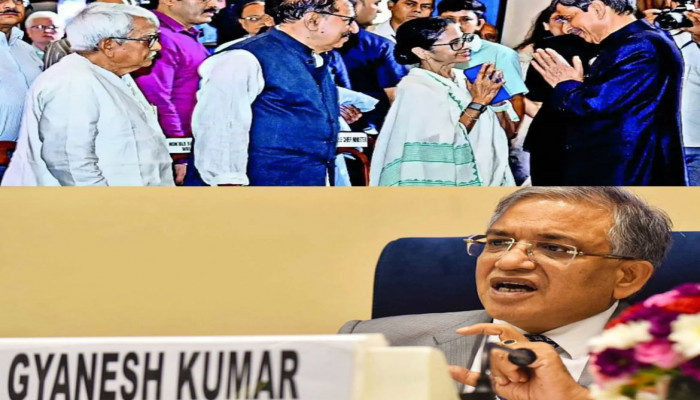
As preparations for upcoming Assembly elections and bypolls gather pace, the Election Commission of India (ECI) has taken several major steps to ensure that the electoral process remains free, fair, and transparent. Among these measures are the deployment of a large number of observers across states and the transfer of senior police officials in poll-bound regions like West Bengal. These actions reflect the Commission’s effort to maintain neutrality and strengthen administrative oversight during elections.
The ECI has decided to deploy more than 1,100 observers for the upcoming Assembly elections and by-elections scheduled for April. These observers will include general observers, police observers, and expenditure observers. Their primary role will be to closely monitor the election process, ensure that the Model Code of Conduct is followed, and keep a check on law and order and election spending. The observers act as the eyes and ears of the Commission on the ground, helping to address complaints, oversee polling arrangements, and prevent irregularities.
Officials from the Commission have stated that this large-scale deployment is aimed at increasing transparency and accountability during elections. They explained that observers would be stationed in different constituencies to monitor the conduct of officials and political parties. According to them, the presence of observers ensures that any violations are reported quickly and corrective steps are taken without delay. They also highlighted that expenditure observers would pay special attention to campaign spending to prevent the misuse of money power during elections.
In addition to deploying observers, the Commission has taken strict administrative action in West Bengal by ordering the transfer of 19 senior police officers. These include several high-ranking officials such as Commissioners of Police and Superintendents of Police. This move comes at a crucial time as the state prepares for Assembly elections, and is part of the Commission’s broader strategy to ensure that the law enforcement machinery remains impartial.
The reshuffle of police officials is not an isolated step but part of a series of actions taken by the ECI in recent days. Reports indicate that multiple changes have been made in the administrative and policing setup in West Bengal to prevent any bias or undue influence during the elections. The Commission believes that transferring officials who have been in the same position for a long time or are perceived to have local influence can help maintain neutrality.
According to officials, these transfers are necessary to build public confidence in the electoral process. They stated that ensuring impartiality among law enforcement agencies is crucial for peaceful polling. The Commission also pointed out that such steps are part of its standard procedure in states heading for elections, especially those that are considered politically sensitive.
The broader objective behind both the deployment of observers and the transfer of police officers is to create an environment where voters can exercise their rights freely and without fear. The ECI has reiterated that it is committed to conducting elections in a fair and transparent manner and will not hesitate to take strict action wherever required.
With elections approaching, the Commission is also increasing surveillance and monitoring mechanisms. The combined presence of observers and newly appointed officials is expected to strengthen election management and reduce the chances of malpractice. These efforts underline the Commission’s proactive approach in ensuring that democratic processes are upheld.
In conclusion, the Election Commission’s recent actions demonstrate its focus on maintaining integrity in the electoral system. By deploying a large number of observers and reshuffling key police personnel, the Commission aims to ensure that elections are conducted smoothly, fairly, and without any undue influence.



 Loading...please wait
Comments