




EAM Jaishankar slams selective application of global rules on terrorism, economic development
- In Reports
- 05:50 PM, Jun 25, 2026
- Myind Staff
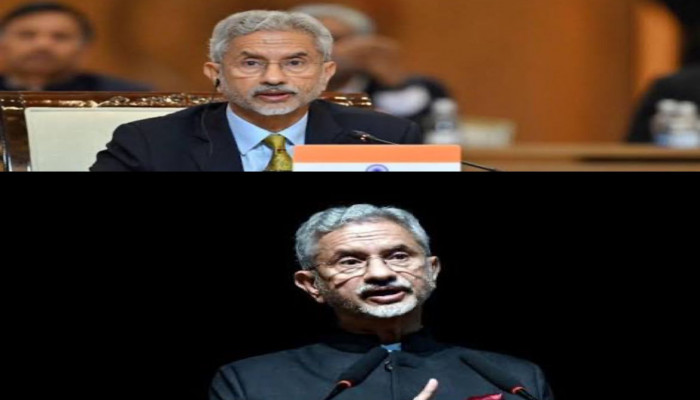
External Affairs Minister S. Jaishankar strongly criticised what he described as the selective application of global rules on terrorism, climate change and economic development. Speaking at the Jeju Forum for Peace and Prosperity in South Korea on Thursday, he said many developing countries are facing barriers that prevent them from achieving industrial growth and economic progress.
Jaishankar argued that the international community often follows different standards when dealing with major global issues. Referring to terrorism and climate change, he said, "On countering terrorism, it has given rise to double standards. As for climate change, there are empty promises with some even in denial."
He then shifted his focus to the economic challenges faced by developing countries. According to him, several nations are being denied the opportunity to industrialise through unfair economic practices. He said, "The right to industrialise, indeed the capacity to do so, is being denied to many developing states by the manipulation of competitiveness and restricting market access." He further added, "This is but another facet of exercising dominance and retaining control."
Jaishankar linked these economic barriers with the broader pattern of selective global governance. He argued that the same approach seen in issues such as terrorism and climate policy is also visible in international trade and economic relations. He said some established powers are struggling to accept increasing competition from emerging economies. "Some entrenched powers also find it hard to come to terms with a loss of competitiveness," he said. "International economy then becomes a zero-sum game."
On multipolarity, which countries are pushing for as an alternative order, in a rare note of caution, he said, "At the end of the day, we will see whether multipolarity really delivers."
India has consistently maintained that global counterterrorism measures often depend on geopolitical interests rather than universal principles. New Delhi has also raised concerns about climate transition policies that place heavy obligations on developing economies despite their comparatively lower historical contribution to global emissions.
The timing and location of Jaishankar's remarks added significance to his message. He delivered the speech in South Korea after holding bilateral meetings in Seoul the previous day. His visit comes shortly after South Korean President Lee Jae Myung’s India tour in April 2026. It marked the first visit by a South Korean president to India in eight years.
India and South Korea have agreed to increase their bilateral trade to 50 billion US dollars by 2030. However, trade data demonstrates serious structural imbalances. During his address, Jaishankar highlighted areas where both countries can deepen cooperation. "We have complementarities in fields like ship-building, digital, health, infrastructure or defence just waiting to be exploited," he said while referring to his discussions with South Korean leaders.
According to an analysis by Rubix Data Sciences based on Directorate General of Foreign Trade data, total goods trade between India and South Korea remained between $ 25 billion and $ 28 billion US dollars from FY22 to FY25. The figure stood at $ 26.9 billion in FY25.
The data also indicates that trade growth has remained slow. According to CNBC, bilateral trade has grown at a compound annual rate of only 3 per cent since 2018. Reaching the target set for 2030 would require nearly doubling the current trade volume within the next few years.
India's position in the trade relationship has weakened during this period. Goods exports from India to South Korea fell from USD 8.1 billion in FY22 to USD 5.8 billion in FY25. This represents an annual compound decline of 11 per cent. At the same time, India's trade deficit with South Korea widened significantly. It increased by more than 1.6 times, rising from USD 9.4 billion to USD 15.3 billion over the same period, according to Rubix Data Sciences.
Product-level trade figures highlight the growing imbalance. South Korea is exporting a larger share of high-value products to India- electrical integrated circuits increased from 7 per cent to 15 per cent of India's import basket from South Korea between FY22 and FY26. The trend points to India's growing dependence on South Korean semiconductor-related components.
In contrast, India's exports to South Korea are mainly commodity-based products. Petroleum products are still the major commodity in India's largest export category, although their share declined from 27 per cent to 13 per cent during the same period. Turbojet exports emerged as a notable exception, rising to 12 per cent of India's export basket.
South Korea also remains an important investor in India. According to the India Brand Equity Foundation, South Korea ranked as the 13th-largest source of foreign direct investment into India. The country invested a cumulative USD 6.69 billion between April 2000 and March 2025. This figure remains lower despite the extensive business presence of major South Korean companies operating in India, including Samsung, LG Electronics, Hyundai and POSCO.
Jaishankar concluded his address by outlining five key priorities for the future global order. He called for diversification of supply chains to reduce economic coercion. He advocated stronger cooperation among influential nations. He stressed the need to protect international law and multilateral institutions. He also emphasised expanding capabilities across the Global South and reforming global governance structures.
Summing up his message, Jaishankar said, "We cannot rely on a few to uphold rules and norms." He added, "This, amongst others, must be expressed in reformed multilateralism."



 Loading...please wait
Comments