



EAM Jaishankar hails recent talks, says Iran got nothing in 'exchange' for Indian-flagged ships passage
- In Reports
- 01:25 PM, Mar 16, 2026
- Myind Staff
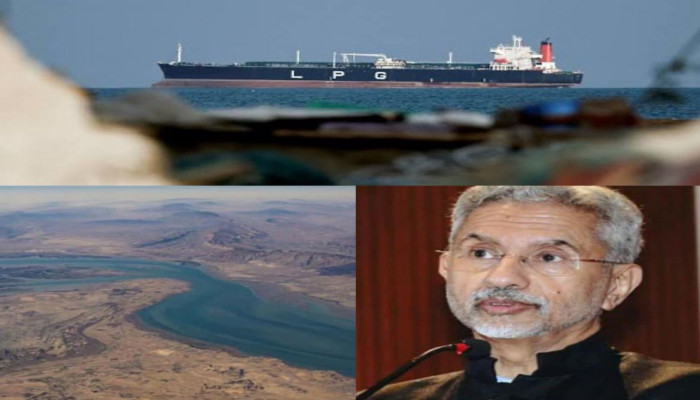
External Affairs Minister Subrahmanyam Jaishankar recently spoke about India’s diplomatic efforts with Iran, saying that direct communication between the two countries helped Indian-flagged ships move through the strategically important Strait of Hormuz. His comments came shortly after two Indian-flagged vessels were allowed to pass through the narrow waterway, which has become tense due to the ongoing conflict in the Middle East.
In an interview with the Financial Times, EAM Jaishankar said that India’s conversations with Iranian authorities have been effective and that these discussions will continue as long as they produce positive results.
EAM Jaishankar explained that India’s engagement with Tehran has already shown practical outcomes. According to him, maintaining direct dialogue is the best way to deal with the challenges currently affecting shipping in the region. He suggested that when diplomatic communication starts giving results, it is natural to continue that approach. He also pointed out that several Indian-flagged ships still need to travel through the strait, which means continued coordination with Iran will remain important in the coming days.
The minister also clarified that there was no broader agreement between India and Iran allowing Indian ships to move freely through the route. Instead, he said that every ship was handled individually and allowed passage separately. This means there was no general arrangement covering all vessels at once.
EAM Jaishankar also dismissed the idea that India had offered something in return for the safe passage of the ships. He explained that the decision was not based on any exchange or deal. Instead, it was rooted in the long-standing relationship between the two countries and their history of communication and cooperation. According to him, India’s interaction with Iran in this matter was guided by mutual understanding rather than negotiation over benefits. He also described the ongoing conflict as unfortunate and said India views the situation with concern.
His remarks came at a time when Donald Trump, the President of the United States, has been considering sending American warships to protect shipping in the Strait of Hormuz. The waterway is extremely important for global trade because a large share of the world’s oil supply moves through it every day. Ensuring that ships can travel safely through this route has therefore become a major international concern.
The two Indian-flagged LPG carriers were allowed to sail through the strait last week. This development took place only hours after PM Modi held a telephone conversation with Masoud Pezeshkian, the President of Iran. It was their first conversation since tensions escalated into open conflict between Iran and the United States. Soon after that cal, Jaishankar also spoke with Iran’s Foreign Minister Seyed Abbas Araghchi. These diplomatic exchanges were seen as an important step to ease the situation for Indian vessels waiting to pass through the area.
The Strait of Hormuz has become a major focus of global attention as it lies between the Persian Gulf and the Gulf of Oman and acts as a key route for energy shipments. However, the ongoing conflict in the Middle East has disrupted movement in this narrow waterway. Iran has reportedly targeted ships linked to the United States and Israel, which has created difficulties for vessels from other countries as well. As a result, several ships have faced delays and uncertainty while trying to cross the area.
According to earlier reports by Press Trust of India, about twenty-two Indian-flagged vessels were stranded on the western side of the Persian Gulf region due to the tensions. Despite the risks, four Indian vessels have managed to cross the conflict zone safely so far. Authorities continue to monitor the situation closely as the route remains sensitive and conditions can change quickly.
Meanwhile, the United States has been urging its allies to help ensure the safety of shipping in the strait. President Trump has suggested that countries benefiting from the route should take responsibility for maintaining security there. He indicated that nations that depend on this passage for trade should contribute to efforts aimed at preventing disruptions or attacks on vessels travelling through the region.
During the same interview, Jaishankar was also asked whether European countries could follow a similar approach to India by engaging directly with Iran. In response, he said that every country’s relationship with Iran is different and shaped by its own diplomatic history. Due to these differences, he noted that it would be difficult for others to simply replicate India’s approach. However, he added that India would be willing to explain its strategy and share its experience with European capitals if they were interested in learning more about how the situation was handled.
Iran has also made its position clear regarding the movement of ships in the Strait of Hormuz. Speaking in an interview, Foreign Minister Abbas Araghchi said that the waterway remains open for most international vessels. However, he stated that ships linked to countries considered hostile to Iran—particularly the United States and Israel—would not be allowed to pass freely. According to him, the restrictions are directed only at those nations involved in attacks against Iran or its allies, while other countries remain free to use the route.
The Strait of Hormuz is one of the world’s most critical energy routes, carrying a large portion of global oil exports. Because of its importance, any disruption in this area immediately affects international markets. The ongoing conflict between Iran and the United States has already pushed oil prices upward. Reports suggest that crude oil prices were hovering close to $ 100 per barrel as the conflict entered its third week. The rise in prices reflects growing concern among global markets about the stability of the region and the future of energy supplies passing through this vital maritime corridor.



 Loading...please wait
Comments