




EAM Jaishankar defends India’s Russia oil policy, questions West’s double standards
- In Reports
- 12:31 PM, Jun 12, 2026
- Myind Staff
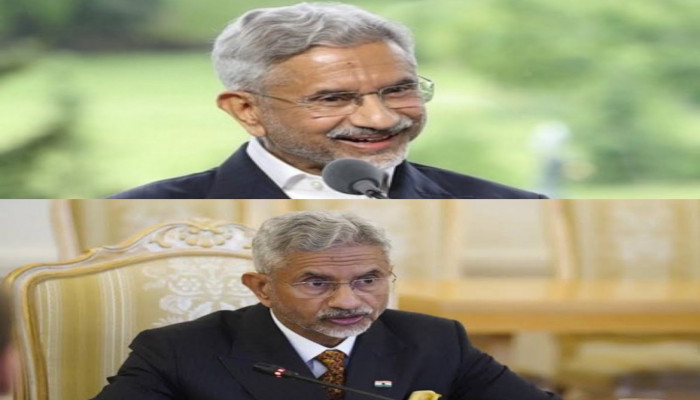
External Affairs Minister S Jaishankar strongly defended India's decision to purchase Russian oil during the Russia-Ukraine conflict and questioned what he described as inconsistencies in the approach taken by Western countries. Speaking at the Kultaranta Talks in Finland during a discussion on 'Emerging Powers and the New Geopolitical Competition', Jaishankar responded to criticism that India had been too supportive of Russia and too willing to continue buying Russian crude.
Addressing the issue, Jaishankar said India's decisions were guided by practical concerns such as energy security and affordability. He explained that India purchased oil based on availability and cost rather than political considerations. According to him, market conditions at the time played a major role in shaping India's energy choices.
"I'll make two observations. I buy oil based on cost and availability. So, at that point of time, much of the oil available in the market was Russian because Europeans were essentially buying oil from the Middle East, which was our traditional supplier. So circumstances pushed us in a certain direction," Jaishankar stated.
The minister argued that India's energy needs could not be ignored, especially during a period of uncertainty in global markets. He maintained that New Delhi acted in the country's best interests while ensuring a stable supply of energy for its citizens.
Jaishankar also used the opportunity to raise concerns about Europe's position on security matters involving India. He pointed to what he called a contradiction in the criticism directed at India by some European nations.
"No European country has been attacked with Indian weapons. I wish I could say that for Europe weapons vis-a-vis India," he remarked, subtly pointing to India's peaceful global footprint.
When asked to explain his statement further, Jaishankar referred to India's long-standing concerns over arms sales by Western countries in the region. He said India had often faced security challenges involving weapons supplied by European nations.
"Europe sells weapons, which are used to attack India. Not just now but for many years. We Indians have never done anything to endanger Europe. I think that's a reasonable point," Jaishankar said.
The minister also recalled developments from 2022, when Western sanctions on Russia disrupted global energy markets. According to him, the United States had recognised India's role in helping maintain stability in oil supplies during that period.
Jaishankar said Washington had encouraged India to continue purchasing Russian crude oil because it helped prevent major disruptions in the market and reduced the risk of rising inflation around the world. He suggested that this reality is often overlooked in discussions about India's energy policy.
“People should also remember that, at that time, the United States specifically asked India to buy Russian oil to help stabilise global markets. After first imposing tariffs on us last year for buying Russian oil, the US then lifted its sanctions on Russian oil. Let’s not pretend there is some great principle involved here,” Jaishankar said.
The minister went on to question the consistency of policies adopted by major powers. He argued that changing positions on Russian oil demonstrated that strategic interests often play a larger role than moral arguments.
"If the policy is on one day and off the next—do it when it suits us and don’t do it when it doesn’t—then come on, we’re all adults in the room. We know how the game is played. So, I don’t think this is really about principles or moral sanctimony,” he added.
Jaishankar's remarks reflected India's continued position that national interests, energy security and economic stability remain key priorities in its foreign policy decisions. He also challenged what he described as the selective application of moral standards in international affairs.
The minister stressed that issues such as energy security are complex and cannot be viewed through a narrow or one-sided lens. His comments highlighted India's view that countries should be allowed to make decisions based on their own requirements, particularly during periods of global uncertainty and economic pressure.



 Loading...please wait
Comments