



EAM Jaishankar co-chairs India-UAE Joint Commission and Strategic Dialogue in Abu Dhabi, reviews ties
- In Reports
- 06:00 PM, Dec 16, 2025
- Myind Staff
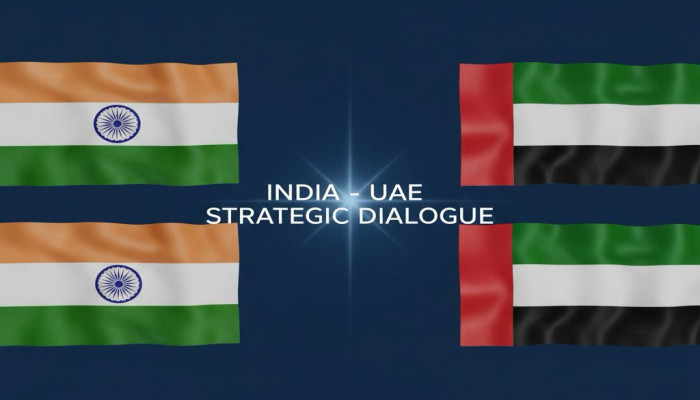
External Affairs Minister S. Jaishankar on Tuesday co-chaired the 16th India-UAE Joint Commission and the 5th Strategic Dialogue with UAE Deputy Prime Minister and Minister of Foreign Affairs Sheikh Abdullah bin Zayed Al Nahyan in Abu Dhabi. The high-level meetings provided an opportunity for both countries to comprehensively review their Comprehensive Strategic Partnership and identify important areas for deeper cooperation in the coming years.
The discussions reflected the growing strength and depth of the India-UAE relationship, which has expanded rapidly across political, economic, strategic, and cultural sectors. Both sides reviewed the progress made so far and agreed on priorities to further strengthen ties in line with their shared vision for peace, prosperity, and stability.
In a post on X, External Affairs Minister Jaishankar said that the discussions covered all major aspects of the expanding bilateral relationship. He noted that the talks focused on key areas such as civil nuclear cooperation, the India-Middle East-Europe Economic Corridor (IMEC), defence and security cooperation, and collaboration in critical minerals.
“Delighted to co-chair the India-UAE 16th Joint Commission and 5th Strategic Dialogue with UAE DPM & FM HH Sheikh Abdullah bin Zayed Al Nahyan in Abu Dhabi today. We reviewed all aspects of our Comprehensive Strategic Partnership and identified key priorities going forward,” Jaishankar said.
During the dialogue, Jaishankar highlighted the strong growth in bilateral trade, investment flows, fintech, and digital connectivity following the implementation of the Comprehensive Economic Partnership Agreement (CEPA) in 2022 and the Bilateral Investment Treaty (BIT) in 2024. He said these landmark agreements have significantly boosted economic engagement and created new opportunities for businesses in both countries.
The External Affairs Minister also underlined the vast potential for cooperation in connectivity and logistics, both at the bilateral level and through regional initiatives such as IMEC. He noted that improved connectivity would strengthen supply chains, enhance trade routes, and support economic development for India, the UAE, and the wider region.
Energy cooperation formed another important part of the discussions. The two sides explored ways to expand collaboration in the energy sector, with a special focus on civil nuclear cooperation. Jaishankar said that energy partnerships remain a key pillar of India-UAE relations and are essential for ensuring long-term energy security.
In addition to energy, both countries discussed ways to further consolidate defence and security cooperation, reflecting the growing strategic trust between New Delhi and Abu Dhabi. The dialogue covered ongoing collaboration in defence, security, and strategic affairs, underlining the importance both sides place on regional and global security.
The talks also extended to education, cultural exchanges, and people-to-people linkages, which both sides described as crucial for strengthening long-term ties. Jaishankar highlighted the need to deepen educational cooperation and expand cultural engagement to bring the people of the two countries closer.
New and emerging areas of cooperation were also discussed during the meetings. These included critical minerals, space cooperation, and polar research, highlighting the forward-looking nature of the India-UAE partnership and its focus on future-oriented sectors.
The discussions further covered the importance of closer coordination in multilateral forums and trilateral mechanisms, reflecting the shared strategic outlook of India and the UAE on regional and global issues. Both sides emphasised that cooperation in international platforms contributes to addressing common challenges and promoting global stability. “In today’s world, deeper India-UAE cooperation advances shared interests and contributes to regional and global stability,” Jaishankar said.
In a separate post on X, the Office of the UAE Minister of Foreign Affairs highlighted the significance of the Joint Committee and Strategic Dialogue mechanisms in strengthening bilateral ties. The post noted that these platforms play a key role in converting the leadership’s vision into concrete and practical outcomes.
“Abdullah bin Zayed and Dr. Subrahmanyam Jaishankar co-chair the 16th session of the Joint Committee and the 5th round of the Strategic Dialogue between UAE & India, during which His Highness affirmed that these mechanisms effectively translate the visions of the two countries’ leaderships into practical outcomes amid the growing UAE-India relations,” the post read.
India and the UAE elevated their bilateral relationship in 2017, during the state visit of Sheikh Mohammed bin Zayed Al Nahyan, President of the UAE, to India. During that visit, both countries signed the Comprehensive Strategic Partnership Agreement, taking their multifaceted ties to a higher and qualitatively new level.
The partnership is based on mutual understanding, trust, and confidence, with the primary objective of ensuring peace and prosperity for both nations. Since then, India-UAE relations have grown steadily, with cooperation expanding across trade, investment, energy, defence, technology, education, and cultural exchanges. The latest Joint Commission and Strategic Dialogue reaffirmed the commitment of both countries to further deepen their partnership and work closely together to address shared priorities and future challenges.



 Loading...please wait
Comments