




E20 fuel use shows no signs of engine damage: IIT Kanpur study
- In Reports
- 05:52 PM, Jul 14, 2026
- Myind Staff
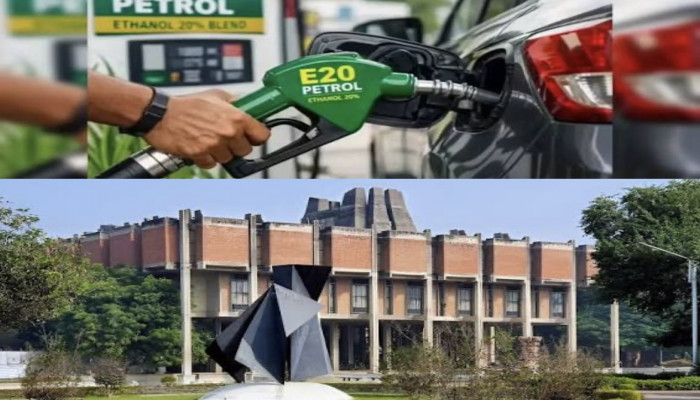
Fresh research by the Indian Institute of Technology (IIT) Kanpur has supported the use of 20 per cent ethanol-blended petrol (E20). The institute said its studies found no major drop in fuel efficiency and no signs of engine damage in either new or older vehicles. The findings come at a time when concerns have grown over the nationwide rollout of E20 fuel.
The latest claims also follow the Ministry of Petroleum and Natural Gas's recent clarification on the impact of E20 fuel. Last week, the ministry said that E20 may reduce mileage by up to 5 per cent in some vehicles. However, it added that the slight reduction is balanced by several advantages, including lower lifecycle carbon emissions.
Dhruv Raj Karana, Project Scientist at the Engine Research Laboratory in IIT Kanpur's Department of Mechanical Engineering, said the institute's research found that the reduction in fuel efficiency is less than 5 per cent when vehicles use E20 fuel. He explained that the reported drop in mileage may not always result from the fuel itself.
Karana told PTI that the up to 5 per cent decrease could be due to factors other than fuel and that a similar result can be obtained "even if back to back tests are repeated with pure petrol". He said this shows that several conditions can affect mileage during testing, even when vehicles run on regular petrol.
He also said the institute carried out "extensive testing" on E20 fuel. According to him, the tests found no engine damage, corrosion or other technical issues linked to the use of E20. The research covered both existing and older vehicles to examine the fuel's impact under different conditions.
Karana rejected claims on social media that E20 damages vehicle engines. He described these reports as "scientifically unfounded". He advised vehicle owners to trust their manufacturer's manual and the Ministry of Petroleum and Natural Gas's guidelines instead of relying on unverified posts shared online.
He also said IIT Kanpur's Engine Research Laboratory has conducted detailed research on ethanol-blended fuels for several years. Professor Avinash Kumar Agarwal heads the laboratory, which has studied different ethanol blends to understand their performance and suitability for Indian vehicles.
Karana said the research team has also successfully tested E85 fuel, which contains 85 per cent ethanol. However, he clarified that such a high ethanol blend requires specially designed engines and compatible fuel systems. Regular petrol vehicles cannot use E85 without the required modifications.
The IIT Kanpur study also found no significant fall in fuel efficiency with E20 fuel. Karana said several other factors influence mileage more than the fuel itself. These include driving habits, road conditions and regular vehicle maintenance. He said these factors often have a greater effect on fuel economy than the change from pure petrol to E20.
The Ministry of Petroleum and Natural Gas recently released a detailed question-and-answer document to address criticism of the Ethanol Blended Petrol Programme. The ministry described E20 as a "cleaner, higher-quality and more efficient fuel" than E10 or pure petrol. It said the government introduced the fuel only after "years of scientific testing, consultations with automobile manufacturers and the expansion of domestic ethanol production".
The ministry's statement aims to reassure consumers as E20 becomes available across the country. It maintained that the fuel had undergone detailed scientific evaluation before its rollout. The government also highlighted the environmental benefits of higher ethanol blending, including lower carbon emissions over the fuel's lifecycle.
The IIT Kanpur findings support the ministry's position on E20 fuel. The researchers said their studies found no evidence that the fuel causes engine damage or major mileage loss. They urged motorists to rely on scientific research, official guidelines and their vehicle manufacturer's recommendations instead of unverified claims circulating on social media.



 Loading...please wait
Comments