




DRDO successfully tests SFDR technology, boosting India’s next-gen air-to-air missile capability
- In Reports
- 04:21 PM, Feb 04, 2026
- Myind Staff
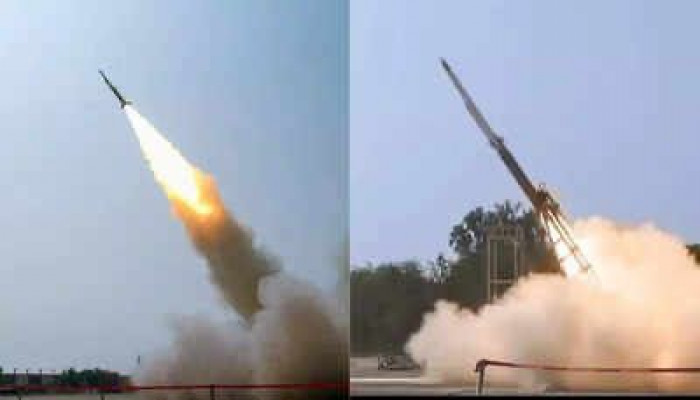
India has made a major breakthrough in advanced missile technology as the Defence Research and Development Organisation (DRDO) successfully tested Solid Fuel Ducted Ramjet (SFDR) technology. With this achievement, India has now entered an elite group of nations that possess ramjet-powered missile technology, which is considered a critical capability for developing next-generation, long-range air-to-air missiles.
The test was conducted at the Integrated Test Range (ITR) in Chandipur, located off the coast of Odisha. The demonstration took place at around 10.45 am on February 3, 2026. According to DRDO, the test marks an important step forward for India’s missile development programmes, especially for air combat systems.
A ramjet is a type of air-breathing jet engine which does not use complex rotating machinery like traditional jet engines. Instead, it uses the missile’s high forward speed to compress the incoming air. This compressed air then supports combustion and produces thrust. In the case of a Solid Fuel Ducted Ramjet, solid fuel is burned in a controlled manner while atmospheric air flows through the engine, generating sustained thrust at very high speeds.
Unlike conventional rocket motors, which burn fuel rapidly and then continue flying without thrust, ramjet-powered missiles can maintain high speeds for a longer duration. This becomes particularly important in the final stage of the missile’s flight. Because of this ability, such missiles remain faster, more manoeuvrable, and much more difficult for enemy aircraft to escape.
During the SFDR test, the missile system was initially accelerated to the required speed using a ground-based booster. Once the missile reached the required Mach number, the ramjet system took over and began operating.
DRDO said that “all key subsystems, including the nozzle-less booster, the solid fuel ducted ramjet motor, and the fuel flow controller, performed exactly as planned.” The missile’s flight performance was closely monitored using several tracking instruments deployed along the coast of the Bay of Bengal. The collected flight data confirmed the success of the test and validated the missile’s propulsion and control systems.
Senior scientists from multiple DRDO laboratories closely observed the test. These included experts from the Defence Research and Development Laboratory, High Energy Materials Research Laboratory, Research Centre Imarat, and the Integrated Test Range.
The successful testing of SFDR technology is considered highly important for India’s defence preparedness. Ramjet-powered air-to-air missiles are capable of striking targets at longer ranges while still retaining high energy during the final moments before impact. This gives fighter aircraft a strong advantage in beyond-visual-range combat situations. It allows pilots to engage enemy aircraft earlier and from safer distances.
Only a limited number of countries globally have mastered this technology due to the complex engineering challenges involved, especially the difficulty of ensuring stable combustion at supersonic speeds. For India, this success is also significant because it reduces dependence on foreign suppliers and strengthens indigenous defence capabilities.
The technology is expected to become a key part of future Indian missile programmes. It is likely to enhance the overall combat effectiveness of the Indian Air Force and strengthen India’s standing as an emerging leader in advanced defence research and development.



 Loading...please wait
Comments