




DRDO successfully conducts flight test of Long-Range Long Attack Cruise Missile (LRLACM)
- In Reports
- 06:52 PM, Jun 16, 2026
- Myind Staff
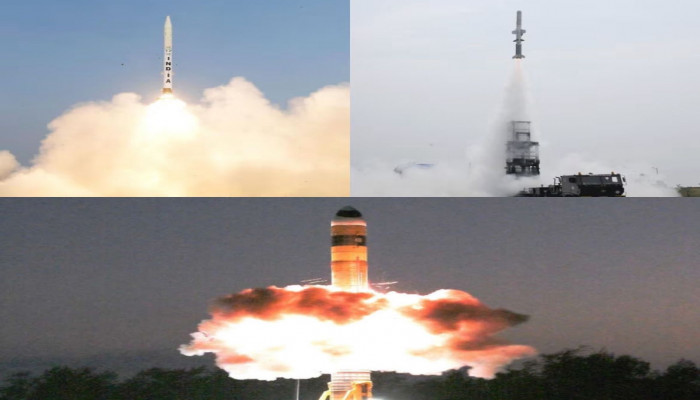
India achieved another important milestone in its defence programme as the Defence Research and Development Organisation (DRDO) successfully conducted a flight test of the Long Range Land Attack Cruise Missile (LRLACM) on Monday. The test was carried out from Dr APJ Abdul Kalam Island, located off the coast of Chandipur in Odisha.
According to the Ministry of Defence, the missile successfully completed all planned objectives during the trial. It accurately struck its target at a distance of 1,000 kilometres. Officials said that all issues identified during previous tests had been resolved before this successful launch.
The Ministry of Defence highlighted that the LRLACM has been developed entirely within the country. It stated, “The LRLACM is an indigenously developed missile with all sub-systems developed by various DRDO laboratories and Indian Industry partners. Aeronautical Development Establishment (ADE), Bengaluru is the Nodal Laboratory”.
The successful test is particularly significant because it follows the long and challenging development journey of India’s earlier indigenous cruise missile project, Nirbhay. The Nirbhay missile faced several setbacks during its development phase, including failed flight tests in 2013, 2015, 2016 and 2020. The LRLACM has been designed as an improved version of that programme and includes several technical upgrades.
Officials said the new missile offers a longer operational range and enhanced capabilities compared to the Nirbhay missile. It has also been designed for launch from multiple platforms, making it more flexible for military operations.
Despite the successful test, the missile is not yet ready for induction into the armed forces. Officials stated that it will undergo two additional developmental trials. These will be followed by two user trials over the next two years. After completing these stages successfully, the missile is expected to be inducted into the Indian Army.
The development comes at a time when India continues to strengthen its defence preparedness amid evolving security challenges in the region. The successful testing of the LRLACM gains added significance nearly a year after Operation Sindoor and the conflict that followed with neighbouring Pakistan.
The missile has been developed to engage high-value targets at long distances with a high degree of accuracy. Its advanced navigation and guidance systems enable it to strike targets with pinpoint precision.
One of the missile’s key advantages is its ability to fly at low altitudes, making detection by enemy radar systems difficult. This capability increases its chances of successfully reaching and destroying intended targets. The missile is equipped with a 500-kilogram warhead, giving it the ability to inflict significant damage on strategic targets.
Defence experts have often compared the LRLACM to the United States’ Tomahawk cruise missile because of its long-range strike capability and operational flexibility. The missile can manoeuvre at different altitudes and speeds during flight, allowing it to adapt to changing mission requirements and avoid enemy defences.



 Loading...please wait
Comments