



‘Don't travel by train today’: Israel warns Iranians as war enters dangerous phase
- In Reports
- 07:57 PM, Apr 07, 2026
- Myind Staff
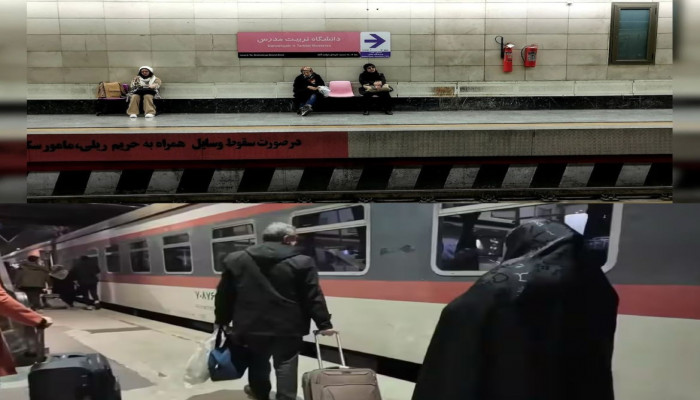
The ongoing conflict between Israel and Iran has entered a more dangerous phase, with new warnings and attacks raising fears of further escalation. In a recent development, the Israeli military issued a public advisory asking people in Iran to avoid travelling by train. This unusual warning has signalled that railway systems could become a potential target in the ongoing war, which has now continued for over five weeks.
The message was shared in Farsi through official Israeli military communication channels. It directly addressed Iranian citizens and warned them about the risks of using trains during this period. The statement read, "For your safety, we ask you to refrain from using trains or travelling by train throughout the country from now until 9:00 pm Iran time." It further added, "Your presence on trains and near railway tracks puts your life in danger." The wording of the message clearly indicates concern over civilian safety while also hinting at possible military action targeting transport infrastructure.
However, reaching the public in Iran has become difficult due to strict internet restrictions imposed by the authorities in Tehran. The government has blocked internet access across the country for several weeks. This has restricted information reach and made it harder for citizens to receive such warnings in real time. Despite this, Farsi-language satellite television networks based outside Iran continue to broadcast updates. These channels have played an important role in spreading such information to people inside the country.
The warning came at a time when military activity between the two sides remains intense. Early on Tuesday, Israel launched another wave of attacks targeting locations in Iran. In response, Iran fired missiles towards Israel and also targeted its Gulf Arab neighbours. This back-and-forth exchange of attacks has increased tensions across the wider region and raised concerns about the possibility of the conflict spreading further.
The situation has become more complicated due to the involvement of the United States. Iran recently rejected a 45-day ceasefire proposal put forward by the US. Instead, Iranian authorities have demanded a permanent end to the war. At the same time, US President Donald Trump has taken a strong stance and issued a deadline for Iran to agree to certain conditions.
Trump warned that failure to meet the deadline could result in severe military action. He expanded the scope of potential targets to include critical infrastructure such as power plants and bridges across Iran. He also linked the ultimatum to the reopening of shipping routes through the strategically important Strait of Hormuz. This route is crucial for global oil transport, as nearly one-fifth of the world’s oil passes through it during normal times.
In a controversial statement, Trump said he is "not at all" concerned about committing possible war crimes if Iran does not comply. He further warned, "The entire country can be taken out in one night," highlighting the seriousness of the threat and the growing intensity of the situation.
The current conflict began after joint military strikes by Israel and the United States on February 28. Following these attacks, Iran responded by blocking shipping traffic through the Strait of Hormuz. This move has had a major impact on global energy supplies and increased uncertainty in international markets.
The conflict has also started affecting neighbouring countries. On Tuesday, Iran launched seven ballistic missiles targeting Saudi Arabia. According to officials, these missiles were intercepted before reaching their intended targets. However, debris from the interceptions fell near energy facilities, raising safety concerns. Authorities have said that the extent of the damage is still being assessed.
A spokesperson for Saudi Arabia’s defence ministry, Turki al-Malki, confirmed the situation and stated that further evaluation is ongoing. The incident highlights how the conflict is no longer limited to Israel and Iran but is now impacting other countries in the region as well.
In response to the missile threat, Saudi Arabia temporarily closed the King Fahd Causeway. This bridge connects Saudi Arabia to Bahrain and serves as a vital link between the two nations. Stretching over 25 kilometres, it is the only road connection between Bahrain and the Arabian Peninsula. The closure was a precautionary measure to ensure public safety during the heightened threat.
Bahrain is also strategically important as it hosts the US Navy’s 5th Fleet. This adds another layer of complexity to the situation, as military assets and international interests are closely tied to the region. The presence of such forces increases the risk of further escalation if tensions continue to rise.
Overall, the latest warning by Israel and the continued exchange of attacks show that the conflict is far from over. With major powers involved and key infrastructure under threat, the situation remains highly unstable. Civilians across the region are facing increasing risks as the war expands beyond its initial boundaries.



 Loading...please wait
Comments