




Do Supreme Court and Constitution have Adequate Offerings for Hindus?
- In Current Affairs
- 09:52 PM, Jul 12, 2022
- Rudra Dubey
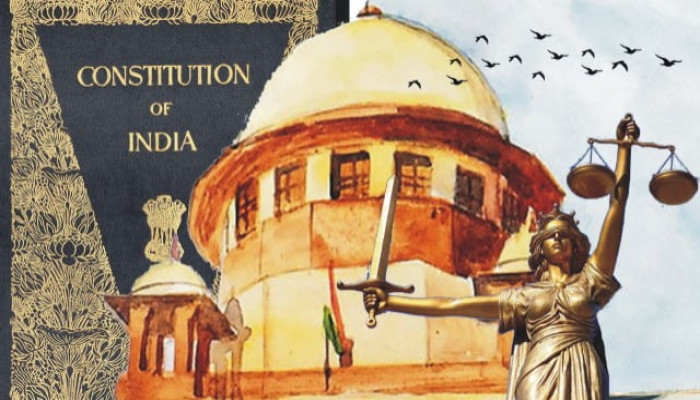
Ever since India got its independence, the citizens of India have been finding themselves in the conundrum of civilizational identity. In recent days in India due to the resurgence of Islamic radicalization, a barrage of attacks has intensified the civilizational identity crisis. Unlike many other countries, India has multi-millennia old civilizational history well-founded in social norms and practices. The civilization of India had been battered by Islamic invasion and British occupation subjecting Hindu society to inhuman level brutalities for about 1000 years.
A video clip of the gruesome beheading of a Hindu by Islamic on social media created a shockwave in India. To deal with such grave issues, though India has various laws in the constitution, it has been noted that the judiciary finds limited options to deal with the root cause of such barbaric criminality committed by perpetrators with a certain religious background. So, it is time to think beyond treating symptoms. It is pertinent to think about whether such a grim situation is due to prejudice or bias or limitation of jurisprudence that is based on the framework of the constitution.
To vest judicial authority in courts, the constitution of India established the Supreme Court (SC) and its decisions which have a deep, far, and wide impact on society at large. The judiciary is the most integral part of the constitution and has the special responsibility to render social, and economic justice and enforce equality, dignity and other social values enshrined in the Constitution of India. Hence, when expectations are not met in terms of their civilizational values, citizens of India would wish to pose questions.
Is Indian Jurisprudence Not Aligned with Critical Social Objectives and Leave Hindus at Disadvantage?
In a keynote address at the India-Singapore Mediation Summit, CJI NV Ramana mentioned that the “often-quoted statistic that pendency in Indian courts has reached 45 (4.5 crores) million cases". While pendency of cases is not a useful indicator of how well or poorly a judiciary system is doing, he says it is not the best way to judge the Indian Judiciary. According to some estimates, 70,572 cases are pending in the SC; 5.91 million cases in the High courts; 41.51 million cases pending in the district courts. India has just 20 judges per million population. While aggregate pending cases stand at 47 million, 76% of all prisoners are undertrials. When we shift our attention from data to quality, we find that situation not so rosy.
On July 1st, the two-judge bench of Justices Surya Kant and Pardiwala of SC came down heavily on Nupur Sharma, a BJP leader and lawyer, saying her “loose tongue” has “set the entire country on fire” and that she is “single-handedly responsible for what is happening in the country”. Both judges came down heavily (oral observation) against Nupur Sharma during the hearing of her plea. The SC judges’ observations came when the entire country was grappling with barbaric Udaipur beheading by Islamist radicals who have claimed through a video release that they were avenging an insult to Islam.
The oral observations of Judges which were available in the public domain sent a shock wave and there was a huge public uproar in the public against the insensitive observations which didn’t make it to the final order. The issue trended the social media.
Justice Pardiwala, who heard Nupur's plea, apparently said digital and social media needs to be mandatorily regulated in the country to preserve the rule of law under our Constitution. The SC which upheld freedom of speech provided by Article 19 (1) (a) of the constitution has challenged the same in this case.
For instance, when VHP spokesman Vinod Bansal, sought the judiciary’s support when it was noted that the “PK” movie made fun of Hinduism, the SC made an observation that any restriction on the release of Aamir Khan-starrer PK movie would “affect constitutional right of the filmmakers”, and consequently rejected a plea seeking a stay on the movie’s release. The Bench headed by Chief Justice R M Lodha also said religion should not be brought into “matters of art and entertainment”. The bench, which also comprised Justices Kurian Joseph and R F Nariman, saw nothing wrong in it. Not sure if any Indian Constitution expert got any substantiation as to how the sentiments of the billions of people was subordinated to the freedom of filmmaking and art and entertainment.
Did Constitution Provide Right Framework to Establish Supreme Court?
The Supreme Court is a constitutional force since 1950 when Indian Constitution was created. Article 141 enjoins "that the law declared by the SC shall be binding on all Courts in India”. The SC has made much progress since its inception and it is second to none in the world. However, it is fair to assume that the functioning of the SC has a limitation that is provided by the Indian Constitution. Undeniably, Indian Judges have lived up to the injunction of Brihaspati and India has noted that Judges decided cases without implied or overt personal gain or prejudice or bias. However, some subject matter experts point to the weakness of our judicial process especially involving a constitutional framework enshrining adequately the social and civilization values of India.
One may postulate that the framework of the Indian Constitution was not adequately based on ample provision to reflect the way of life that has been shaped through the longest tenure of civilization and rather relied asymmetrically on the circumstantial and contemporary need for a collection of abstract theories.
It is noted by historians that the state in ancient India had a huge public sector and the Arthashastra critical role in regulating not only the market but also the associated civic life. A close inspection may suggest that the social and civilizational values were not objectively deliberated and the framework of the Indian Constitution was not built through due process.
Amendments in the Indian Constitution are made to make adjustments but they perhaps are not adequate for the course correction. It is, therefore, critical that we systematically scrutinize and evaluate the constitutional framework since the time of the inception of the Indian Constitution and the development of Indian Jurisprudence. The strong and deep civilizational and social track of India offers the best benchmark for this scrutiny and evaluation.
Judiciary Systems of India in Ancient Time had Sound Foundation of Civilizational and Social Values
The concept of Rule of law in India can be traced to the Upanishads. It states that the law is supreme than the kings and nothing is higher than law, and justice shall triumph (book of Rama Jois (1990), ‘Seeds of Modern Public Law in Ancient Indian Jurisprudence’). It is anyone’s guess why some Historians and Foreign Jurists opined that there was no ‘rule of law’ in ancient India. The continuity of the long historical account of Indian jurisprudence could, for simplicity, be understood by demarcating it into four eras- The Vedic period, the Islamic period, the British period, and post-independence.
The history of law in India is marked by the Vedic period, the Bronze Age, and the Indus Valley civilization. The key objective of the law in the Vedic period was to uphold the principles of "dharma" which means righteousness and duties (both legal duties and religious duties), and therefore, it is absolutely different from the term “religion”.
The wider interpretation of Dharma, which set the foundation of laws, was simplified by Sri. K. Balasubramanian Aiyar, as “dharma is the way of life which translates into action the truth perceived by the man of insight as expressed by him truly”. P.V. Kane’s History of Dharmasastra elucidates the jurisprudence aspects of Dharmashastras, that laid the foundation for laws. The key feature of ancient Indian jurisprudence is that it had a bench of two or more judges and was always preferred to administer justice rather than a single individual being the sole administrator of justice. Justice S. S. Dhavan of Allahabad High Court asserted that Legal System in ancient India was comprehensive and mature.
In the Maurya Empire, each district in the State has judicial officers, which had a hierarchy going from the Munsif, Civil Judge, Civil and Sessions Judge- with the District Judge as its head. Hence it is pertinent to know when and how India lost its most advanced jurisprudence system? With the disintegration of the Harsha Empire the legal system went under siege since the Islamic invasion and subsequently British occupation to traverse the abysmal path.
Did the Islamic, and British occupations cause irreparable damage to the Indian Civilization negatively impacting its ability to regain its Jurisprudence galore?
To suit their agenda to glorify the oppressors, the historians from the oppressors’ tents paint all sorts of pictures of invaders. To keep no room for doubt or obfuscation, invaders came to take over all that belonged to Indian inhabitants and used brutal force to maintain and expand their rule in the territory. Only deceit and force were to offer upfront or in return. Muslim historian Firishta (Muhammad Qasim Hindu Shah), the author of the Tarikh-i Firishta and the Gulshan-i Ibrahim, provided an account of the mammoth bloodshed that occurred in India during the Muslim invasion and occupation. It was estimated that 400 million Hindus (a total of 600 million) were slaughtered during the Muslim invasion and occupation of India. Survivors were chased until killed or captured, enslaved, and castrated. By the mid-1500s the Hindu population was reduced to a third i.e 200 million. The Islamic invaders have massacred the soul of the Indian Civilisation.
According to the account provided by Roy Jackson in his book “Mawlana Mawdudi and Political Islam: Authority and the Islamic State”, the key instrument that was used to dispense an inhuman level of colossal atrocities was Sharia laws, which were systematically enforced by the Delhi Sultanate, and the Mughal Empire. Among them, the most infamous was Fatawa-e-Alamgiri imposed by Aurangzeb which became the reference legal text to impose Sharia in India.
The pre-Islamic Indian culture was a stoic-inspired benevolent culture that accorded the highest value to seeking knowledge and learning. India faced grave atrocities during the British Raj as well. Crafty Britishers brought the Anglo-Hindu law to control the civilizational values of Hindus and morphed them so that they create revulsion and contempt for Indian culture and civilization. This eventually left them with no choice but to become subservient to the British and their culture.
Henry Maine described the legal system of ancient India "as an apparatus of cruel absurdities” and Bernard Cohn, the ancient constitution rendered Indian history as antique, static and theocratic. British had a strong agenda to justify their imperialism in India and under that, they constructed a series of myths one of the prominent was that Indians lacked a civilized system with any useful jurisprudence and that Britishers endowed India with sense of justice and rule of law. Some colonized minds may argue that India had the advantage of being able to inherit the advanced British constitution providing the framework for jurisprudence. To them, the European primordial Greek and Roman civilizations were based on slavery and the law of reason was mostly related to the law of a Christian God conferring no freedom for faith or worship. As a result, the social values of India got tainted to an abominable level and that’s where India lost the most.
Some critical events that shaped Post-Independence Jurisprudence and thus the future of India
After World War II (1945), the economy of Britain was, in many senses, bankrupted and the British had no choice but to abandon India to return to Britain. During the winter of 1945-46, they called for general elections in provincial legislatures or assemblies with an objective that elected the members of the Constituent Assembly would undertake the drafting of the Constitution of India and replace the Government of India Act 1935 resulting in the Dominion of India becoming the Republic of India.
It is anyone’s guess why the Constituent Assembly had members mostly from the Congress Party, which was actually founded (1885) by an Englishman himself, Allan Octavian Hume. The Constituent Assembly also had a few Communists. The Constituent Assembly was a one-party body, the Congress Party, and it apparently ignored all other leaders who were highly patriotic, social harbingers, fought for independence and were highly capable. Instead, a few Congress party leaders who had a background in law and public affairs were selected to build the Constitution of India influenced by the British and the USA.
The British strictly wanted Indian constitutional development to be decided exclusively by the British Parliament and it was formally stated in the Government of India Act 1919. Britain never wanted to give Indians the right to frame their own constitution until after 1942. Even during the Government of India Act 1919 review, (Simon Commission), not a single Indian member was involved. The Commission asked Indians to prove that they could draft a constitution themselves.
Leaders of the Congress prominent party responded to the challenge by drafting it, it was called Nehru Report (1928). But the British discarded Nehru’s report and went ahead with the Government of India Act 1935. Even the Muslim League leaders trashed the Nehru proposals. Mohammad Ali Jinnah demanded exclusive provisions for the Muslim community in exchange for an independent united India. The idea of a Constituent Assembly for India was put forward by M. N. Roy, who was a pioneer of the communist movement. The framers of Indian Constitutions borrowed features of previous legislation such as the Government of India Act 1858, the Indian Councils Acts of 1861, 1892 and 1909, the Government of India Acts 1919 and 1935.
Those who wonder why elements from Indian Civilization were not considered during the formation of the Indian Constitution, need to first ask why the British who always meant to harm Indian Civilization chose people from certain party for the Constituent Assembly.
Another intriguing yet burning question is that when Muslims went on Aligarh Movement forming All-India Muslim League and later had Lahore Resolution nurtured by religious-based separatism, and eventually made Pakistan (Islamic Republic) movement, where were the Hindu activists who were the custodian of Indian Civilization with Hinduism at their core?
In continuation of the Caliphate agenda, at the 27th annual Muslim League session in 1940, Jinnah spoke without mincing a word “Hindus and Muslims belong to two different religions, philosophies, social customs, and literature... It is quite clear that Hindus and Muslims derive their inspiration from different sources of history. To yoke together two such nations under a single state must lead to growing discontent and final destruction of any fabric that may be so built up for the government of such a state.” So, it was not just two-nation theory, rather it was rather a religion-based two nations theory and was driven by one religion that had the clarity to not accommodate the other. Then what was the stand of leader for Hindus when the Muslim League was formally committed itself to create an independent Muslim state, and were fiercely belligerent about it?
The Hindu revival movements of the 19th and early 20th centuries brought the ingredients for the growth of Indian nationalism (Bharatiyata) and the struggle for independence of India. So why during the framing of Indian Constitution, Hindu Mahasabha, Anushilan Samiti, Bengal Volunteers, Bharat Naujawan Sabha, Hindustan Socialist Republican Association, Indian Independence League, Bengali Renaissance, Brahmo Samaj, and Arya Samaj were sidelined? On the contrary, why interests of Muslims who tore India were considered while framing the constitution?
Vasudaivakutumbakam, ‘the world is one family’ a concept based on shloka in Maha Upanishad, “ayam bandhurayam neti gananaa laghucetasaam, udaaracaritaanaam tu vasudhaiva kutumbakam” has been the guiding force of Hindus. The Sanskrit shloka says- This one is a relative, friend and brother; this other one is an outlander, is for the mean-minded. For those who’re known as magnanimous, the entire world constitutes but a family. For those who have this knowledge about Hinduism, would they ever consider bringing narrow scope words like secular and socialist? However, not only during the framing of the Indian Constitution but also subsequently Hinduism values have been debauched. The words "secular" and "socialist" were added to the preamble by the 42nd amendment act in 1976 during the Emergency.
During the framing of the Indian Constitution, Dr. Ambedkar played a pivotal role and he became renowned as the principal architect. He was a jurist, economist, social reformer, political leader of the Dalit Buddhist movement and renounced Hinduism.
Did India use adequate sources of the Constitution and considered Indian Civilization in shaping Judiciary System?
The framers of the Indian Constitution in the Constituent Assembly drew primarily upon three sources.
- the Government of India Act of 1935, which was passed by the Parliament in London.
- the constitutions of other countries (mostly Britain and the USA).
- the Objectives Resolution was adopted in the December 1946 Assembly session.
Interestingly, the Muslim personal law was preserved and substantiated, especially in the judiciary system.
To be the ultimate arbiter of the constitution, the duty (mandated by the constitution) of the judiciary system is to act as a watchdog, preventing any legislative or executive act from overstepping constitutional bounds. Therefore, an independent judiciary is the custodian of the basic feature of the constitution and is responsible for fending off undesirable changes brought in by the legislature or the executive. But the scope (Article 13) can go as far as the provision in the constitution, and that limitation may have deep implications when laws binding to the citizen are interpreted with limitations.
Hindus have begun to wonder as to why values of Indian Civilization were excluded while framing the Indian Constitution, and why the jurisprudence built during the Indian Civilization is not brought under the purview of judicial review as well as in pertaining legislations. On the contrary, the Muslim personal laws (uncodified) accommodated in the Indian Constitution are primarily based on Hanafi Fiqh served as the base of Islam and it is structured around pre-Islamic customs which were approved by the Prophet and Quran and the traditions of the Prophet.
The Supreme court is not just the apex court of any country, but it is an apex representation of a vital characteristic of society and a civilizational value. The judicial system does not operate in a vacuum as the judicial process is only a part of the larger social process. Therefore, the courts of law cannot function in defiance or ignorance of the social objectives that stem from civilizational values.
In England, Western Europe, and the U. S. A., the judge, and lawyer receive education from the jurisprudence of their civilization. It is incomprehensible why the Indian jurisprudence should not draw its inspiration from its own civilizational values? To further confound this issue, unfortunately, the syllabus for the law degree in an Indian University does not include ancient Indian Jurisprudence or the history of Indian Law, therefore, there is a lack of civilizational understanding of Hinduism.
During the early 1950s, some parliamentarians and groups mustered to table the idea of a return to the classical Hindu law with one uniform family law for all the communities, but quite disappointingly the proposal was turned down. To our dismay, the SC’s observations often times are in line with British or American civilizational perception and not Indian traditional Hindu concepts. Clearly, the Supreme Court and the Constitution don’t have adequate accommodations for Hindus.
Image source: Punjab Today TV
Disclaimer: The opinions expressed within this article are the personal opinions of the author. MyIndMakers is not responsible for the accuracy, completeness, suitability, or validity of any information on this article. All information is provided on an as-is basis. The information, facts or opinions appearing in the article do not reflect the views of MyindMakers and it does not assume any responsibility or liability for the same.



 Loading...please wait
Comments