




Diplomacy turns Digital: Trump and Iran engage in sharp public exchanges
- In Reports
- 07:12 PM, Apr 06, 2026
- Myind Staff
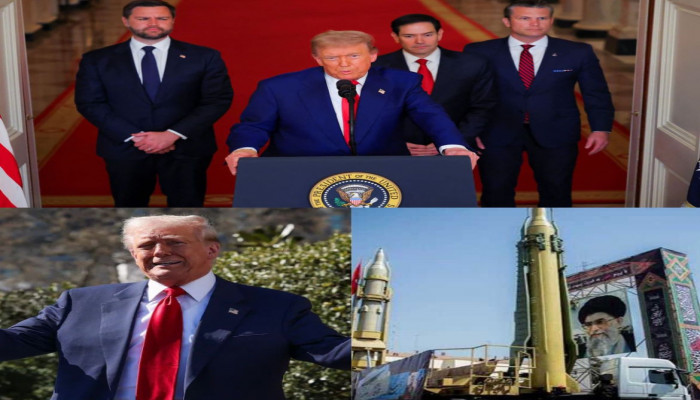
The confrontation between US President Donald Trump and Iranian diplomats has taken an unusual turn. What was once limited to formal diplomatic statements has now shifted to open exchanges on social media. This new battleground is marked by raw, direct, and often theatrical communication. Diplomats, who traditionally maintained restraint and politeness, are now engaging in sharp, public exchanges filled with sarcasm, ridicule, and even memes.
The tone of this digital conflict has largely been shaped by Trump himself. In a recent post, he wrote: “Tuesday will be Power Plant Day, and Bridge Day, all wrapped up in one, in Iran. There will be nothing like it!!! Open the Fuckin’ Strait, you crazy bastards, or you’ll be living in Hell - JUST WATCH!” The message carries a clear threat, but its style stands out even more. The use of profanity, exaggeration, and dramatic phrasing turns a strategic warning into something that feels like a public performance. This approach blurs the line between official state communication and personal expression.
For Trump’s domestic audience, this tone reinforces his image as a strong and decisive leader. His supporters often view this bluntness as honesty and strength. However, on the global stage, this style creates space for unconventional responses. By stepping away from formal diplomatic language, Trump opens the door for others to reply in a similar tone rather than maintaining traditional respect for his position.
Iranian embassies across different countries have responded in ways that reflect this shift. Instead of issuing standard diplomatic protests, they have chosen mockery and direct criticism. The Iranian Embassy in South Africa responded by saying, “Seriously think about the 25th amendment, Section 4,” referring to a US law used to remove a sitting president. This reframes Trump’s statement as a sign of instability rather than strength.
The Iranian Embassy in Bulgaria took a lighter but still dismissive approach, stating: “!Take it easy, tiger . (sic) Keep your cool,” which sounds more like personal advice than official communication. It reduces the authority of the US president by portraying him as impulsive. The Iranian Embassy in Austria went further with a detailed critique, posting: “#POTUS has stooped to an unprecedented level of begging, laced with bitter, hollow rudeness and threats. The desperation is almost palpable, dripping from every syllable—especially the haphazardly hurled expletives.” It added, “A further warning: shield all minors under 18 from exposure to #Trump’s rhetoric.” This response not only criticises Trump but also frames his language as inappropriate for public audiences.
In the United Kingdom, the Iranian embassy used a proverb to make its point. It stated: “It is better to keep your mouth closed and let people think you are a fool than to open it and remove all doubt.” It then described Trump’s remarks as a “sign of weakness & SICKNESS.” Meanwhile, the Iranian Embassy in India adopted an even sharper tone, saying: “Swearing and throwing insults are how sore loser brats behave. Get a grip on yourself, old man!” These responses show a clear and coordinated move toward public shaming instead of formal diplomacy.
The conflict has also expanded into visual communication. Iranian diplomatic accounts have started using memes and images to mock the United States. One post from the embassy in Bulgaria showed Trump stuck in the Strait of Hormuz with the caption: “I can’t breathe.” This phrase carries strong meaning in American political discourse and is used here to highlight vulnerability. Another post from the Iranian Embassy in South Africa featured a Lego-style US pilot being chased by Iranian forces with the caption: “Currently in Iran.” This turns a serious military situation into a visual joke.
The same embassy also posted, “The regime change happened successfully. MAGA,” following reports of internal changes in US military leadership. This flips a long-standing US objective into a critique of American politics. In another provocative post, it shared an image of a missile with the caption: “Injection for Pedophiles with love from IRAN,” linking geopolitical tensions to personal allegations involving Trump.
This tone is not limited to embassies. Senior Iranian leaders have also joined in. Speaker of the Iranian Parliament Mohammad Bagher Ghalibaf wrote on X, "After defeating Iran 37 times in a row, this brilliant no-strategy war they started has now been downgraded from 'regime change’ to "Hey! Can anyone find our pilots? Please?" Wow. What incredible progress. Absolute geniuses," using sarcasm to question US military effectiveness.
What is unfolding is a clear breakdown of traditional diplomatic language. For decades, even hostile nations maintained a level of formality in their public statements. This helped manage tensions and allowed room for negotiation. Now, that restraint is fading. When a US president uses aggressive and informal language, it changes what is considered acceptable in global communication.
Iran’s response is not accidental. It reflects a deliberate strategy within this new environment. By using humour and ridicule, Iranian officials signal that respect is no longer automatic. Instead, it must be earned through conduct. This shift makes it harder to separate serious warnings from emotional reactions. It also increases the risk of escalation, as direct language can corner leaders into stronger positions.
These exchanges are aimed at multiple audiences. Trump’s messaging is primarily directed at his domestic supporters. His style reinforces ideas of strength and urgency. It helps maintain confidence in US actions during a conflict. At the same time, international observers, including allies and rivals, watch closely. His tone can create uncertainty about US intentions and stability.
Iran’s communication serves a different purpose. It focuses on shaping global perception rather than influencing American voters. By openly mocking Trump, Iranian officials project confidence and resistance. This is important in regions where strength and image matter. There is also a broader online audience. Social media rewards content that is bold and shareable. Iranian posts are designed to spread quickly and influence public opinion beyond diplomatic circles.
This digital exchange highlights a larger reality. Modern conflict is no longer limited to physical battles. It includes control over narratives, public perception, and psychological influence. Trump’s statements aim to project power and deterrence. However, the dramatic tone can weaken their impact if seen as exaggerated. Iran uses humour to reduce the seriousness of these threats and challenge their credibility.
The result is a new kind of battlefield. Here, words, images, and online reactions play a crucial role. The way a conflict is presented can shape how it is understood across the world. In this fast-moving digital space, perception can become reality very quickly. The struggle is no longer just about military strength but also about who controls the story.



 Loading...please wait
Comments