




Dhaka links trajectory of India, Bangladesh ties with Ganga waters treaty renewal
- In Reports
- 06:55 PM, May 18, 2026
- Myind Staff
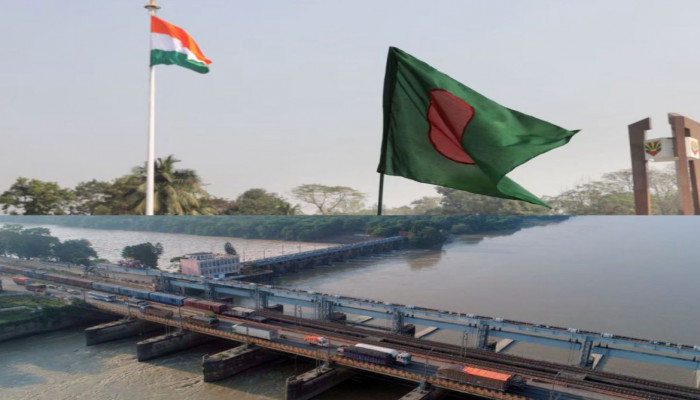
Bangladesh’s ruling party, the Bangladesh Nationalist Party, has linked the future of Dhaka’s relationship with New Delhi to the renewal of the Ganges Water Sharing Treaty, which is set to expire in December this year. The treaty, signed in 1996 between India and Bangladesh for a period of 30 years, governs the sharing of the Ganga river water during the dry season at the Farakka Barrage in West Bengal.
Senior BNP leaders have publicly urged India to begin talks on a fresh agreement. They said any new arrangement must reflect Bangladesh’s national interests and address the country’s growing concerns over water availability. Addressing an event in Dhaka, BNP secretary general Mirza Fakhrul Islam Alamgir said Bangladesh wanted to send a strong message to India regarding the treaty’s renewal.
“We want to send a clear message to the Indian government that a new treaty must be finalised through discussions in line with the expectations of the people of Bangladesh," Alamgir said. “The opportunity to establish good relations with India will depend on the signing of the Ganges Water Sharing Treaty or the Farakka Agreement," he said.
The remarks come at a time when Bangladesh is also moving ahead with a major barrage project on the Padma River. Dhaka says the project is aimed at reducing the impact caused by India’s Farakka Barrage and improving water management inside Bangladesh.
The Ganges Water Sharing Treaty is one of the most important agreements between India and Bangladesh. It was signed on December 12, 1996, during the tenure of former Bangladesh Prime Minister Sheikh Hasina after years of negotiations and temporary water-sharing arrangements between the two countries. The treaty mainly focuses on sharing water during the lean season between January 1 and May 31, when the flow of the river reduces sharply and both countries depend heavily on the water for farming, ecology, transport and daily use.
Under the agreement, water sharing at the Farakka Barrage depends on the amount of water available during the dry season. If the flow is 70,000 cusecs or less, both India and Bangladesh receive an equal 50 per cent share. If the flow remains between 70,000 and 75,000 cusecs, Bangladesh gets 35,000 cusecs while India receives the remaining amount. If the flow rises above 75,000 cusecs, India gets 40,000 cusecs and Bangladesh receives the rest.
The treaty does not include a fixed minimum guarantee clause if water levels fall sharply. Instead, Article II states that if the flow at Farakka falls below 50,000 cusecs during any 10-day period, both countries will immediately hold consultations and make emergency adjustments based on “equity, fair play and no harm to either party”.
The agreement also says that during the most critical dry-season period between March 11 and May 10, India and Bangladesh will each receive a guaranteed 35,000 cusecs in alternating three 10-day cycles.
At the centre of the dispute is the Farakka Barrage, located in West Bengal near the Bangladesh border. India built the barrage in the 1970s to divert water from the Ganga into the Hooghly River. The move was aimed at reducing silt and maintaining navigability at Kolkata Port.
Bangladesh, however, has repeatedly argued that the diversion reduces downstream water flow during dry months. Dhaka says this affects agriculture, fisheries, groundwater levels and the overall river ecosystem in several regions of the country.
The Ganga River enters Bangladesh through Chapai Nawabganj district and becomes known as the Padma. It remains one of Bangladesh’s most important river systems and plays a major role in agriculture, fisheries, ecology and drinking water supply. Bangladesh shares 54 transboundary rivers with India and depends heavily on upstream water-sharing arrangements.
According to Alamgir, nearly one-third of Bangladesh’s population of around 170 million people depends directly or indirectly on the river system for livelihoods and ecological balance. Water availability during the dry season has remained a politically sensitive issue in Bangladesh for decades. Environmental groups and water experts in the country have often claimed that reduced downstream flow due to the Farakka Barrage has increased salinity intrusion, damaged ecosystems and hurt agricultural production.
India has consistently maintained that the Farakka Barrage was built mainly to protect the navigability of Kolkata Port. Water diverted into the Hooghly River helps flush out sediment and maintain navigation channels.
The issue has returned to the spotlight because the current treaty is close to expiry and political discussions in Bangladesh have intensified over what should replace it. BNP leaders have demanded that negotiations on a new agreement should begin before the present pact expires. Alamgir also argued that the current arrangement should continue until a fresh agreement is finalised. He further said future water-sharing agreements should not be restricted to fixed time periods.
The debate has gained further attention after Bangladesh approved a large barrage project on the Padma River. Dhaka says the project is linked to the country’s national interest and is meant to counter the “negative impact" of the Farakka Barrage. The project is expected to be completed by 2033.
Bangladesh Water Resources Minister Shahiduddin Chowdhury Anee said the proposed project did not require consultations with India. “Discussions are necessary regarding the Ganges, and those are ongoing," Anee said after the meeting.
The BNP has also connected the broader river-water issue with the long-pending Teesta water-sharing agreement between India and Bangladesh. The Teesta pact has remained stalled for years because of opposition from governments in West Bengal over concerns about water availability within the state.
Earlier this month, BNP Information Secretary Azizul Baree Helal criticised former West Bengal Chief Minister Mamata Banerjee over the delay in the Teesta agreement. Speaking to ANI, Helal accused Banerjee’s government of blocking progress on the proposed deal. He also welcomed the BJP’s recent electoral victory in West Bengal and expressed hope that political changes in the state could help restart talks on Teesta.
Helal further said closer cooperation between Dhaka and Kolkata could improve overall India-Bangladesh relations, especially because West Bengal shares Bangladesh’s longest land border among Indian states.
India has maintained that there are already structured bilateral mechanisms to discuss all water-related issues with Bangladesh. Earlier this month, Ministry of External Affairs spokesperson Randhir Jaiswal said India and Bangladesh continue to engage regularly through institutional platforms since the two countries share 54 rivers. “These bilateral mechanisms continue to meet at regular intervals," Jaiswal said during a media briefing.



 Loading...please wait
Comments