




Department of Space approves space manufacturing hubs in Gujarat and Tamil Nadu
- In Reports
- 07:26 PM, May 22, 2026
- Myind Staff
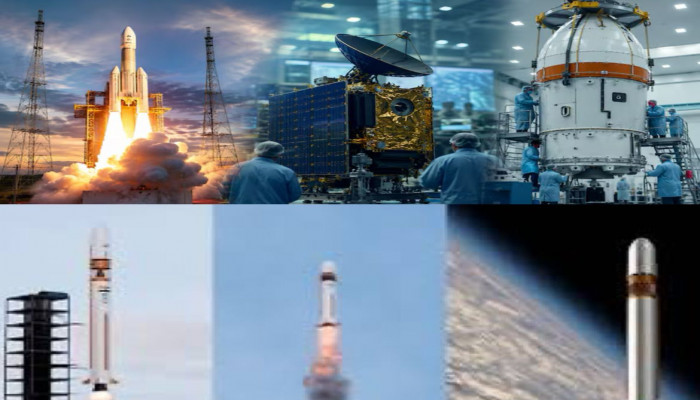
India is preparing to strengthen its private space sector with the approval of two major space manufacturing hubs in Gujarat and Tamil Nadu. The Department of Space has cleared the development of advanced common technical facilities that will help private companies manufacture rockets and satellites more efficiently. These hubs are expected to reduce costs for startups and attract large-scale investments into India’s growing commercial space industry.
The project is being led by the Indian National Space Promotion and Authorisation Centre, also known as IN-SPACe. The facilities will work as shared infrastructure centres where companies can access expensive testing and manufacturing systems without having to build their own setups. This move is expected to make entry into the space sector easier for startups and smaller firms that usually struggle with high initial investment costs.
The new system will operate on a plug-and-play model. This means companies can bring their hardware to the facilities and begin testing or manufacturing operations immediately. By offering shared access to advanced equipment, the government aims to speed up production and encourage more private participation in India’s space programme.
One of the major projects will come up at Khoraj near Ahmedabad in Gujarat. The Space Manufacturing Park there will focus mainly on spacecraft production and payload system development. Payloads are the key instruments carried by satellites, including cameras, communication devices, and sensors that perform mission-related tasks in space.
The Khoraj facility will include heavy engineering machinery for structural assembly and advanced systems for electronic validation. These systems are important because satellite equipment must survive harsh conditions in space, including strong radiation and extreme electrical environments. The infrastructure will help companies test whether their satellite systems can operate safely and effectively once launched into orbit.
Officials have already secured land for the manufacturing park. The government expects the cluster to attract strong private investment and support the growth of India’s satellite manufacturing ecosystem. The project is also likely to create opportunities for domestic suppliers, engineers, and technology firms linked to the space sector.
At the same time, Tamil Nadu’s Thoothukudi district is set to become a major centre for rocket and launch vehicle manufacturing. A separate Space Vehicles Cluster will be established there to focus on the production, integration, and testing of launch vehicle systems. The location has strategic importance because it is close to the upcoming small satellite launch complex at Kulasekharapatnam.
Launch complexes are specialised facilities where rockets are prepared and launched safely. The proximity of the Thoothukudi cluster to the upcoming launch site is expected to improve coordination between manufacturing and launch operations. This could reduce transportation challenges and make testing processes faster and more efficient.
The central government has approved Rs 100 crore for the Tamil Nadu facility. The centre will offer advanced vibration and shock testing systems that simulate the intense shaking and pressure experienced by rockets during liftoff. Such testing is critical because even small equipment failures during launch can lead to mission failure.
The facility will also provide thermal vacuum testing. In this process, equipment is placed inside a specialised chamber that recreates the freezing temperatures and vacuum-like conditions found in space. This helps engineers check whether satellite and rocket components can function properly in extreme environments before launch.
Another important feature of the Thoothukudi hub will be propulsion validation systems. These systems test rocket engines and fuel mechanisms to ensure they operate safely and reliably during missions. Proper propulsion testing is considered one of the most important steps before any rocket launch.
Through these projects, India is trying to move away from a fully centralised space manufacturing structure. Instead, the government wants to create a distributed industrial network where multiple states and private firms contribute to the country’s growing space economy. The aim is to build a stronger domestic supply chain and improve India’s competitiveness in the global commercial space market.
The initiative has already generated interest across the country. Around 10 other states have reportedly shown interest in developing similar manufacturing clusters. This reflects the increasing confidence in India’s private space sector after recent policy reforms and the opening of the industry to non-government players.
The new facilities are expected to strengthen India’s position as a rising space manufacturing destination. By reducing infrastructure barriers and giving companies access to advanced testing systems, the government hopes to encourage innovation, attract investment, and increase India’s share in the rapidly expanding global space economy.



 Loading...please wait
Comments