



Denmark issues strong warning to Trump over Greenland annexation threat
- In Reports
- 02:24 PM, Jan 09, 2026
- Myind Staff
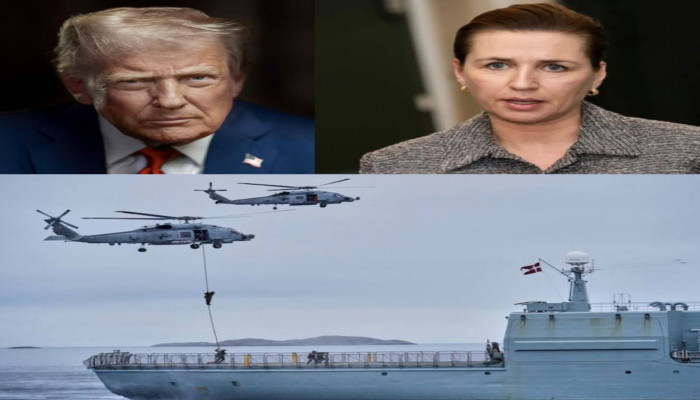
Denmark issues strong warning to Trump over Greenland annexation threat
Denmark has issued a sharp warning to former US President Donald Trump amid his repeated remarks about taking control of Greenland. Danish authorities said that their armed forces stationed in Greenland are bound by a long-standing military rule that allows them to respond immediately to any invasion, without waiting for political approval. According to the Danish defence ministry, this rule clearly allows soldiers to “shoot first and ask questions later” if Greenland comes under attack.
The warning has drawn international attention as it comes in response to Trump’s statements, in which he has not ruled out the possibility of using force to take over Greenland. Greenland is an autonomous territory that remains part of the Kingdom of Denmark, and any threat to it is seen as a direct challenge to Danish sovereignty.
The Danish defence ministry explained that the rule being referred to dates back to 1952. This directive was issued during the Cold War period and remains valid even today. The ministry stated that the order instructs Danish forces to “immediately take up the fight” in the event of an attack. It does not require soldiers to wait for instructions from Copenhagen or for political discussions to take place before acting.
Officials stressed that this rule applies regardless of the attacking force. The instruction does not make exceptions and is designed to ensure a swift response in order to protect Greenland. Denmark made it clear that the directive is still active and legally binding.
Trump’s remarks about Greenland have caused concern across Europe. His comments have revived fears about territorial security and international stability. European leaders are now working on how to respond collectively to these statements, as the idea of using force to annex territory is viewed as unacceptable by most Western nations.
The situation has also sparked diplomatic discussions among European countries. French Foreign Minister Jean-Noel Barrot confirmed that he would hold talks with his counterparts in Germany and Poland to coordinate a united response. Speaking to France Inter radio, Barrot said, “We want to take action, but we want to do so together with our European partners.”
Barrot also referred to remarks made by US Secretary of State Marco Rubio, who dismissed comparisons between Greenland and recent US military actions elsewhere. Rubio rejected any suggestion that Greenland could face a situation similar to Venezuela, where the United States has taken aggressive political and economic measures. This statement appeared to be an attempt to calm fears of an immediate military confrontation.
Despite these assurances, concerns remain strong in Europe due to ongoing discussions within the Trump camp about Greenland’s future. According to the report, the Trump administration has explored the idea of offering direct cash payments to Greenland’s residents as part of a strategy to encourage them to distance themselves from Denmark and align more closely with the United States.
Sources cited in the article said that discussions included possible payments ranging from $10,000 to $100,000 per person. While no official proposal has been announced, the idea itself has raised serious questions about sovereignty, influence, and political pressure. The details of the plan remain unclear, and it is not known how such payments would be funded or implemented.
Greenland has a population of around 57,000 people and is known for its rich natural resources, including rare earth minerals that are increasingly important for modern technology. Its strategic location in the Arctic has also made it geopolitically significant, especially as climate change opens up new shipping routes and access to resources.
However, public opinion in Greenland does not support becoming part of the United States. Surveys indicate that while many Greenlanders favour eventual independence from Denmark, they do not want to replace Danish rule with American control. This sentiment weakens the possibility of Greenland voluntarily agreeing to any such proposal.
Denmark’s firm response highlights its determination to protect Greenland and maintain control over its territory. By publicly referring to its military directive, Denmark has sent a strong message that any attempt to take Greenland by force would be met with immediate resistance.
The warning also serves as a reminder of existing defence commitments and the seriousness with which Denmark views any threat to Greenland. As diplomatic discussions continue across Europe and the United States, the situation remains sensitive, with many leaders emphasising the need for unity, dialogue, and respect for international law.



 Loading...please wait
Comments