




Democrats reach a temporary deal with Republicans to prevent government shutdown, DHS funding extended for two weeks
- In Reports
- 05:53 PM, Jan 30, 2026
- Myind Staff
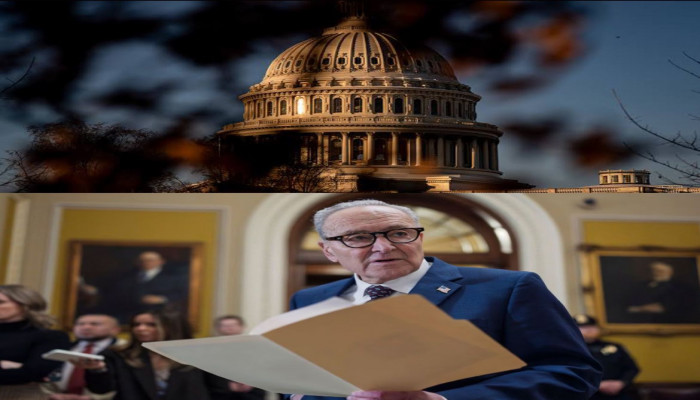
Democrats in the United States have reached an agreement with the White House and Senate Republicans to prevent a partial government shutdown, according to reports by the Associated Press (AP). The deal came after intense political negotiations and disagreements over immigration enforcement and the funding of the Department of Homeland Security (DHS).
Under the agreement, funding for DHS will be separated from the broader government spending bill and extended for a period of two weeks. This temporary extension is meant to give lawmakers time to negotiate possible limits on Immigration and Customs Enforcement (ICE) operations. Meanwhile, most other federal agencies will continue functioning without interruption.
US President Donald Trump welcomed the agreement and described it as a positive step toward bipartisan cooperation. In a social media post, he said, “Republicans and Democrats have come together to get the vast majority of the government funded until September,” while also extending current funding for Homeland Security. He urged lawmakers to support the deal, calling it a “much needed Bipartisan YES vote.”
The breakthrough came after Democrats blocked earlier legislation that aimed to fund DHS as part of the broader spending package. Their opposition was driven largely by anger over the deaths of two protesters in Minneapolis during encounters with federal agents. This incident intensified debates around Trump’s push for stricter immigration enforcement and the conduct of ICE agents.
House Speaker Mike Johnson expressed his concerns about separating DHS funding from the main spending bill but said avoiding a shutdown was more important than political disagreements. “We can’t have the government shut down,” he said, adding that any revised legislation would need to move forward quickly to ensure continued government operations.
Democrats have been demanding significant reforms in ICE operations. Their proposals include ending roaming patrols in cities, introducing stricter rules on warrants, and ensuring stronger accountability for federal agents. Senate Democratic leader Chuck Schumer described the situation as a critical moment, calling it “a test.” He said that while Americans support border security, they do not support ICE “terrorising our streets.”
Democratic Senator Tina Smith of Minnesota also emphasised the need for accountability in ICE operations. She said, “What we are talking about is that these ICE agents should be following the same rules that your local police department does.” She further added, “There has to be accountability.”
Republicans, however, have pushed back against some of the proposed reforms. Senator Thom Tillis argued that forcing officers to reveal their identities could endanger them and their families. Senator Lindsey Graham said that some reforms could be reasonable, but warned Democrats not to block immigration enforcement entirely.
The duration of the DHS funding extension was one of the main points of disagreement in the negotiations. Senate Majority Leader John Thune said that a two-week extension might not be enough time to reach a final compromise, but confirmed that discussions were still ongoing.
Despite the temporary agreement, tensions between the two parties are expected to continue. Democrats have warned that they could block future funding if their demands for reforms are not met. On the other hand, Republicans, especially in the House of Representatives, have made it clear that they do not want changes to the bill that has already been passed.
Even so, House Speaker Mike Johnson indicated that he was willing to move forward once the Senate takes action. He reiterated the importance of maintaining government operations, saying, “A shutdown doesn’t help anybody.”
Although the deal has prevented an immediate shutdown, it is only a temporary solution. The two-week extension means lawmakers will soon face another round of negotiations over immigration policy and federal funding. The coming weeks are expected to see further debates as both parties attempt to reach a longer-term agreement.
For now, the agreement has ensured that most federal agencies will remain operational while discussions continue over the future of DHS funding and ICE reforms. The situation reflects ongoing political divisions in the US over immigration enforcement, government spending, and accountability of federal agencies.



 Loading...please wait
Comments