




Delhi police bust ISI-linked spy network, arrest seven operatives
- In Reports
- 07:22 PM, Jun 17, 2026
- Myind Staff
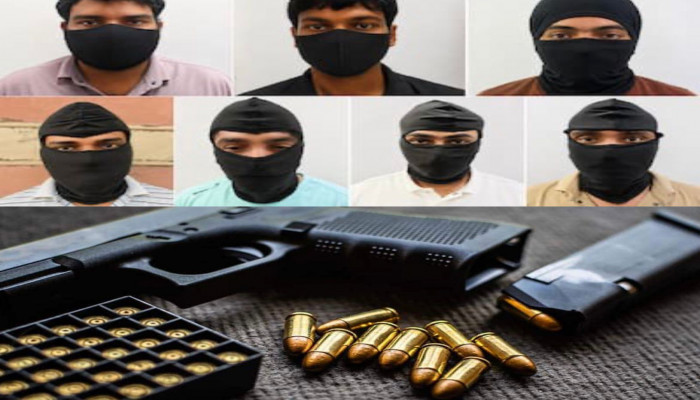
Delhi Police on June 16 busted an international terror-crime syndicate allegedly linked to Pakistan's Inter-Services Intelligence (ISI) and arrested seven operatives. Among those arrested, six were residents of Ghaziabad in Uttar Pradesh, highlighting the district's significant connection to the network.
The arrests come months after a major crackdown by the Ghaziabad Police in March 2026. At that time, police arrested 21 people, including two women and several minors, who were allegedly linked to Pakistan-based gangster-turned-terrorist Shahzad Bhatti. Most of the accused were from Western Uttar Pradesh, particularly Ghaziabad.
The investigation began on March 14 after the Kaushambi police received information about suspicious activities in the Bhovapur area. According to the tip-off, a group of youngsters was taking photographs and videos of railway stations, army installations, and other important locations. These visuals were reportedly being shared with contacts based abroad. The information also suggested that young people were being recruited in exchange for money.
Acting on the intelligence, police arrested five men and one woman. Further investigation uncovered a much larger espionage network. Authorities found that the accused were collecting sensitive information related to India's military infrastructure. Investigators believe the information was being gathered to support future terror operations.
The probe revealed that handlers based in Pakistan were recruiting Indian youths through social media platforms and messaging applications. Once recruited, the individuals were instructed about which locations to survey and what kind of information they needed to collect.
The network specifically targeted people with technical knowledge. Mobile phone mechanics, CCTV operators, and individuals with computer-related skills were among those approached. These recruits were asked to collect photographs, videos, and GPS coordinates of railway stations, army bases, and other strategically important locations. In return, they were paid between Rs 5,000 and Rs 20,000 for each assignment.
Investigators found that recruits were also trained to use a specific mobile application through which the collected information was transmitted. The network intentionally included women and minors because they attracted less suspicion and could move around more easily.
During the investigation, police discovered that four of the six individuals arrested in Ghaziabad had travelled to Pulwama in Jammu and Kashmir. Officials said they sent sensitive information to contacts in Pakistan while they were there. Sources revealed that plans for another major terror attack in Kashmir were allegedly being developed following the Pulwama attack.
The probe also exposed a plan to install solar-powered CCTV cameras at major railway stations between Delhi and Jammu. The purpose of these cameras was to monitor the movement of Army personnel and track the activities of security agencies.
Investigators found that such cameras had already been installed at Delhi Cantt railway station and Sonipat railway station in Haryana. Authorities later learned that the network intended to install nearly 50 similar cameras across different parts of the country.
By the time law enforcement agencies intervened, more than 450 photographs and videos had reportedly been sent to Pakistan. Officials believe the information included visuals and details of sensitive locations that could have been used for surveillance and future planning.
The investigation also uncovered an extensive OTP and SIM card racket being operated by the accused. According to police, members of the network forwarded one-time passwords (OTPs) received on Indian mobile numbers to individuals located abroad. This allowed foreign operators to create and run WhatsApp and social media accounts using Indian phone numbers.
The accused reportedly charged between Rs 500 and Rs 5,000 for providing OTPs and facilitating the use of Indian mobile numbers. Investigators said the network used multiple methods to obtain SIM cards. These included snatching phones, using forged documents, and purchasing pre-activated SIM cards through agents.
Police also examined the financial operations of the syndicate. The accused used UPI-based transactions to receive payments. However, they avoided transferring money directly into their personal bank accounts. Instead, funds were routed through Jan Seva Kendras and local shopkeepers before being withdrawn as cash.
According to investigators, this method helped the accused avoid attracting attention and made financial tracking more difficult for law enforcement agencies. The strategy allowed the network to operate for a considerable period without coming under serious scrutiny.
The arrests have exposed a sophisticated espionage and surveillance operation allegedly supported by handlers in Pakistan. Authorities continue to investigate the network's reach, its recruitment methods, and its possible links to future terror plots targeting sensitive locations across India.



 Loading...please wait
Comments