




Delhi Gymkhana is public property: Government moves for eviction of Club
- In Reports
- 07:22 PM, Jul 01, 2026
- Myind Staff
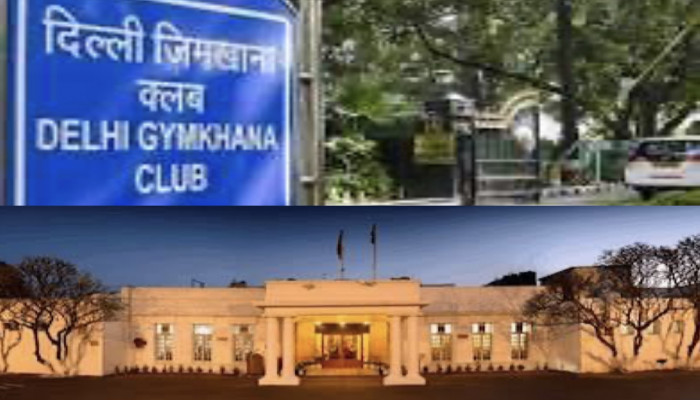
The Central Government has moved to evict the Delhi Gymkhana Club from its 27.3-acre property on Safdarjung Road. The Centre has filed a plaint before the Estate Officer and stated that the land is public property vested in the Union of India. It has asked the Estate Officer to declare that the Club is in unauthorised occupation of the premises and order its eviction.
The government has relied on Clause 4 of the 1928 Perpetual Lease Deed to resume possession of the land. It said the property is required for defence infrastructure, public security and other public purposes. According to the plaint the government issued a notice on May 22, 2026, terminating the lease and directing re-entry into the property. It asked the Club to hand over vacant possession by June 5, 2026. However, the Club did not vacate the premises within the given deadline.
The Centre argued that the termination of the lease ended the Club's legal right to occupy the property. It said the Club's continued presence on the land now amounts to "unauthorised occupation" under the provisions of the Public Premises (Eviction of Unauthorised Occupants) Act, 1971 (PPA). The government also informed the Estate Officer that the land is urgently required for institutional, governance and defence-related purposes.
In its plaint, the Centre also referred to earlier eviction orders passed by the Estate Officer on May 20, 2026. It has requested the Estate Officer to officially declare that the Club is an unauthorised occupant. The government has also sought an eviction order and directions to ensure the peaceful handover of vacant possession of the property to the Union of India.
Meanwhile, the Estate Officer has issued a show-cause notice to the Delhi Gymkhana Club under Section 4(1) read with Section 4(2)(b)(ii) of the Public Premises (Eviction of Unauthorised Occupants) Act, 1971.
According to the notice issued by the Land and Development Office (L&DO), the Club's occupation became unauthorised after the government lawfully terminated the lease and resumed the property for a public purpose. The notice stated that the Club's continued occupation falls within the definition of an "unauthorised occupant" under Section 2(g) of the Act.
The Estate Officer has directed the Club to explain by July 7, 2026, why an eviction order should not be passed against it. The Club must also appear before the Estate Officer at 2:30 pm on July 7, either in person or through a duly authorised representative. It has been asked to submit any evidence or arguments in its defence during the hearing.
The notice further stated that if the Club fails to appear on the scheduled date and time, the proceedings may continue ex parte. In such a situation, the Estate Officer can decide the matter without hearing the Club's submissions.
The dispute over the Delhi Gymkhana Club has turned into a major legal and political issue after the Central Government terminated the lease of the 113-year-old elite institution. The action affects the Club's 27.3-acre property located in the prime Lutyens' Delhi area.
The Land and Development Office, which functions under the Ministry of Housing and Urban Affairs, issued the order terminating the Club's 1928 perpetual lease. The ministry had earlier directed the Club to hand over possession of the property by June 5, 2026.
The government invoked Clause 4 of the lease deed and stated that the highly sensitive land, located near the Prime Minister's official residence, is required for "strengthening and securing defence infrastructure" and other vital public security needs.
Apart from strategic requirements, the government also raised concerns over the Club's financial functioning. Authorities alleged that the Club was involved in financial irregularities, tax evasion and opaque management practices. The government also revised the nominal British-era rent to reflect current market rates. Following the revision, the Club allegedly accumulated outstanding dues and penalties amounting to ₹47.6 crore.



 Loading...please wait
Comments