




DAC clears ₹1.10 lakh crore defence acquisition proposals, 98% procurement from Indian industry
- In Reports
- 06:39 PM, Sep 07, 2026
- Myind Staff
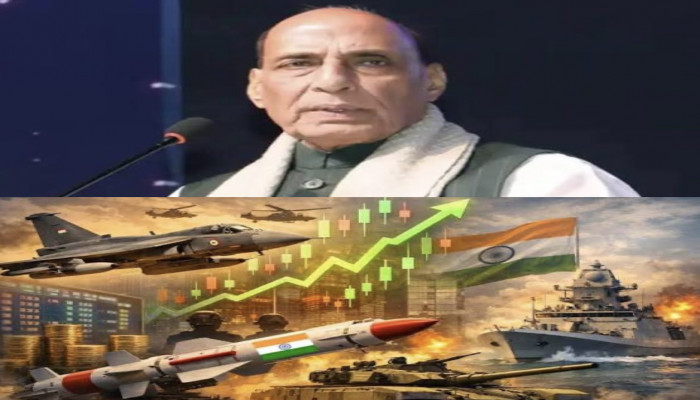
The Defence Acquisition Council (DAC), chaired by Defence Minister Rajnath Singh, on September 7 approved defence acquisition proposals worth around ₹1.10 lakh crore. The proposals cover the operational requirements of the Indian Army, Navy and Air Force. The Defence Ministry said around 98% of the planned procurement will be sourced from Indian industry, giving a major boost to domestic defence manufacturing.
The approvals were granted as an Acceptance of Necessity (AoN). It is an in-principle administrative clearance that allows a defence procurement proposal to move ahead in the acquisition process. However, an AoN does not mean that the government has signed a procurement contract. The proposals must still go through the required stages before contracts can be finalised.
For the Indian Army, the DAC approved procurement proposals for Chemical Biological Radiological and Nuclear (CBRN) reconnaissance vehicles, High Mobility Vehicles, Self-Propelled Mechanical Mine Layers, Advanced Light Helicopters, Trawl Tanks and the Sarvatra Bridge System. These platforms and systems are aimed at improving the Army’s mobility, operational readiness and ability to respond to threats across different terrains.
The CBRN reconnaissance vehicles will help the Army detect, identify, monitor and mark areas contaminated by chemical, biological, radiological or nuclear agents. The systems will support troops operating in areas where such hazards may pose a threat during military operations.
The DAC also cleared High Mobility Vehicles for the Army. These vehicles will support operational and logistical needs while improving the movement of personnel and equipment in difficult terrain. The council also approved Self-Propelled Mechanical Mine Layers. These systems will allow the Army to lay mines more quickly in challenging areas.
Advanced Light Helicopters also received approval for procurement. The helicopters will serve both the Army and the Air Force and will support missions across different terrains and operational conditions. The DAC further cleared Trawl Tanks and the Sarvatra Bridge System. These systems will help fighting formations cross obstacles and difficult areas during military operations.
For the Indian Navy, the DAC approved the procurement of Arudhra Radars. These radars will replace the existing Air Route Surveillance Radars installed at various Naval Air Stations. The move is expected to strengthen surveillance capabilities and improve the monitoring of airspace around naval facilities.
The council also approved the design and development of Marine Gas Turbines, followed by their procurement. Marine Gas Turbines play an important role in the propulsion of warships. Developing these systems in India will reduce the Navy’s dependence on foreign vendors and strengthen domestic capabilities in critical defence technology.
The Indian Air Force also received several approvals aimed at improving the capabilities of its fighter aircraft, transport aircraft and helicopters. The DAC cleared the procurement of Ground-Based Multi-Purpose Jammers as part of these measures. The jammers will be used against adversary radars and will help strengthen electronic warfare capabilities.
The council also approved the installation of the Defence Forces Secure Access Card (DEFSAC) system. The system will replace existing paper-based identity cards, passes and permits with interoperable smart cards that use radio-frequency identification technology. This is expected to improve access management and identification across the Defence Forces.
The latest approvals cover a wide range of equipment and technologies for all three services. With nearly 98% of the procurement expected to come from Indian industry, the decisions also underline the government’s focus on strengthening domestic defence production. The proposals will now move through the next stages of the defence acquisition process before actual contracts are signed.



 Loading...please wait
Comments