




DAC approves defence procurements worth ₹2.38 lakh crore including additional S-400 units
- In Reports
- 11:44 AM, Mar 28, 2026
- Myind Staff
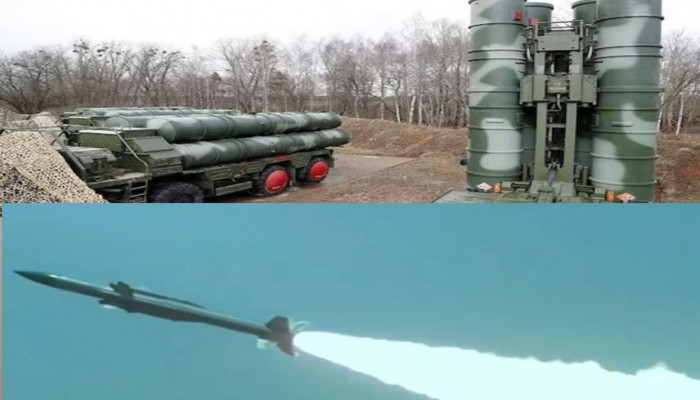
India has taken a major step to strengthen its military capabilities with the Defence Acquisition Council (DAC) approving defence procurements worth ₹2.38 lakh crore. This decision aims to modernise the armed forces with advanced systems, including additional S-400 air defence units, remotely piloted strike aircraft, transport planes, artillery guns and tank ammunition, according to the defence ministry.
A key highlight of the approval is the acquisition of five more units of the S-400 missile system. These systems are known for their ability to detect, track and engage enemy aircraft, missiles and drones over long distances. Their induction will significantly enhance the Indian Air Force’s (IAF) operational strength. The S-400 had earlier demonstrated its effectiveness during Operation Sindoor last May by successfully targeting Pakistani positions.
With this new approval, the total number of S-400 units in the IAF will rise to 10. India had earlier signed a ₹39,000 crore deal with Russia in October 2018 for five units. Out of these, three have already been deployed, while the remaining are expected to be delivered by the end of the year.
The defence ministry stated, “The S-400 system will counter enemy long-range air vectors targeting vital areas, while the remotely piloted strike aircraft will enable undertaking offensive counter and coordinated air operations.” These systems will also play a crucial role in India’s long-term plan to build a national air defence shield under Mission Sudarshan Chakra, which is targeted for completion by 2035. The initiative aims to protect both military and civilian installations from aerial threats and enable strong counterattacks.
Alongside the S-400 systems, the DAC has also cleared four squadrons of remotely piloted strike aircraft, also known as unmanned combat aerial vehicles (UCAVs). These drones will allow the air force to conduct precision strikes without risking human lives. They will also improve intelligence, surveillance and reconnaissance capabilities, which are essential for modern warfare.
The council, led by defence minister Rajnath Singh, has also approved the procurement of 60 medium transport aircraft (MTA). These aircraft will replace the ageing AN-32 and IL-76 fleets and strengthen India’s airlift capabilities. The defence ministry said, “The induction of medium transport aircraft—replacing the AN-32 and IL-76 transport fleets—will meet the strategic, tactical and operational airlift requirements of the services.”
Several global companies are competing for the MTA contract. These include Lockheed Martin with its C-130J Super Hercules, Embraer with the KC-390 Millennium, and Airbus Defence and Space offering the A-400M. The selection process will also support the government’s Make in India initiative, as the winning company will establish a production line in India. Lockheed Martin has partnered with Tata Advanced Systems Limited, while Embraer has teamed up with Mahindra. Airbus has not yet announced its Indian partner.
In terms of carrying capacity, the C-130J can carry up to 20 tonnes, the KC-390 can carry 26 tonnes, and the A-400M can carry up to 37 tonnes. These can critically enhance India’s logistical strength during both peace and conflict situations.
The DAC’s approval marks only the first stage of the procurement process, known as Acceptance of Necessity (AoN). However, it reflects a clear focus on strengthening defence preparedness in light of recent global conflicts, including those in Ukraine and West Asia.
Air Marshal Anil Chopra (retired) highlighted the importance of this move, stating, “The approval for additional S-400 systems is the key takeaway from the DAC meeting. Ongoing wars in Ukraine and West Asia, and Operation Sindoor last year, have underscored the importance of air defence systems. S-400 is one of the top such systems in the world. For a country the size of India, the five units ordered earlier were inadequate. The new systems will provide the needed air defence coverage.”
In addition to these major acquisitions, the DAC has also cleared proposals for Dhanush artillery guns, armour-piercing tank ammunition, a runway-independent aerial surveillance system, an air defence tracked system, and high-capacity radio relay systems for secure communication. The defence ministry noted, “The Dhanush gun system will enhance the artillery’s capabilities to engage targets at longer ranges in all terrains with enhanced lethality and accuracy.”
India is also planning to finalise several major defence deals in the financial year 2026-27. These include the purchase of 114 Rafale fighter jets, additional airborne early warning and control systems, and medium transport aircraft. Earlier in February, the DAC had already approved defence procurements worth ₹3.6 lakh crore, including Rafale jets, P-8I maritime surveillance aircraft, Scalp cruise missiles and high-altitude pseudo-satellites.
Overall, these decisions reflect India’s continued push to modernise its military and strengthen its defence infrastructure in response to evolving security challenges.



 Loading...please wait
Comments