




CWMA directs Karnataka to release 4 TMC of Cauvery Water to Tamil Nadu
- In Reports
- 07:17 PM, Jul 30, 2026
- Myind Staff
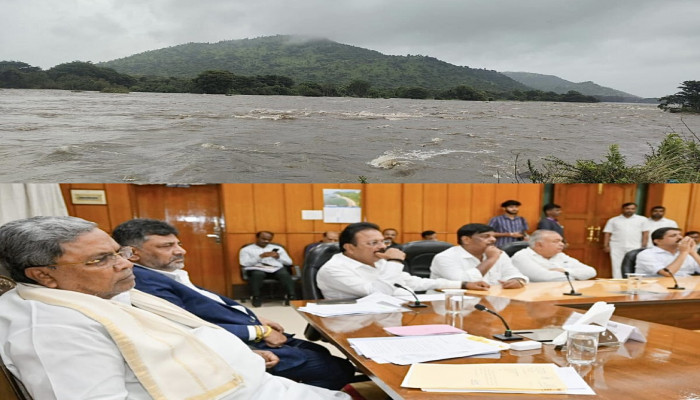
The Cauvery Water Management Authority (CWMA) on Thursday directed Karnataka to release Cauvery water to Tamil Nadu after rejecting the state's appeal against an earlier recommendation. Karnataka had requested relief, stating that poor rainfall and low water levels in its reservoirs had made it difficult to release water. However, the Authority decided to uphold the recommendation of the Cauvery Water Regulation Committee (CWRC) and asked the state to comply with the order.
The CWMA instructed Karnataka to release 3,500 cusecs of Cauvery water per day to Tamil Nadu for the next 15 days. Under this direction, Karnataka will release a total of 4 Thousand Million Cubic feet (TMC) of water. The Authority issued the order after holding an emergency meeting to examine Karnataka's appeal against the CWRC's recommendation.
During the meeting, Karnataka informed the Authority that it was facing severe water shortages across the Cauvery basin. State officials said rainfall in the region had remained far below normal, which had affected reservoir storage. They argued that the current situation had made it impossible for the state to release the required quantity of water while also meeting its own essential needs.
Karnataka presented data before the Authority to explain the extent of the shortage. Officials said only 178 cusecs of water had flowed at Biligundlu so far this year. During the corresponding period last year, the flow stood at 30,748 cusecs. The state argued that the sharp difference reflected the seriousness of the present situation.
The state also submitted figures for water inflows during June and July. According to Karnataka, only 3.55 TMC of water flowed during these two months this year. During the same period in 2025, the inflow measured 116.92 TMC. Officials said the large gap had significantly reduced the amount of water available in reservoirs.
Karnataka further informed the Authority that reservoirs in the Cauvery basin currently hold only 36.69 TMC of water. During the same period last year, the storage stood at 99 TMC. Officials said the decline had placed heavy pressure on available water resources. They argued that the state needed to carefully manage the remaining water to meet future requirements.
The state also submitted that nearly 40 TMC of water would normally have flowed downstream by this stage of the monsoon. This year, only around 3.5 TMC has flowed. Officials attributed the reduced flow to severe drought-like conditions across the basin. They urged the Authority to consider the situation while deciding the matter.
Karnataka also argued that reservoir storage would play an important role in meeting drinking water requirements and other essential needs in the coming months. Officials said the available water had to serve multiple purposes, making the situation even more challenging. They requested the Authority to take these concerns into account before issuing directions.
The state also pointed out that maintaining a flow of 3,500 cusecs at Biligundlu would require releasing an even larger quantity of water from upstream reservoirs. Officials argued that this would increase pressure on already depleted reservoirs and make compliance more difficult under the present conditions.
Tamil Nadu opposed Karnataka's request during the meeting and argued that the CWRC's recommendation represented only the minimum amount of water that should be released. State officials urged the Authority to direct Karnataka to release a larger quantity instead of limiting the discharge to the recommended level.
Tamil Nadu also informed the Authority that Karnataka's reservoirs had received around 36 TMC of inflows. Officials argued that this indicated the state had sufficient water to comply with the recommendation. They maintained that Karnataka should release more water in line with existing arrangements governing the sharing of Cauvery water.
The state also stated that nearly 40 TMC of water should have flowed downstream by this stage of the water year under normal conditions. Tamil Nadu argued that the actual release remained far below the expected level. Officials said this had affected the state's share of Cauvery water.
Tamil Nadu further alleged that Karnataka had not properly implemented the distress-sharing formula, which applies during years of deficient rainfall. According to the state's submissions, only 3.5 TMC of water has flowed at Biligundlu during the last two months. Officials said this had created a shortfall of 9.46 TMC under the distress-sharing mechanism.
After considering the submissions of both states, the CWMA rejected Karnataka's appeal and upheld the recommendation made by the CWRC. The Authority directed Karnataka to release 3,500 cusecs of water every day for 15 days, amounting to a total of 4 TMC of Cauvery water for Tamil Nadu. The latest order adds another chapter to the long-running Cauvery water-sharing dispute, which continues to remain a major issue between the two neighbouring states.



 Loading...please wait
Comments