




Cubans turn to solar power as black out worsens under U.S. oil restrictions
- In Reports
- 03:22 PM, Feb 21, 2026
- Myind Staff
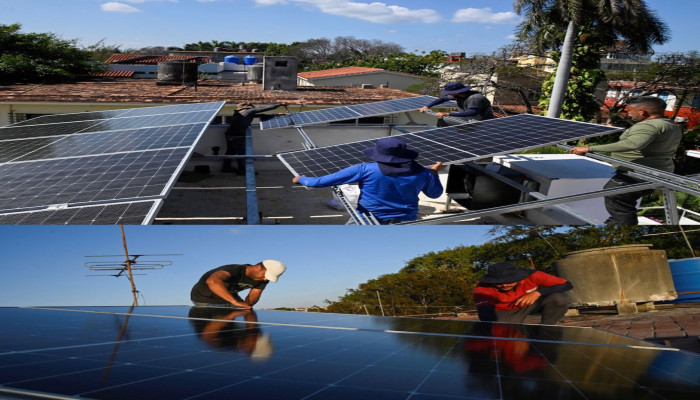
Cubans are facing long power outages and severe fuel shortages, and many are turning to solar panels to keep their homes, shops, and vehicles running. These growing efforts to install solar systems come as the United States continues to limit oil shipments to Cuba, a situation that has made it hard for the country to generate electricity and worsened the existing energy crisis.
For years, Cuba’s government has struggled to buy enough fuel because of U.S. sanctions and a persistent economic crisis. These problems made it difficult for state power plants and generators to operate normally. In recent months, oil shipments from traditional suppliers like Venezuela and Mexico have dropped sharply, partly because of U.S. tariff threats. This has made fuel shortages even worse and led to long, frequent blackouts that affect both daily life and key services.
To deal with this, many Cuban households, businesses, and even taxi drivers are turning to solar systems. These solar panels are helping people get basic electricity during outages. Together with support from China, which has provided financing and donated equipment, the Cuban government has been building more solar generation capacity. In the past year, the country added more than 1,000 megawatts of solar power, and officials plan to double that amount in the coming years. But while the government pushes large-scale solar projects, ordinary people are also acting on their own to bring electricity into their lives.
A resident of Havana, Roberto Sarriga, explained why he chose to use solar panels on his home. He told Reuters that the blackouts “pretty much stop you from doing anything,” so he agreed with a friend to invest in panels and have them installed. The solar setup now gives him internet access, lets him charge his phone so people can find him, and powers a television that keeps his elderly mother entertained. He said: “The idea was to at least have the basics covered.”
These solar panels are usually imported and sold in U.S. dollars, which is too expensive for most people in Cuba. Only a small group can afford them — mainly private business owners or people who receive money from relatives overseas. But for this growing group, solar energy has become a vital way to keep their daily needs met amid the power crisis.
The Cuban government is also trying to encourage more private investments in renewable energy. Late on Thursday, authorities announced new measures to support this effort. Under the new plan, business owners who invest in renewable energy projects, like solar panels, will not have to pay personal taxes for up to eight years. This tax break is meant to make it easier for private entrepreneurs to adopt clean energy solutions.
Solar installers report rising demand as fuel becomes harder to find. Raydel Cano, who installs panels in homes and private businesses in Havana, told Reuters that demand has increased recently because conventional fuel sources like gas and diesel are now very expensive and scarce. He said that many people with generators have been left without a backup option because there is not enough fuel to run them. “Private businesses see themselves obligated to install panels,” he said, noting that alternative ways to generate power have mostly stopped working as the electrical grid falters.
Many business owners are now relying on solar energy to keep operating. Dariem Soto-Navarro, manager of a café in Havana, explained why he chose solar despite its high upfront cost. He said that diesel is increasingly difficult to buy, and solar energy not only provides power but also helps reduce business costs. “In addition to being clean, green energy, it optimises operating costs,” he said. “It is without a doubt one of the best solutions for entrepreneurs and private businesses.”
Some people are even taking solar power on the road. Alejandro Arritola, a tricycle-taxi driver, installed solar panels on the roof of his vehicle so he can travel farther when fuel runs out. He told Reuters that this helps him stay mobile and support his family even when gasoline is unavailable. He said: “It extends my range and I don’t have to use any gasoline … If there’s no public transportation, it doesn’t matter.”
The United States says its restrictions are intended to increase pressure for political change in Cuba. White House press secretary Karoline Leavitt commented that it was in Cuba’s “best interest to make very dramatic changes very soon.” This statement reflects Washington’s official view that its actions aim to push for reforms.
Meanwhile, the United Nations has warned that if Cuba cannot meet its energy needs, the situation could cause a humanitarian crisis. The island already faces severe shortages of food, fuel, and medicine, and authorities have implemented rationing measures to protect essential services like hospitals and emergency systems.
Russia, one of the few remaining oil suppliers to Cuba, is preparing to send crude oil in the near future, according to reports. However, no specific date for the shipments has been given, leaving uncertainty about when Cuba might get more traditional fuel supplies again.



 Loading...please wait
Comments