



Cuba releases thousands of prisoners under the watch of US Rights groups
- In Reports
- 12:51 PM, Apr 04, 2026
- Myind Staff
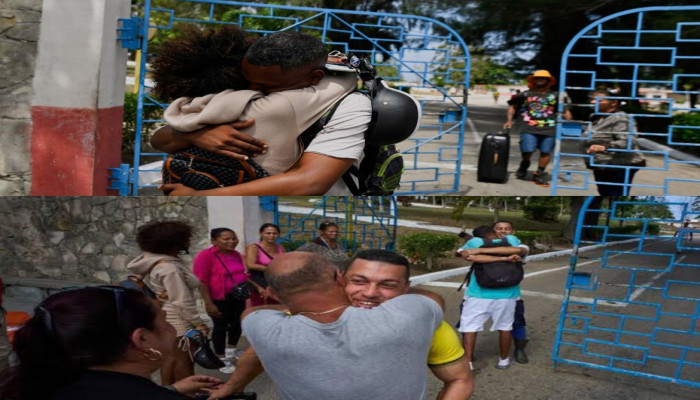
Cuba began releasing prisoners on Friday, only hours after announcing a large-scale amnesty that comes at a time of heightened pressure from the United States. The move marks one of the most significant prisoner releases in the country in recent years. According to state-run media, more than 2,000 prisoners are expected to be freed. The government described the decision as a “sovereign and humanitarian” act, making it the largest amnesty carried out in the past decade.
The United States government has said it is closely observing the situation, particularly to see whether individuals it considers political prisoners are among those being released. Officials have raised concerns over the lack of clarity regarding who will benefit from the amnesty. “It is unclear how many, if any, political prisoners will be released,” the spokesperson said. “We continue to call for the immediate release of the hundreds of other brave Cuban patriots who remain unjustly detained.” The issue of political prisoners has remained a key point of tension in relations between Washington and Havana for years. If a large number of such detainees are freed, it could be seen as a significant step by Cuba in ongoing discussions between both countries.
On Friday morning, a steady flow of prisoners was seen leaving La Lima prison in Guanabacoa, located just outside Havana. Those released included men and women who had been convicted of common offences such as theft and bribery. However, none of the individuals interviewed had taken part in anti-government protests or political demonstrations. The scenes outside the prison reflected a mix of emotions. Some people celebrated loudly, while others left quietly, overwhelmed by the moment.
One man, who had been convicted of theft, shouted, “Long live freedom,” as he reunited with his sister waiting outside. Many of the released prisoners carried a simple white document stating that they had been granted a pardon. The paper served as official confirmation of their release. For many families, the moment marked the end of a long period of separation.
Despite the timing of the announcement, the Cuban government has firmly denied that its actions are influenced by pressure from the United States. Official media reports outlining the amnesty did not mention the U.S. or the Vatican, both of which have played roles in past negotiations and prisoner releases. Cuba has consistently maintained that its decisions are made independently and are based on its own internal considerations.
Human rights organisations, including some supported by the U.S. government, have said they will closely monitor the release process as it unfolds. These groups claim that Cuba holds hundreds of political prisoners, although estimates vary. They have emphasised the importance of transparency and accountability in verifying who is being released. Early reports suggested that, by midday Friday, there was no confirmed release of individuals classified by these groups as “prisoners of conscience.”
The Cuban government has repeatedly rejected allegations that it detains people for political reasons. Authorities argue that individuals arrested during anti-government protests were charged with crimes such as public disorder, resisting arrest, robbery, and vandalism. This difference in interpretation continues to fuel disagreement between Cuba and international observers.
Efforts to verify the identities of those released have been complicated by the government’s usual practice of not publishing official lists of pardoned prisoners. This lack of information makes it difficult for independent organisations to confirm whether political detainees are included in the amnesty. Nonetheless, sources indicated that releases were taking place not only in Havana but also in other parts of the country.
Cuba has a history of granting large-scale pardons during significant moments. In 2015, the government released 3,522 prisoners when Cuba tried to improve relations with the United States, coinciding with Pope Francis’s visit. More recently, in March, Cuba freed 51 prisoners as part of an agreement involving the Vatican. Rights groups noted that while some of those released were considered political prisoners, others were not.
The current amnesty is being closely watched both within Cuba and internationally. It has raised hopes among families of detainees, but also concerns about whether deeper issues will be addressed. As the process continues, attention remains focused on whether the release will include those detained for political reasons and what it might mean for future relations between Cuba and the United States.



 Loading...please wait
Comments