




Cuba announces fuel rationing plan to safeguard essential services amid U.S. oil supply threat
- In Reports
- 08:24 PM, Feb 09, 2026
- Myind Staff
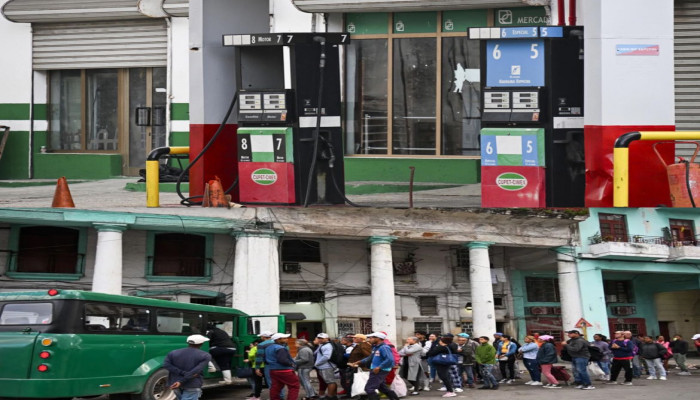
Cuba announces fuel rationing plan to safeguard essential services amid U.S. oil supply threat
Cuba has begun preparing to protect its essential services and manage fuel shortages after the United States moved to cut off oil supply to the Caribbean island. The communist-run government has announced that fuel will be rationed, with priority given to key sectors such as agriculture, education, water supply, healthcare, and defence.
The Cuban government announced the wide-ranging plan on Friday, after U.S. President Donald Trump threatened to impose tariffs on U.S.-bound products of any country exporting fuel to Cuba. Trump also signalled difficult times ahead for Cubans, who are already struggling with serious shortages of food, fuel, and medicine.
Government ministers said the new rationing measures are designed to guarantee fuel supply for critical national services. Officials said the goal is to ensure that the most important sectors continue functioning despite supply pressure.
Commerce Minister Oscar Perez-Oliva delivered details of the plan during a television news program and adopted a defiant tone. “This is an opportunity and a challenge that we have no doubt we will overcome,” Perez-Oliva said. “We are not going to collapse.”
Perez-Oliva said the government will also provide fuel to the tourism and export sectors, including the production of Cuba’s world-famous cigars. He explained that these industries are necessary to earn foreign exchange, which the country needs to fund other basic programs. “If we don't have income, then we will not overcome this situation,” he said.
The minister stated that domestic and international air travel will not be immediately affected by the fuel rationing plan. However, drivers will experience fuel cutbacks at gas stations until the supply situation returns to normal.
Cuban officials also said the government will protect ports and guarantee fuel for domestic transportation to support the island’s import and export sectors.
Perez-Oliva also announced a plan to plant 200,000 hectares, or 500,000 acres, of rice to guarantee “an important part of our demand.” However, he acknowledged that fuel shortages will force Cuba to depend more on renewable energy for irrigation needs and use animal-power for tilling agricultural land.
Education Minister Naima Ariatne, speaking during the same program, said infant-care centres and primary schools will remain open and continue in-person classes. However, secondary schools and higher education institutions will shift to a hybrid system. She said this would require more “flexibility” and would vary depending on the institution and region. “As a priority, we want to leave (open) our primary schools,” Ariatne said.
Top officials also confirmed that healthcare services will be prioritised. They said special focus will be placed on emergency services, maternity wards, and cancer programs.



 Loading...please wait
Comments