




COP31 talks hit deadlock after references to fossil fuels are removed
- In Reports
- 06:02 PM, Nov 21, 2026
- Myind Staff
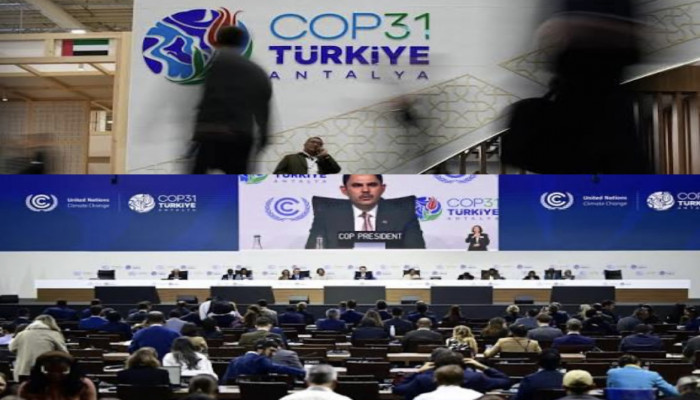
The COP31 climate negotiations extended into Saturday as nearly 200 countries struggled to reach an agreement after a revised draft removed all references to fossil fuels. The move exposed deep divisions over how to tackle global warming and forced negotiators to continue discussions through the night after missing Friday’s deadline.
Australia, which is presiding over the negotiations, worked to prepare a third draft deal as delegates rushed to secure an agreement before leaving for home. “We are close to the finish line, but we are not there yet,” COP31 President Murat Kurum, Turkey’s environment minister, told an assembly late Friday after it approved several technical matters.
Kurum paused his opening address midway after a protester shouted: “You are killing the future!” Security personnel later escorted the protester out of the hall.
Expectations of a breakthrough remained low amid an oil price shock and geopolitical tensions linked to the war in Iran. The summit also follows several climate-related disasters across Europe, Nepal and Indonesia, while a super El Niño pattern raises the risk of further extreme weather.
An earlier draft proposed a faster phase-out of fossil fuels, drawing strong opposition from oil-producing countries such as Saudi Arabia. However, a revised version released on Thursday removed all references to fossil fuels, prompting fresh objections.
The European Union said the new draft “risks turning this climate COP into a fossil summit”. On Friday, 12 European and developing countries, including France, Panama and the Solomon Islands, issued a letter demanding “a clear transition away from fossil fuels”.
Panama also threatened to withdraw from the talks. Its environment minister, Juan Carlos Navarro, accused a “petroleum mafia” of blocking progress. Meanwhile, OPEC said on X that its head, Haitham Al Ghais, met Russian presidential climate envoy Ruslan Edelgeriev at COP31 to discuss “the importance of inclusive and balanced approaches across all multilateral environmental fora”.
Australia’s Climate Minister Chris Bowen held discussions with delegations to find common ground. He said Friday he would work “for as long as it takes, to get the job done”.
The draft cover decision proposes electrifying the global economy by replacing fossil fuel-based technologies, such as diesel cars and gas heating, with electric alternatives. Turkey and Australia support the proposal to improve energy security and reduce emissions.
“Electrification is the key to transitioning away from fossil fuels,” Bowen said. The proposal aims to increase electricity's share of global final energy demand to 35% by 2035. However, it does not require the additional electricity to come from renewable sources, raising concerns among countries seeking a specific clean energy target.
Some countries also opposed expanding carbon capture, calling it costly and unproven. They warned it could allow industries to continue burning fossil fuels.
Countries also remained divided over the timing of the next Intergovernmental Panel on Climate Change (IPCC) reports. The latest draft expressed “deep concern” over the imminent breach of the 1.5C goal but removed an earlier call to bring global warming below that limit as soon as possible this century.
Developing countries criticised wealthy nations for failing to meet their climate finance commitments. The removal of a US$120 billion target for climate adaptation further angered them.
“We didn’t come here to beg,” said Ghana’s environment minister, Zanetor Agyeman-Rawlings.



 Loading...please wait
Comments