




Concept of Information, Knowledge, Wisdom, and Vision
- In Society
- 11:47 AM, Jul 25, 2024
- Dr Ryan Baidya
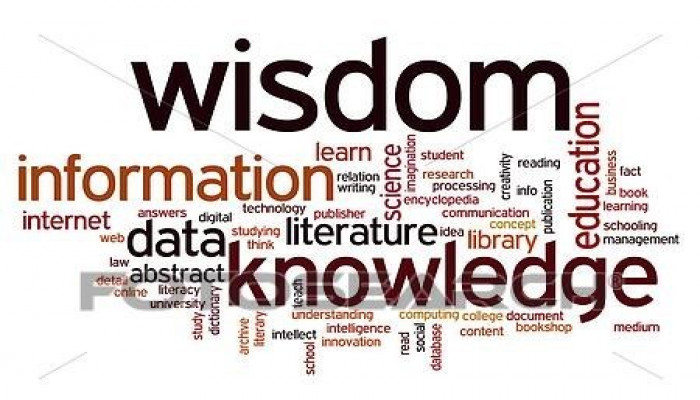
In our information-rich age, terms like "smart," "intelligent," "brilliant," and "wise" are often used interchangeably, yet each holds distinct meanings that reveal deeper layers of cognitive ability and practical application. This is why general views on the attributes of being smart, intelligent, wise, brilliant, educated, sharp, and visionary can be confusing. These attributes are often used indiscriminately by writers, journalists, commentators, thought leaders, politicians, and business professionals to describe mental acuity. In reality, each of these attributes denotes different stages of brain acuity and more, though there are connections and processes of transformation from one attribute to another.
Let's break down these terms and explore their meanings and relationships:
- Smart: Generally refers to quick thinking, cleverness, or practical intelligence. It often implies being able to solve problems effectively or make decisions swiftly.
- Intelligent: Refers to a broader cognitive ability, encompassing reasoning, learning, understanding complex ideas, and adapting to new situations. It typically denotes a high level of cognitive functioning.
- Wise: Involves the ability to make sound judgments based on knowledge, experience, and understanding. Wisdom goes beyond intelligence, incorporating aspects of empathy, compassion, and ethical decision-making.
- Brilliant: Often used to describe someone exceptionally intelligent or talented. It suggests outstanding intellectual ability or remarkable talent in a particular area.
- Educated: Refers to having received formal or systematic instruction or knowledge in various subjects or fields. It implies academic learning or training.
- Sharp: Describes someone quick-witted, mentally alert, or having a keen intellect. It often denotes perceptiveness or the ability to understand things clearly and quickly.
- Visionary: Refers to someone who can think about or plan for the future with imagination and wisdom. It often involves innovative thinking and the capacity to envision possibilities beyond the current scope.
These terms are related but differ in emphasis and context:
- Smart and intelligent focus on cognitive abilities and problem-solving skills. Smart and intelligent may or may not evolve into being wise or visionary.
- Wise incorporates judgment, experience, and ethical considerations beyond just cognitive abilities. A wise person could be a slow thinker but always brilliant and strategic.
- Brilliant emphasises exceptional intellectual abilities or talents and may not be wise or visionary.
- Educated pertains to formal learning and knowledge acquisition.
- Sharp highlights mental acuity and quick thinking and may not be visionary or wise.
- Visionary involves forward-thinking and creativity in imagining future possibilities. A visionary is not necessarily a quick thinker but is strategic and profoundly intuitive.
These traits can complement each other, with wisdom often integrating knowledge, intelligence, and foresight, while brilliance and sharpness might emphasise exceptional cognitive abilities in specific domains. Being educated can enhance both intelligence and wisdom through formal learning. Each trait contributes uniquely to an individual's overall cognitive and decision-making capabilities. Individuals with one of these traits may or may not display other traits with time and experience.
From Information to Wisdom: Unravelling the Layers of Intelligence
Information is the basic foundation of these attributes. Anyone who can acquire information and provide it upon request is merely a database that stores information and gives it out upon direct request. Those who promptly retrieve information and share it are often labelled as smart, brilliant, and knowledgeable, which can be erroneous in a true conceptual sense.
Transformation from Information to Wisdom
A trait to use information for doing things is knowledge. Experience gathered through practicing knowledge over time with successes and failures gives wisdom.
Therefore, information turns into knowledge, which with time and practice converts into wisdom as shown below:
Information → Knowledge → Wisdom
Simplistically, individuals who quickly provide information are intelligent, those who use information for functionalities are smart or knowledgeable, and those who are wise or visionary are battle-tested knowledge users.
A further breakdown of this concept aligns well with traditional understanding:
- Information: Raw data or facts.
- Knowledge: Information processed and understood, useful for practical application.
- Wisdom: Application of knowledge gained through experience, resulting in sound judgment and decisions.
Information: Foundation of Knowledge
Information serves as the foundational element of knowledge. It consists of raw data and facts that are essential for understanding the world around us (Smith, 2018).
Imagine information as the building blocks of a structure—the essential components that require organisation and context to become meaningful.
For example, in scientific research, data collected from experiments provide information. However, it is through analysis and interpretation that this information transforms into actionable knowledge.
Knowledge: Application of Information
Knowledge is the processed and organised form of information that allows individuals to understand concepts, solve problems, and make decisions (Petersen, 2020). It involves not just knowing facts but understanding their implications and how they interconnect.
An example can be seen in education: students learn historical events (information) and then analyse their causes and consequences (knowledge), gaining insights into societal trends and human behaviour.
Intelligence: Effective Use of Knowledge
Intelligence involves the ability to think critically, solve problems, and adapt to new situations (Sternberg, 2009). It goes beyond the acquisition of knowledge to its practical application in various contexts.
For instance, a software QA engineer who can swiftly debug complex code issues demonstrates intelligence by applying their knowledge of programming languages and algorithms to solve technical challenges.
Wisdom: Integration of Knowledge and Experience
Wisdom encompasses the application of knowledge gained through experience, resulting in sound judgment and decision-making (Baltes & Smith, 2012). It involves learning from successes and failures, understanding complexities, and considering long-term consequences. Wisdom involves judgment, experience, empathy, and ethical considerations and is more nuanced.
An example is seen in leadership: Experienced CEOs not only possess knowledge of business strategies but also exhibit wisdom in foreseeing market trends and making decisions that benefit their companies and stakeholders.
Examples in Practice
Consider the case of medical professionals: A knowledgeable physician understands medical conditions and treatments based on years of study (knowledge), while an experienced doctor applies this knowledge to diagnose complex cases and recommend personalised treatment plans (wisdom).
Advanced Understanding: Gyan, Buddhi, and Divya-Gyan
These terms are rooted in Sanskrit and have specific meanings in Indian philosophy and social developmental traditions:
- Gyan (ज्ञान): Translates to knowledge or wisdom. It denotes understanding or awareness gained through learning, experience, or insight. Gyan encompasses both theoretical knowledge and practical wisdom, emphasising comprehension and realisation of truths about the self and the universe.
- Buddhi ( बुद्धि): Refers to the intellect or the faculty of reasoning, discernment, and decision-making. It is the higher mental faculty responsible for understanding, discrimination, and practical intelligence. Buddhi is essential for making informed judgments and choices based on knowledge and wisdom.
- Divya-gyan (दिव्य-ज्ञान): Describes transcendental or divine knowledge; visionary insight or wisdom that transcends ordinary understanding. It refers to the spiritual or intuitive understanding of truths beyond the material world, often associated with profound spiritual experiences or realizations. Divya-gyan encompasses a deeper awareness of universal principles, consciousness, and the interconnectedness of all existence, attained through spiritual practice, meditation, or divine revelation. Divya-gyan is in the realm of vision that visionary individuals acquire through the purity of their thought processes.
These concepts are foundational in philosophical and spiritual traditions in India, contributing to the understanding of human cognition, spiritual growth, and the pursuit of higher truths.
The take-home message is that while information provides the raw material, knowledge enables understanding, intelligence facilitates effective action, and wisdom represents the pinnacle of cognitive development—a blend of knowledge, experience, and ethical considerations (Sternberg, 2023).
Attributes a Student Must Have to Get Their First Job
Based on the concepts of information, knowledge, and wisdom, here are the key attributes a student should develop to secure their first job:
1. Information Gathering:
- Curiosity: A keen desire to learn and understand new things. Curiosity drives a student to gather information about the industry, the company, and the specific role they are applying for.
- Research Skills: The ability to effectively find and evaluate relevant information. This includes using online resources, academic databases, and professional networks to gather necessary information about the job market and industry trends.
2. Knowledge Application:
- Technical Skills: Proficiency in the specific skills required for the job, such as software knowledge, programming languages, or other technical expertise. This is where the gathered information is applied and practiced.
- Analytical Thinking: The ability to analyse information, recognise patterns, and draw meaningful conclusions. This helps in solving problems and making informed decisions based on the knowledge acquired.
- Communication Skills: The capability to convey information clearly and effectively in both written and verbal forms. Knowledge is best demonstrated when it can be shared and understood by others.
3. Wisdom Development:
- Critical Thinking: The ability to think deeply about complex issues, question assumptions, and evaluate the implications of decisions. This is essential for making wise choices in the workplace.
- Emotional Intelligence: Understanding and managing one's emotions and empathising with others. This helps in building strong relationships, navigating workplace dynamics, and making thoughtful, empathetic decisions.
- Ethical Judgment: The capacity to consider the ethical dimensions of decisions and actions. Wisdom involves understanding the broader impact of one's actions on colleagues, the company, and society at large.
- Resilience and Adaptability: The ability to learn from failures and adapt to changing circumstances. Wisdom comes from experience, and resilience helps in navigating challenges and growing from them.
Developing these attributes requires a balance of theoretical learning, practical experience, and reflective practice. Students should seek opportunities to apply their knowledge in real-world contexts, learn from their experiences, and continually refine their understanding and skills. By nurturing curiosity, technical proficiency, critical thinking, emotional intelligence, and ethical judgment, students can better prepare themselves for their first job and their future careers.
In conclusion, the journey from information to wisdom is a transformative process that integrates learning, experience, and ethical considerations. Each stage—information, knowledge, intelligence, and wisdom—contributes uniquely to cognitive and decision-making capabilities. Understanding these concepts is crucial for personal and professional development, enabling individuals to navigate the complexities of the modern world with insight, foresight, and sound judgment.
Additional Information and Further Readings:
- Baltes, P. B., & Smith, J. (2012). Toward a Psychology of Wisdom and Its Ontogenesis. Wisdom: Published online by Cambridge University Press, pp 87-120.
- Sternberg, R. J. (2009). Wisdom, Intelligence, and Creativity Synthesized, Cambridge University Press
- Sternberg, R. J (2023). Introduction: Intelligence, Creativity, and Wisdom—A Brief Intellectual History of the Theory and Research on their Interrelationships, Intelligence, Creativity, and Wisdom, Springer Link
- Chaim Zins (2007). Conceptual Approaches for Defining Data, Information, and Knowledge. Journal of the American Society for Information Science and Technology, 58(4) 479-493.
- Walsh, R. (2015). What is Wisdom? Cross-Cultural and Cross-Disciplinary Syntheses. Review of General Psychology, 19(3), 278-293.
- Gardner, H. (2011). Frames of Mind: The Theory of Multiple Intelligences," Basic Books.
- S-Y Yang (2011). Wisdom Displayed Through Leadership: Exploring Leadership-Related Wisdom, The Leadership Quarterly, 22 (4), 616-632
Image source: LinkedIn
Disclaimer: The opinions expressed within this article are the personal opinions of the author. MyIndMakers is not responsible for the accuracy, completeness, suitability, or validity of any information on this article. All information is provided on an as-is basis. The information, facts or opinions appearing in the article do not reflect the views of MyindMakers and it does not assume any responsibility or liability for the same.



 Loading...please wait
Comments