




CJP accuses Centre of failing to fulfil promise of no action on protesters
- In Reports
- 07:22 PM, Jul 28, 2026
- Myind Staff
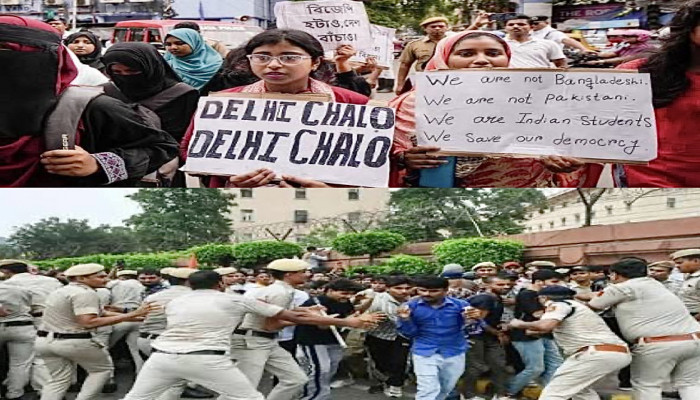
The Cockroach Janta Party (CJP) has accused the Centre of failing to honour its commitments made during talks that led to the suspension of protests over alleged examination paper leaks. The party claimed the government had assured protesters that no punitive action would follow. However, government sources rejected the allegation and said the assurance never applied to people accused of violence or those with a criminal background.
According to a report by The Indian Express, government sources clarified that the Centre did not promise protection to every protester. They said the assurance covered only peaceful protesters and never included those allegedly involved in violent incidents or those with previous criminal records. The clarification came after the CJP warned that it could resume protests, claiming the government had failed to fulfil the terms of the agreement reached earlier.
One of the major demands raised by the CJP during discussions with the Centre was the withdrawal of cases filed against protesters. The party had agreed to call off demonstrations held in Delhi and other parts of the country after receiving assurances from the government. The protests had taken place over the alleged paper leak issue, which triggered widespread outrage among students.
The CJP has now claimed that the Centre has gone back on its word. Party leaders alleged that police in BJP-ruled states have continued to register FIRs and make arrests despite the understanding reached during the negotiations. They also said the Centre has not yet handed over the signed agreement that it had promised during the discussions. The party warned that it may restart its agitation if the government does not fulfil its commitments.
CJP spokesperson Saurav Das has repeatedly stated that the withdrawal of all FIRs and the release of detained protesters were among the party's primary demands. He maintained that these assurances played a major role in the party's decision to suspend the protests.
Speaking on the issue, Das said, "One of our key demands was that all FIRs registered against the protesters be withdrawn and that everyone who was detained be released. The government also needs to honour the commitments it made during the press conference."
His statement came only hours after the Supreme Court passed an important interim order related to the recent student protests. The court directed states not to take any coercive action against protesters involved in the agitation, provided they did not have any criminal antecedents. The order offered temporary protection to peaceful protesters while making it clear that those with criminal records would not receive the same relief.
The Supreme Court also directed authorities to release detained students who are below 18 years of age, subject to the same condition that they have no criminal antecedents. At the same time, the court clarified that the protection would not apply to individuals with criminal backgrounds. It also allowed the Delhi Police to continue its investigation into the FIRs already registered in connection with the protests.
The matter reached the Supreme Court through a batch of petitions that alleged police brutality during demonstrations over alleged irregularities in examinations and the NEET paper leak. The petitions sought judicial intervention and an independent investigation into the actions taken during the protests.
A bench headed by Chief Justice of India Surya Kant observed that the allegations required a fair and independent probe. The court stressed the need to preserve evidence related to the protests so that any future investigation could proceed without interference or loss of material.
As part of its interim directions, the Supreme Court instructed states where protests took place to preserve all relevant evidence. This includes CCTV footage, drone recordings, body-camera footage, wireless communication records, PCR logs and other digital material linked to the demonstrations. The court said these records must remain secure for any future inquiry into the allegations raised by the petitioners.
The bench also directed authorities to preserve any digital data collected on protesters. At the same time, it ordered that such data should not be placed in the public domain. The direction aims to protect the integrity of the investigation while safeguarding the privacy of those involved.
The disagreement between the Centre and the CJP has added a fresh layer of uncertainty to the ongoing controversy surrounding the paper leak protests. While the government maintains that it never assured immunity to people accused of violence, the CJP insists that the withdrawal of FIRs and the release of detained protesters formed a key part of the understanding reached during negotiations. With the party threatening to resume its agitation and the Supreme Court continuing to monitor the issue, the dispute remains at the centre of the larger debate over the handling of the nationwide student protests.



 Loading...please wait
Comments