




Chinese Chipmaker CXMT sues Pentagon over military ties listing
- In Reports
- 02:58 PM, Aug 29, 2026
- Myind Staff
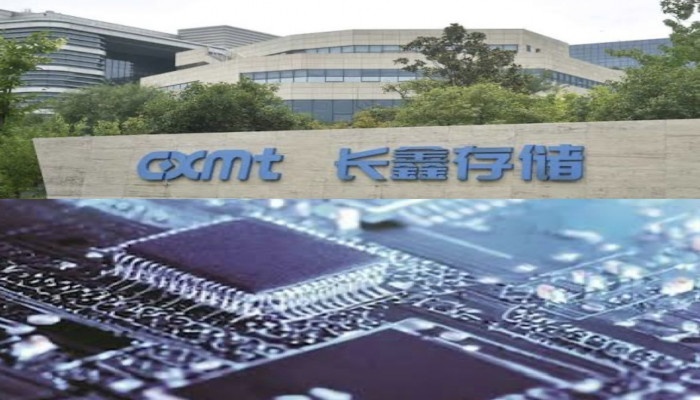
China’s leading memory chipmaker, ChangXin Memory Technologies (CXMT), has sued the U.S. Department of Defence over its inclusion on a Pentagon list of Chinese companies that Washington says are supporting Beijing’s military. The lawsuit was filed on Friday in the U.S. District Court for the District of Columbia. CXMT is seeking to overturn the designation and have its name removed from the list.
CXMT has denied having any links to China’s military. In its federal lawsuit, the company said, "CXMT is not affiliated with the Chinese military," and added, "CXMT designs, produces, and sells its DRAM chips for civilian and commercial use, not for military use." The company argues that its products are designed for civilian and commercial markets rather than military applications.
The U.S. Defence Department declined to comment directly on the case. In a statement to Reuters, the Pentagon said: "As a matter of policy, the Department does not comment on pending or ongoing litigation."
The Pentagon first designated CXMT as a Chinese military company in January 2025 under the Biden administration. The Trump administration retained the company on the list in an update issued in June. The designation can create restrictions on government contracting and may also affect a company's reputation and business relationships.
CXMT said its inclusion on the list has already caused significant damage to its business. "Since its initial designation in January 2025, CXMT has continuously suffered reputational and commercial harm," the company said in a statement to Reuters. It added that the legal action is aimed at protecting its business interests.
The company is asking the court to cancel the Pentagon's decision and remove it from the list. CXMT has described the designation as "arbitrary" and argued that the Pentagon did not have enough evidence to support its decision. The company also claims that the decision violated its due-process rights.
According to CXMT's complaint, the company spent more than a year sharing information with the Pentagon to challenge its designation. CXMT said it repeatedly sought to convince the Defence Department that it should not remain on the list.
The company has also raised questions over the Pentagon's handling of its case. CXMT said the Defence Department published a notice in February indicating that the company would be removed from the list. The notice was withdrawn on the same day. CXMT claims the Pentagon later put the company back on the list without providing an adequate explanation for the reversal.
The lawsuit names several senior U.S. officials as defendants. They include the Department of Defence, Defence Secretary Pete Hegseth, Deputy Defence Secretary Steve Feinberg and Assistant Secretary of Defence for Industrial Base Policy Michael Cadenazzi.
CXMT is China's largest producer of dynamic random-access memory, or DRAM, chips. These chips are widely used in smartphones, personal computers, servers, artificial intelligence systems and other electronic devices. The company has been expanding its position in China's semiconductor industry and is seeking to compete with major global memory chipmakers.
CXMT's financial performance has also grown sharply. Its revenue increased by 874% in the first half of the year. Despite its dispute with the U.S. government, the company has long-term ambitions to enter the American market. Reuters has previously reported on CXMT's plans to expand into the U.S. market.
The case comes amid growing tensions between Washington and Beijing over advanced technology and semiconductor supply chains. The U.S. has taken several steps to limit China's access to technologies it considers important to national security. CXMT's legal challenge now puts the Pentagon's decision directly before a U.S. federal court.
CXMT's lawsuit will seek to establish that its designation was not supported by sufficient evidence and that the company should not be treated as a Chinese military entity. The company maintains that its chips serve civilian and commercial customers. It is now asking the court to reverse the Pentagon's decision and remove the designation that it says has harmed its commercial interests.



 Loading...please wait
Comments