



Chinese automakers shift focus to hybrids in Europe to overcome EV tariffs
- In Reports
- 05:55 PM, Dec 05, 2024
- Myind Staff
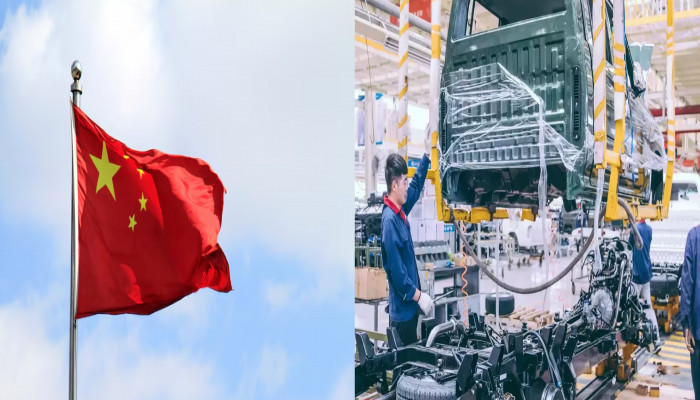
Chinese automakers are increasing exports of hybrid vehicles to Europe and planning more models for the market. This highlights the limits of the European Union's electric vehicle (EV) tariff policy.
The EU's new tariffs, designed to shield its auto industry from cheap Chinese EV imports, do not apply to hybrid cars. This allows major Chinese brands like BYD, the leading EV maker in China, to continue expanding in Europe, according to experts. Additionally, some companies are moving production and assembly to Europe to reduce costs related to tariffs. "The increase is driven by Chinese OEMs shifting toward PHEVs (plug-in hybrids) as a way to sidestep the new EU tariffs on BEV (battery-powered EVs) imports from China," said Murtuza Ali, an analyst at Counterpoint Research.
According to him, China's hybrid shipments to Europe will increase by 20% this year and much more quickly the next year. The European Commission claims that unjust subsidies enabled China to develop spare production capacity for 3 million EVs annually, twice the size of the EU market. To combat these subsidies, EU tariffs of up to 45.3% on Chinese EV imports went into force in late October. Anti-subsidy investigations into Chinese electric vehicle (EV) imports, starting in October 2023, along with slowing car sales in China due to an economic slowdown, have prompted some automakers to adjust their strategy in Europe by focusing more on hybrid exports.
Hybrids, which use both gasoline and electricity, are becoming more popular as an affordable middle ground between fully combustion-powered and fully electric vehicles. From July to October, China's hybrid car exports to Europe more than tripled compared to the same time last year, reaching 65,800 units. This reversed the decline in sales seen earlier in 2023, according to data from the China Passenger Car Association. As a result, hybrids (both plug-in and conventional) made up 18% of China’s vehicle exports to Europe in the third quarter, up from 9% in the first quarter. Meanwhile, the share of EV exports dropped slightly, from 62% to 58% during the same period. The trend is expected to grow even stronger.
China, which became the world's largest auto exporter last year by leading in EV production, is boosting exports to deal with overproduction at home, according to analysts. With 100% tariffs on Chinese-made EVs in the U.S. and Canada, Europe stands out as a key market for Chinese automakers. The European Commission has not yet responded to a request for comments on the increase in hybrid imports from China.
Chinese automakers, like BYD, are entering the European plug-in hybrid market, challenging established brands like Volkswagen and Toyota. BYD's Seal U DM-i, its first plug-in hybrid for Europe, starts at €35,900 ($37,700), making it €700 cheaper than VW's popular Tiguan PHEV and 10% less expensive than Toyota's C-HR PHEV. To further expand, BYD is reportedly considering producing both electric and hybrid vehicles at its Hungarian plant, according to China Auto News.
"The segment could see bigger growth potentials with Chinese automakers bringing more affordable options to Europe that are attractive to cost-sensitive consumers," said Yale Zhang, managing director at Automotive Foresight. SAIC, whose EV exports to the EU are subject to the highest extra rate of 35.3%, has stated that it intends to develop products with a range of powertrain configurations for the European market. The second-largest carmaker in China based on sales, Geely, introduced a new plug-in hybrid for Europe last month under the Lynk & Co. brand. "The recent increased introduction of electrified hybrid models to markets around the world by global automakers is in line with consumer demands and purchasing trends," Geely said in response to Reuters questions. It did not comment on trade restrictions.
Japanese automakers are benefiting from the growing popularity of conventional hybrids in Europe this year while also tackling their overproduction issues in China. Honda, facing a 29% drop in vehicle sales in China during the first nine months of this year, is exporting two conventional hybrids, one plug-in hybrid, and one electric vehicle (EV) model from China to Europe.
Chinese companies are likely to be more cautious for fear of triggering another round of EU tariffs, according to some analysts, even if increased shipments from China might lead to fierce pricing rivalry in the European hybrid vehicle market. "If BYD takes Qin Plus to Europe at a price of 20,000 euros, I am sure it would trigger another earthquake," Zhang said, referring to its hybrid sedan.



 Loading...please wait
Comments