




China’s military-linked university obtained Nvidia H200 AI chips despite US sanctions
- In Reports
- 05:34 PM, Nov 12, 2026
- Myind Staff
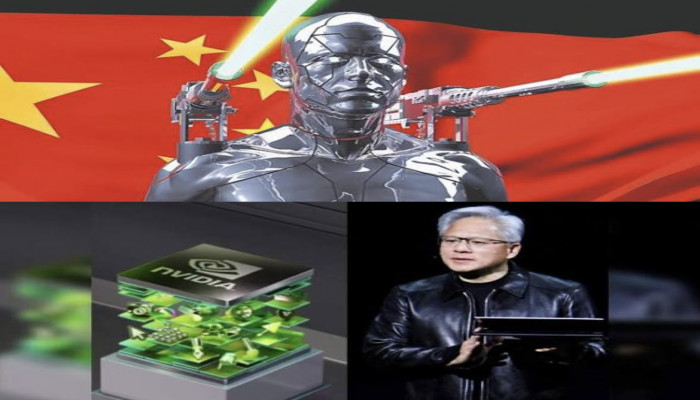
Northwestern Polytechnical University in China, which has close ties to the People's Liberation Army (PLA), purchased two Nvidia H200 artificial intelligence (AI) chips last month despite being on the US export blacklist. Procurement records reveal the purchase, raising concerns over gaps in Washington's efforts to restrict China's access to advanced technology.
The university paid 874,700 yuan ($123,000) for the two chips, according to a procurement record published on October 21. It bought them for its management school through a Chinese supplier, Shaanxi Bosuan Network Technology, rather than directly from Nvidia.
Northwestern Polytechnical is part of China's 'Seven Sons of National Defense', a group of universities known for defence-related research. Based in Xi'an, the institution works on military aircraft, missiles and satellites. The US Commerce Department added it to the Entity List in 2001 over alleged involvement in missile proliferation and military research. Washington tightened restrictions in 2019, making export licences for controlled US technology to the university subject to denial in most cases.
The H200 is among Nvidia's most powerful processors for developing and running advanced AI systems. Its export requires US government approval, which authorities generally deny to blacklisted institutions.
Reuters also found that the university obtained access to H200 processors through rented computing services. Its cybersecurity school awarded two seven-month contracts in January for servers containing eight H200 chips each. Valued at 441,700 yuan and 441,000 yuan, the contracts covered AI model fine-tuning and reinforcement-learning training.
The university also rented computing capacity powered by eight Nvidia A100 chips and eight A800 chips. Both models face US export restrictions on sales to Chinese entities. In April, another university institute purchased computing services requiring at least 24 A100 chips under a 375,000 yuan contract for structural and fluid-dynamics simulations.
A Reuters review of 26 Chinese procurement and corporate records found several universities and research institutions buying restricted Nvidia chips or renting access to computing services powered by them. Some institutions had close links to China's defence sector.
Other purchases included three H100 processors by Shenzhen University for 769,800 yuan in September. Wuhan University of Technology bought an H100-powered server for 355,000 yuan in June and four A100 chips for 344,000 yuan. Beihang University, another member of the Seven Sons group, purchased four A800 processors for 489,000 yuan in April.
Government procurement records also identified suppliers offering restricted H800 and A800 computing services to the University of Chinese Academy of Sciences. One July announcement listed H800 access at 10 yuan per chip-hour. Another January contract awarded a supplier 484,800 yuan for six A100 chips for a public institution in Shenzhen.
US President Donald Trump's administration began allowing certain H200 exports to China on a case-by-case basis in January. However, the policy did not remove restrictions on Entity List institutions. It also requires safeguards to prevent blacklisted organisations and military users from accessing exported chips remotely.
Meanwhile, Nvidia CEO Jensen Huang faces growing scrutiny in Washington over his lobbying for relaxed restrictions on AI chip sales to China. Three Republican congressional committee chairmen have requested a briefing with Huang on November 18 over his reported contacts with an alleged Chinese intelligence operative. US lawmakers have also called for stricter chip-tracking requirements and greater congressional oversight.



 Loading...please wait
Comments