




China’s economic slowdown deepens as investment falls, retail sales hit post-COVID low in November
- In Reports
- 06:47 PM, Dec 19, 2025
- Myind Staff
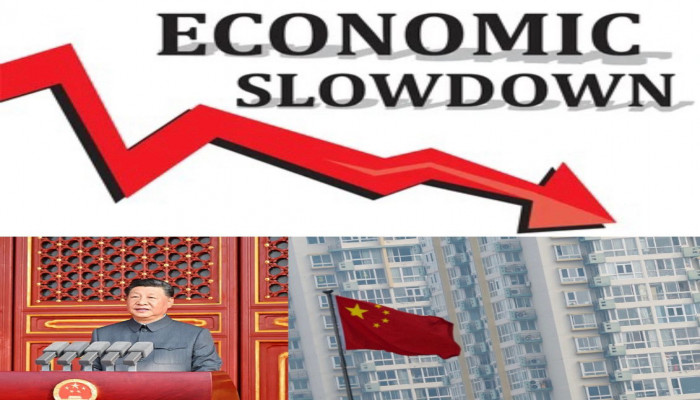
China’s economic growth showed fresh signs of weakening in November 2025 as both investment and consumer spending slowed sharply, according to official data and expert commentary released this week. The latest figures highlight growing strains in China’s post-pandemic recovery and shed light on continued challenges facing the world’s second-largest economy.
Retail sales, a key measure of consumer demand, rose by only 1.3 per cent in November compared with the same month last year. This was a major slowdown from October’s growth and marked the weakest retail increase since China lifted strict COVID-19 restrictions in December 2022. The slow pace shows that Chinese consumers are not spending as much as expected, despite ongoing government efforts to support economic activity.
At the same time, overall investment in the economy continued to decline. China’s authorities reported that fixed-asset investment, the spending on infrastructure, factories, buildings, and equipment, fell by 2.6 per cent from January to November compared with the same period in 2024. This drop is larger than the decline seen through October and reflects reduced investment activity, especially outside rural households.
The slowdown in retail and investment came alongside a moderation in industrial output growth. China’s industrial output, which measures production in factories, mines and utilities, rose by 4.8 per cent year-on-year in November, slightly lower than the 4.9 per cent increase recorded in October. That figure also missed economists’ expectations for stronger growth, signalling that manufacturing activity is losing momentum.
Economists say the weakness reflects structural problems in China’s economy, including the lingering effects of a long-running property market slump. The real estate sector, once a major driver of growth, has been shrinking for years and now accounts for a smaller share of economic activity than before.
Data released on December 15 showed that real estate investment had fallen by 15.9 per cent over the first 11 months of 2025, worsening from a 14.7 per cent contraction in the first 10 months of the year. This deep decline in property investment has hurt both business confidence and household wealth, reducing demand for related goods and services.
Official figures also revealed that new home prices in about 70 major Chinese cities continued to shrink in November, reflecting persistent weakness in the housing market. In addition, new home sales by value dropped 11.2 per cent from January to November, compared with a 9.4 per cent fall from January to October. These trends show that even at discounted prices, many buyers are unwilling or unable to purchase property. Government statisticians acknowledged the troubling data and provided context at a briefing in Beijing.
Fu Linghui, a representative of China’s National Bureau of Statistics (NBS), discussed the investment data during the news briefing. He explained that the overall 2.6 per cent drop in fixed-asset investment over the first 11 months of the year was largely caused by the continuing decline in real estate investment. Fu noted that the property sector’s contraction was a major factor behind the broader weakness in investment.
The property sector had once contributed about one-quarter of China’s gross domestic product (GDP). Its prolonged downturn has reduced household wealth and weakened consumer confidence. As real estate prices and sales continue to fall, many families have become cautious about spending on big-ticket items and other goods, further slowing retail growth.
Economists outside the government also weighed in on the latest figures, characterising the data as a sign of “widespread weakness in domestic activity.” Huang Zichun, an economist at Capital Economics, said that the November figures reflected a broad pullback in economic activity, especially due to reductions in fiscal expenditures. He noted that the investment and retail data together suggest that China’s economy faces persistent challenges even as policy support is used to encourage recovery.
Huang also offered a cautionary outlook “Although policy support should aid in stimulating a partial recovery in the months ahead, it likely won’t stop China’s overall growth from remaining subdued throughout 2026.” This statement underlines fears within the global economic community that domestic consumption and investment could remain weak next year unless stronger stimulus measures are introduced.
Economists point out that weak consumption has been a recurring theme in China’s post-COVID economy. Although the lifting of pandemic controls initially sparked a boost in spending, that effect appears to have faded. Many households are still cautious, opting to save rather than spend, especially on large purchases like homes, appliances and cars.
China’s latest economic figures underscore broadening challenges as the country tries to shift from an investment- and export-driven model toward one supported more by domestic demand. While China’s overall economic growth rate is still positive, the slowdown in key indicators such as retail sales and investment suggests the recovery is weakening.
For policymakers, the figures raise difficult choices about how to support growth without creating new risks. Some economists argue for stronger fiscal stimulus, greater support for households and structural reforms to reduce dependence on property and heavy industries. Others warn that too much intervention could distort markets and delay necessary adjustments.
As the year ends, China’s government has stressed its commitment to stabilising the economy and supporting sustainable development. But the data from November show that recovery is uneven, and risks to growth persist as the country heads into 2026.



 Loading...please wait
Comments