



China's covert penetration of Taiwanese governance structures raises alarm over systemic loopholes
- In Reports
- 07:05 PM, Apr 03, 2026
- Myind Staff
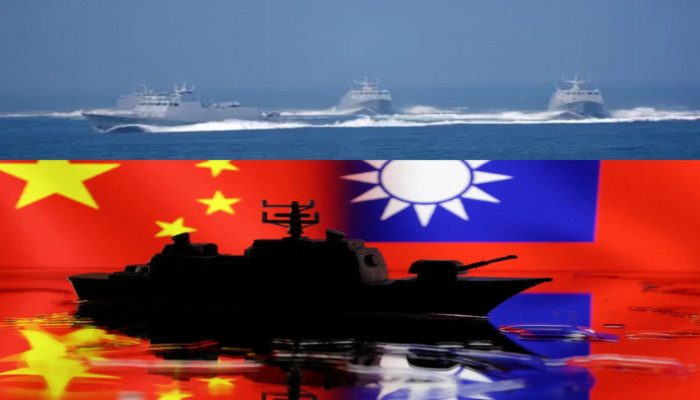
China is increasingly using Taiwan’s own systems and exchange platforms to quietly expand its political influence, raising serious concerns about hidden vulnerabilities within Taiwan’s governance structure. According to a Taiwanese academic cited by The Taipei Times, these activities are not carried out in obvious ways. Instead, they are disguised as routine business, cultural, and community exchanges, making them difficult for authorities to detect and prevent.
Hung Pu-chao, deputy director of Tunghai University Centre for Mainland China and Regional Development Research, highlighted a recent legal case that points to what could be a much greater and coordinated effort. The case involves Xu Chunying, a China-born resident of Taiwan who obtained residency through marriage. She has been accused of taking part in election interference allegedly directed by China. Xu heads the Taiwan New Immigrant Development Association and is suspected of violating Taiwan’s Anti-Infiltration Act.
Investigators believe that Xu facilitated multiple visits by Sun Xian, a Chinese political figure associated with the Revolutionary Committee of the Chinese Kuomintang in Shanghai. Sun reportedly entered Taiwan under legitimate reasons but later moved beyond his declared schedule. Authorities claim that over nearly two decades, he travelled widely across Taiwan. During this time, he met immigrant communities and promoted Beijing’s “one country, two systems” model.
Hung explained that such operations do not rely on illegal entry or obvious espionage tactics. Instead, they take advantage of Taiwan’s open and democratic systems. Individuals can enter legally and then engage in activities that are not part of their stated purpose. This method allows them to blend into normal cross-strait exchanges without raising suspicion.
He further pointed out that China is not necessarily creating new channels for influence. Rather, it is repurposing existing legal and administrative frameworks. By doing so, its actions appear normal and routine. This makes it much harder for authorities to distinguish between genuine exchanges and covert political efforts.
The case also highlights weaknesses in Taiwan’s regulatory system. While entry procedures into Taiwan are strict and carefully monitored, there is less oversight after individuals have entered the country. This gap creates opportunities for misuse. People who enter with legitimate intentions may later engage in undisclosed political activities without immediate detection.
Hung has warned that this imbalance between strict entry checks and weak post-entry monitoring is a key loophole. He has urged the government to improve its oversight mechanisms. This includes closer monitoring of individuals whose actions differ from their declared purpose of visit. Strengthening such measures, he suggested, is essential to prevent further misuse of Taiwan’s open systems.
The situation reflects a broader challenge for Taiwan. Its democratic openness, which allows free movement and exchange, is also being used against it. The blending of legal travel and covert political outreach creates a complex security issue. It is not easy to address without affecting normal interactions between people across the Taiwan Strait.
This case serves as a warning that influence operations may not always appear as direct threats. Instead, they can operate quietly within existing systems. As authorities continue to investigate, the focus is now on closing these systemic gaps while maintaining Taiwan’s open and democratic environment.



 Loading...please wait
Comments