



China warns and drives Japanese fishing boat from contested waters near Japan-held Islands
- In Reports
- 04:55 PM, Jul 14, 2023
- Myind Staff
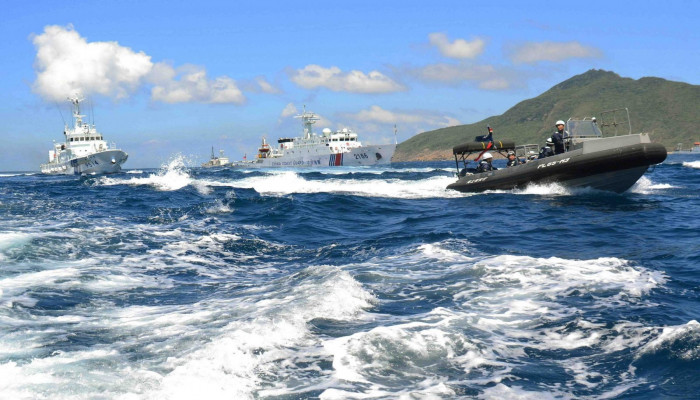
According to state media, China's coast guard has issued a warning to a Japanese fishing boat operating in the waters surrounding uninhabited islands in the East China Sea. These islands are controlled by Japan but claimed by China, adding to the existing tensions between the two nations.
The warning occurred just over a week after China's senior diplomat, Wang Yi, made controversial remarks suggesting the establishment of an alliance between China, Japan, and South Korea based on cultural and racial similarities, excluding Western-style democracies like the United States.
The Chinese coast guard spokesperson, Gan Yu, stated to state media that a Chinese vessel had issued a "warning to depart" to the Japanese fishing boat named Zuiho Maru. This incident took place near an island known as Chiwei Yu in Chinese and Taisho in Japanese. The island in question is the easternmost among the eight islands comprising the Senkaku chain, which is referred to as Diaoyu in Chinese.
It is worth noting that Taiwan also claims sovereignty over the Senkaku chain. However, unlike China, Taiwan has established agreements with Japan regarding fishing activities in the area and does not contest Japan's sovereignty by sending ships or planes to the region.
The Chinese statement said the Japanese boat “illegally entered the territorial waters of Chiwei Island, and the Chinese coast guard ships took necessary control measures and warned them to leave.”
“We urge the Japanese side to immediately stop all illegal activities in the waters to ensure that similar incidents will not happen again,” the statement said.
There is no immediate information available on whether the Japanese fishing boat complied with China's warning or if further action was taken. However, it is noteworthy that Japan has a consistent practice of scrambling jets and dispatching ships to deter Chinese incursions into the airspace and waters surrounding the disputed islands.
China's claim of sovereignty over these islands is part of its broader territorial assertions in the Pacific region, which include claims to underwater resources in the East China Sea, Taiwan, and the majority of the South China Sea—a crucial waterway for international trade. China's claims often rely on historical precedents, although scholars have criticized these assertions as lacking clarity. Taiwan, having split from mainland China in 1949, maintains its own separate position on the issue.
The islands in question are situated between Taiwan and Okinawa, approximately 330 kilometers (205 miles) off the Chinese coast. After World War II, the United States administered the islands, which were eventually returned to Japanese sovereignty in 1972.
China's Foreign Ministry has sought to downplay any controversy surrounding the recent remarks made by Wang Yi, China's senior diplomat, which drew widespread condemnation from scholars for placing ethnic similarities above political considerations. While Japan and South Korea are democratic allies of the United States, China remains an authoritarian one-party Communist state and has been engaged in various disputes with Washington.
Despite occasional tensions, China-Japan relations have seen some improvement in recent years, with economic ties and tourism remaining strong. Anti-Japanese protests in China have become less frequent, although Chinese propaganda still portrays Japan as insufficiently apologetic for its actions during the first half of the 20th century.
Image source: ET



 Loading...please wait
Comments