




China to be India’s main competitor across multiple fields: Former Army Chief Naravane
- In Reports
- 09:08 PM, Aug 21, 2026
- Myind Staff
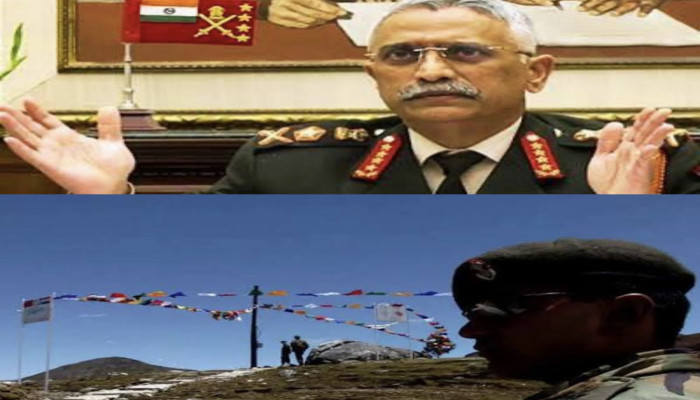
Former Army chief General Manoj Naravane has said China is likely to become India’s main competitor in the long term, with rivalry extending across politics, economics, trade and military affairs. He said India must maintain a strong military deterrence while using dialogue and diplomatic channels to manage differences with Beijing.
Naravane made the remarks on Thursday while speaking at the launch of his book, “The Curious and the Classified: Unearthing Military Myths and Mysteries”, published by Rupa Publications. He said Pakistan and China remain major security challenges for India, but the nature of the threat from the two countries is different. India has fought wars with both nations and continues to have unsettled borders with them.
"Pakistan and China are a totally different ballgame. We have fought wars with both of them. We have unsettled borders. So, they will always remain on our radar as a threat, as a challenge," he noted.
Naravane said Pakistan continues to draw India's immediate security attention due to the threat of terrorism. China, however, will play a much bigger role in India's strategic calculations over the coming years. He deliberately described China as a competitor rather than an enemy.
"We have fought major wars with Pakistan, and because of their continued support for terrorism, our attention is towards our western borders. But I think we are very clear that in the long term and in the years to come, China is going to be our main competitor. And I purposely use the word competitor and not enemy," Naravane said.
According to the former Army chief, competition with China will not remain limited to military affairs. He said both countries are likely to compete in several areas, including politics, economic activity and trade. Such competition can also create points of conflict, making it important for India to remain prepared while avoiding unnecessary escalation.
"They are going to be our main competitor in all fields. Political, economic, trade, and of course military also. And wherever there is competition, there is always a little bit of conflict," insisted Naravane, who served as Army chief from December 31, 2019 to April 30, 2022.
Naravane stressed that India should try to settle differences with China through talks and diplomatic mechanisms. He said the use of force should remain the last option. At the same time, he underlined the need for credible military preparedness to ensure that India can respond if diplomatic efforts fail.
"It is up to us to try to resolve those conflicts, those differences, through the mechanisms of talks, dialogues. And taking recourse to the use of force should always be the last priority," the former Army chief maintained.
He said India needs strong deterrence to prevent any potential military misadventure. The armed forces must remain ready to deal with security threats at all times. Naravane said preparedness itself can help prevent an adversary from choosing force.
"There comes a moment when you realise that this is not going to happen. And therefore, you have to have a strong deterrence," Naravane said, adding the Indian armed forces must remain prepared at all times.
"That is why the armed forces have to be ready at all times. You have to have a strong deterrence to stop anybody from taking recourse to the use of force or any misadventure," he said.
Naravane also spoke about India's wider neighbourhood and stressed the need for stability in countries surrounding India. He named Nepal, Bhutan, Bangladesh and Myanmar among the countries where India should work towards maintaining stability. He said India cannot choose its neighbours and must instead focus on building stable relations with them.
"You can't choose your neighbours, in real life also, and in geopolitics also. You have to make the best of what you have," he said.
He warned that instability in neighbouring countries can directly affect India. Such situations can trigger refugee movements and increase risks linked to smuggling, drug trafficking and the illegal movement of arms. He pointed to the refugee influx from Myanmar as an example of how unrest in a neighbouring country can create challenges for India.
"If your neighbouring country is burning, that should not make you happy," he said, citing the refugee influx into India from Myanmar as an example.
The former Army chief said instability along India's borders can also affect the country through the movement of narcotics and other illegal goods. He called for greater efforts to help neighbouring countries remain stable, as regional instability can eventually create security and humanitarian problems for India.
"Therefore, we need to help out these countries to be stable," Naravane said.
Naravane also highlighted the importance of maintaining peace while ensuring that India's armed forces have enough capability to deter threats. He said military preparedness and diplomatic engagement must work together. India should seek peaceful solutions to disputes, but it must also remain ready to defend its interests when required.
"If you want peace, prepare for war," Naravane added.



 Loading...please wait
Comments