




China tightens scrutiny on Indium exports amid AI industry boom
- In Reports
- 06:50 PM, Jun 20, 2026
- Myind Staff
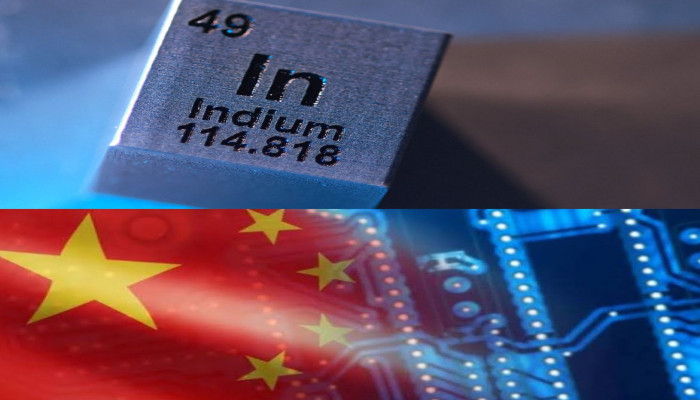
China has increased its scrutiny of indium exports, raising concerns among international buyers that the metal could soon be brought under the country's growing export control system. Indium is a niche but strategically important metal that has become increasingly valuable due to rising demand from the artificial intelligence industry and next-generation data centres.
China currently produces nearly 70 per cent of the world's indium supply. The metal is mainly obtained as a byproduct during zinc refining. Traditionally, it has been used in display screens and soldering materials. However, its importance has grown because it serves as the raw material for producing indium phosphide, a key component used in high-speed optical chips that support AI data centres.
In February 2025, Beijing placed indium phosphide on its export control list. Since then, the restrictions have created challenges for companies involved in next-generation data centre technology. The issue became significant enough that the chief executive of Nvidia-backed chipmaker Coherent travelled to Beijing with President Donald Trump in May to discuss the matter directly with Chinese officials.
Although indium metal itself is not currently included on China's export control list, buyers have reported signs of increased oversight by Chinese customs authorities. Two buyers told Reuters that export procedures involving indium have become more closely monitored in recent months.
One European buyer said that, for the first time this year, Chinese customs officials requested detailed information about the final users of the material. The buyer was asked to disclose who would ultimately use the indium and where those users were located. Such requests had not been made previously, leading to concerns that authorities may be gathering more information about global supply chains.
A major buyer in North America also reported noticeable changes in the export approval process. According to the buyer, approvals that were once granted on the same day now take several days. The company attributed the delays to closer examination of paperwork by customs authorities. The buyer described the atmosphere as "tense". However, the company said it had not been asked to provide any additional information beyond the standard documentation.
China's Ministry of Commerce did not immediately respond to a request for comment because the inquiry was made during a public holiday. The buyers who spoke to Reuters also chose not to reveal their identities because of the sensitive nature of the issue.
The increased scrutiny does not appear to be affecting all buyers equally. Two other buyers told Reuters that they had heard reports of stricter checks but had not personally experienced any additional examination of their shipments. At present, Reuters has not identified any cases in which indium shipments have been blocked or denied export approval.
Even so, concerns remain within the relatively small indium industry. Some market participants believe the recent checks hint at a possibility of tighter regulations in the future. Industry observers noted that end-user disclosures are commonly used by governments with export control systems. Such information helps authorities map supply chains, identify strategic dependencies, and locate potential vulnerabilities within global trade networks.
The growing attention on indium comes at a time when the metal is increasingly viewed as a critical resource. The United States has already identified indium as a potential supply chain weakness. Earlier this year, the U.S. Defence Logistics Agency issued a request for proposals to build a stockpile of up to 403 tons of indium over the next three years. The move highlights concerns about dependence on foreign supplies of materials that are important for advanced technologies.
Some industry participants believe the latest developments could be the first step toward stricter restrictions. Another North American buyer said they suspected that the reporting requirements were "a precursor to restrictions or outright bans on exports."
While no formal changes have been announced regarding indium metal exports, the increased checks have attracted attention across the industry. Buyers, manufacturers, and governments are closely monitoring the situation because of the metal's growing role in AI infrastructure and advanced semiconductor technologies. Any future restrictions could have implications for global supply chains and the rapidly expanding artificial intelligence sector.



 Loading...please wait
Comments