




China rejects Pakistan's request for sea-based nuclear second-strike capabilities, leaked report reveals
- In Reports
- 01:54 PM, May 19, 2026
- Myind Staff
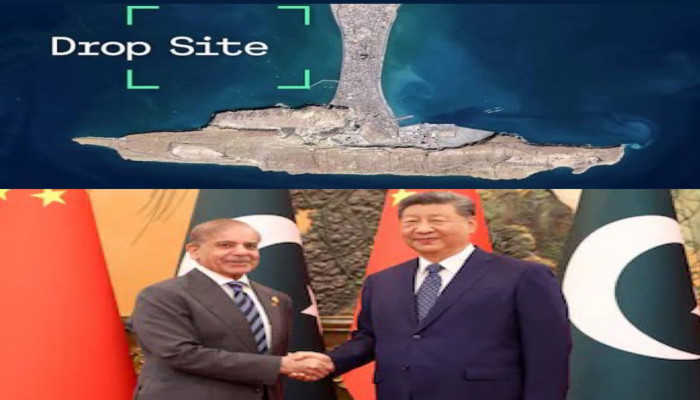
Pakistan’s request for Chinese support in developing a sea-based nuclear second-strike capability was reportedly turned down by Beijing, according to leaked classified documents reviewed by Drop Site News. The documents reveal that the development came at a time when tensions were quietly growing within the long-standing China-Pakistan partnership over financial disputes, security concerns and strategic demands.
The report states that Pakistan Prime Minister Shehbaz Sharif returned from China in 2024 without securing fresh financial assistance from Beijing. Pakistan has been facing severe economic pressure, while unpaid dues to Chinese power companies operating in the country have reportedly become a major source of friction between the two sides. The issue has added strain to what both countries have often described as an “all-weather” relationship.
Amid these economic and security-related tensions, Pakistan reportedly approached China with a proposal to help it build a sea-based nuclear deterrent. According to the leaked documents published by Drop Site News, the request was part of broader strategic discussions involving defence cooperation, infrastructure expansion and the future role of Gwadar port. Pakistan reportedly wanted to strengthen its nuclear deterrence by adding a maritime-based component to its existing land- and air-based nuclear capabilities.
However, China rejected the proposal. The report states that Chinese officials described the request as “unreasonable”. Beijing reportedly warned that supporting such a move would directly involve China in nuclear proliferation in South Asia. Chinese officials also feared that such assistance could trigger serious diplomatic and international consequences for Beijing.
China has officially maintained a non-proliferation position for years, despite being Pakistan’s closest strategic ally and one of its largest defence partners. The reported refusal highlights the limits of Beijing’s support when it comes to issues that could increase global scrutiny or intensify regional tensions.
The leaked documents also suggest that discussions around Gwadar port were tied to broader strategic negotiations between the two countries. Pakistan reportedly offered conditional cooperation on turning the deep-water Gwadar port into a permanent Chinese military facility. In return, Islamabad sought guarantees from Beijing against possible political, diplomatic and economic retaliation from the United States.
Pakistan also reportedly asked China for wider military modernisation support to help maintain strategic balance with India. The documents indicate that Islamabad wanted stronger Chinese backing in multiple defence areas as regional competition with India continued to widen.
The report further points to increasing frustration within China over Pakistan’s handling of security for Chinese nationals working in the country. Chinese ambassador to Pakistan Jiang Zaidong had publicly criticised Islamabad during a seminar in 2024. He accused the Pakistani state of failing to ensure the safety of Chinese citizens and workers linked to the China-Pakistan Economic Corridor (CPEC). He noted that 21 Chinese workers had been killed in attacks since the launch of CPEC.
The repeated attacks on Chinese personnel have reportedly become a major concern for Beijing. China has invested heavily in Pakistan through CPEC, which is considered one of the flagship projects under China’s Belt and Road Initiative. However, security threats and delays in multiple projects have raised concerns within the Chinese leadership over the future of these investments.
According to the documents cited by Drop Site News, several CPEC projects have either slowed down or stalled completely due to financial disagreements, rising security risks and differences over long-term strategic commitments. Beijing is also reportedly unhappy with Pakistan’s inability to fully protect Chinese investments, workers and infrastructure projects operating in the country.
The report explains that a sea-based nuclear second-strike capability refers to a country’s ability to carry out a retaliatory nuclear attack even after suffering a major first strike from an enemy. Such capabilities are generally built around nuclear-powered ballistic missile submarines, also known as SSBNs. These submarines can remain underwater for long periods and are extremely difficult to detect, making them one of the most effective tools of nuclear deterrence.
Only a limited number of countries currently possess such systems. These include the United States, Russia, China, France, the United Kingdom and India. Pakistan’s reported interest in developing a similar capability reflects its efforts to expand and modernise its nuclear deterrence structure.
The leaked documents paint a picture of a relationship that remains strategically important for both countries but is increasingly facing internal pressure. While China and Pakistan continue to cooperate closely on defence and infrastructure, the report suggests that growing economic disputes, security failures and differing strategic expectations are beginning to expose cracks within the partnership.



 Loading...please wait
Comments